
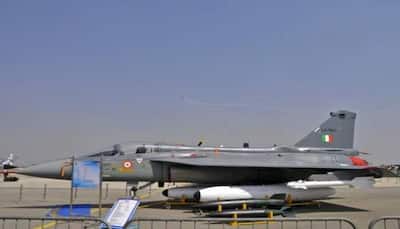
IAF’s First Tejas Mk1A Arrives This Month, But Key Tech Is Israeli
The Indian Air Force will receive its first Tejas Mk1A fighter by month-end, but the jet’s most critical combat systems—its radar and electronic warfare suite—are sourced from Israel, challenging its ‘Made in India’ narrative.
Key Takeaways
- First Delivery Imminent: IAF to get first of 83 Tejas Mk1A aircraft this month.
- Core Israeli Systems: The jet uses Israel’s EL/M-2052 AESA radar and ELL-8222WB jammer pod.
- Self-Reliance Gap: Highlights India’s continued dependency for cutting-edge defence electronics.
- Future Goals: DRDO aims to develop indigenous replacements for future variants like Tejas Mk2 and AMCA.
Advanced Israeli Radar & EW Suite Power the Mk1A
The Tejas Mk1A’s most significant upgrade is its new Active Electronically Scanned Array (AESA) radar. It replaces an older Israeli model with the more advanced EL/M-2052, made by ELTA Systems, a subsidiary of Israel Aerospace Industries. This radar offers superior detection, multi-target tracking, and enhanced electronic warfare capabilities.
Complementing the radar is the Israeli ELL-8222WB self-protection jammer pod, also from ELTA. This system is vital for disrupting enemy radar and missile locks, boosting the aircraft’s survival odds in modern combat. Together, these Israeli imports form the core of the Mk1A’s sensor and defensive avionics.
The Persistent Challenge of Defence ‘Atmanirbharta’
This reliance exposes a gap in India’s defence manufacturing. While the airframe, flight controls, and parts of the avionics are developed domestically by the (ADA) and built by (HAL), the most sophisticated sensor and EW technologies remain imported.
The Tejas program has made substantial progress in building indigenous capability over decades. However, the Mk1A shows that for top-tier technology in specific domains, India still depends on strategic partners like Israel.
Global Norms and India’s Long-Term Roadmap
Defence analysts note that such international collaboration is common, even in advanced global aircraft programs. However, the long-term objective for India’s and the private sector is clear: to develop and certify homegrown equivalents.
This is crucial to reduce dependency and control the supply chain for future upgrades and next-generation fighters, including the planned Tejas Mk2 and the ambitious Advanced Medium Combat Aircraft (AMCA).


