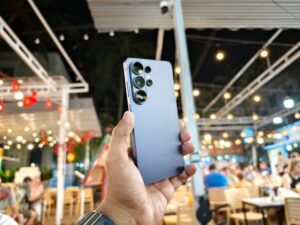
Samsung Galaxy S26 Ultra Review: There are some phones that have made a cult following for themselves. Of course, this exists for the iPhone. Asus ROG phones are popular for their performance. Pixels are popular for their refiend software. Another phone that enjoys this status quo is Samsung’s Galaxy S series, which a few years ago replaced the Note lineup. Now Samsung’s S series, especially the Ultra variant, represents the top-end and the latest and greatest you can buy from Samsung.

Naturally, people have a lot of expectations from Samsung’s top-end flagship. In fact, it is the de facto choice for most people on the Android side of things looking to buy a premium phone. In this case, it is quite premium at ₹1.4 lakh. Yes, Samsung is bundling offers, including the ability to get more storage for the same price. But at the end of the day, you are still going to be spending a lot of money to get the S26 Ultra.
On paper, you might think this is not enough to justify an upgrade. In many ways you would be right, but in many ways you would be wrong as well. The answer is much more nuanced. I have now spent more than 15 days with the Samsung Galaxy S26 Ultra as my main phone of choice. I have done all kinds of things with it. I made videos, used navigation, shot photos, took calls, and more. While the phone sits at the top of the Android flagship food chain and does justify its position, there are several areas where Samsung should not play safe.

Let’s address the elephant in the room first: The Privacy Display
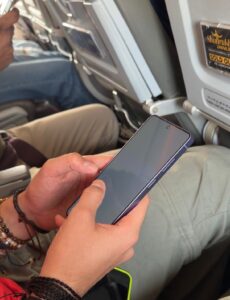
I did talk about the Privacy Display in a separate article, so you can read about it in full detail here, where I discussed a popular use case I found, which was using the phone during flights to edit videos. Yes, it is about privacy, and it helps me get more done without having to worry about people peeking into my phone.
In many ways, it is genuinely useful. It is one of those features you have to use in order to understand how useful it can be. For me, I think this is definitely one of the most intuitive features introduced by any phone maker in the last few years and it solves a big privacy problem for many people.

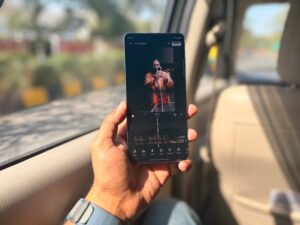
Yes, the display does get a bit dim when you turn it on, but it is barely noticeable. The important part is that the phone’s brightness and peak outdoor visibility remain quite legible. In fact, I would say this is one of the brightest screens I have used outdoors. I remember using the phone in the bright Jaipur sun at around 3 p.m., and the phone was perfectly legible with direct sunlight falling on it. See the image below for reference.

Yes, despite the Privacy Display, the screen remained quite legible, and I can confidently say that it does not hamper the display experience. But again, not everyone is going to take a microscope and inspect the display. If you are a normal user who wants functionality from their phone, wants a bright display with great colour accuracy and a flagship-grade panel, I do not think you can go wrong with the Samsung Galaxy S26 Ultra.
So the Privacy Display is genuinely useful. It can actually block notifications from specific apps, and you can also tweak it accordingly. For instance, you can make sure it becomes active only while using apps such as WhatsApp. You may not want to use the privacy display while watching YouTube, and that is doable. This granular control is what actually separates the feature from simply toggling it on. This is exactly what separates it from using a traditional privacy screen guard.
Samsung displays are generally considered top-end, so is this one?
Well, the Samsung Galaxy S26 Ultra’s display did have a bit of a controversy in the past. The phone features a 6.9-inch QHD+ AMOLED panel. It is a top-end panel, supports 120Hz, and is what you would expect from a flagship Samsung phone.
As mentioned earlier, it was perfectly legible even in bright outdoor sunlight. The good thing about Samsung phones is that the display stays bright consistently without dimming. Yes, the iPhone can appear brighter in certain outdoor conditions, but the S26 Ultra stayed bright for as long as I used it under the sun.
This is definitely a real-world use case because many people use their phones outdoors and often complain that the brightness is not great despite high peak brightness claims. So yes, I have no complaints here.

When it comes to colours, Samsung has largely become a master at tuning its displays to strike a balance between being punchy and realistic. Here, the panel simply looks gorgeous. It is sharp, and I do not see any concerns where people were criticising it for not being as sharp as the S25 Ultra because of the new privacy layer or display arrangement.
Do note that by default the panel is set to Full HD+ resolution. It would be in your best interest to switch it to QHD+ as soon as you receive the phone. I tested the phone with both resolutions and the battery consumption was not significantly different. If you are paying ₹1.4 lakh, you might as well get the most out of it.
So yes, when it comes to the display, I have no complaints whatsoever. It is a really good panel and the cherry on top is Samsung’s anti-reflective technology, which disperses light and is far superior to most other Android phones out there. Yes, the latest iPhones also have this coating, but they are no match for the Samsung S26 Ultra in this regard.
Samsung Galaxy S26 Ultra doesn’t skip a beat and OneUI 8.5 is great
This is a Samsung flagship and it is powered by the Snapdragon 8 Elite Gen 5 for Galaxy. Let me make one thing clear. This phone absolutely flies in everyday operations. There are no skipped frames, no app crashes, and apps load almost instantly while remaining in memory for long.
I also tried my fair share of performance intensive tasks, such as editing in the Edits app for Instagram. Here I would say the experience was pretty smooth. Consistently, the phone rendered videos faster than the iPhone 17 Pro that I am also using. Yes, it is that fast. I exported the same video on both phones and the Samsung always finished faster.
This also shows in synthetic benchmarks. In our Geekbench testing, the phone scored 10963 in the multi core test and 3633 in the single core test (more than what you get with the A19 Pro on the iPhone 17 Pro models), which goes on to show how powerful this device is.
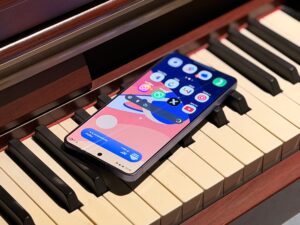
As for the software, the phone runs One UI 8.5 based on Android 16. The experience with One UI 8.5 is top-notch. It feels polished, the animations are slick, it looks modern unlike some recent Android skins, and there are several nifty AI features built in.
Now Brief has been a mainstay and I use it quite a lot, and it has become really handy to track my day. However, the Now Nudge AI feature barely came into play for me and I have not yet found a compelling use case for it.
Apart from this, there are several AI features built in, including Call Assist, which offers real-time translation during voice calls. I think this is a really handy feature. There is also Writing Assist, Interpreter, Browsing Assist, Creative Studio, and of course the full set of AI functionality built into things like the Gallery (wherein you can simply enter a prompt and accordingly make edits).
Powerful camera system but Samsung needs to take more risks
Samsung, like Apple, has been making reliable camera systems for a while now, especially on flagships such as the S series. The S26 Ultra is no different. There are meaningful upgrades over the S25 Ultra, including a larger aperture for the primary camera. However, the sensors largely remain unchanged.
You get a quad camera setup on the back with a 200MP primary. There is a 10MP 3x telephoto, a 50MP 5x telephoto, and a 50MP ultra-wide lens. Right at the beginning, let me tell you that the weakest link of this camera system is the 3x telephoto. It is not as sharp and not at the level of the other sensors on this phone. It sits somewhere between the primary and the 5x shooter, but this could be mitigated if Samsung decides to consolidate the telephoto setup into one larger sensor, similar to what Xiaomi has done with the Xiaomi 17 Ultra, and choose a focal length between 3-4.3x.
That said, the 5x telephoto lens consistently produced sharp results. I do not see a problem there. It offers good background separation and portrait shots from this lens are generally very sharp. Images have good depth and excellent detail with strong dynamic range.


Another thing I liked about this camera system is the colour consistency across lenses. You can expect a similar colour profile from the ultra-wide, the 5x telephoto, and the primary sensor. The 3x telephoto is slightly different, but overall your images and videos look consistent when switching lenses.
Now let’s talk about the primary sensor. I have quite a few inputs here. The images look very detailed. I tested it alongside the Xiaomi 17 Ultra and sometimes the Samsung produced even more detailed images. This was also reflected in our Instagram test, where many users preferred the S26 Ultra over the Xiaomi 17 Ultra in most situations. The images are typical Samsung. They are bright, punchy, and social media-ready, with excellent dynamic range and sharpness. You really cannot go wrong with the primary camera.


One underrated upgrade this year is on the video side. The phone now supports Log video recording along with the ability to apply LUTs. This allows you to change the look of the footage even after shooting, making the workflow much more flexible.
As for the quality of the Log video itself, it is right up there with the iPhone. I tried grading the footage and it came out really well. Combined with fast autofocus and Samsung’s signature look, this is a welcome addition to the S26 Ultra.
Portrait video is also dependable. This is one of the few phones that allows you to capture portrait video from both the front and rear cameras. The Xiaomi 17 Ultra and Pixel 10 do not support this. In this regard, Samsung is quite close to the iPhone.
The edge cut-outs are decent and the depth of field fall-off looks natural. In portrait photos as well, the edge detection is among the best in the Android world and the bokeh appears natural.
One thing I would want Samsung to improve is colour tuning. Sometimes the images appear slightly oversharpened, which makes them look more like typical phone photos rather than images from a dedicated camera, something phones like the Xiaomi 17 Ultra handle better.
So while this is definitely an A+ camera system, there is still room for improvement, especially considering the Ultra branding and the price tag.
The most comfortable Samsung Galaxy Ultra ever
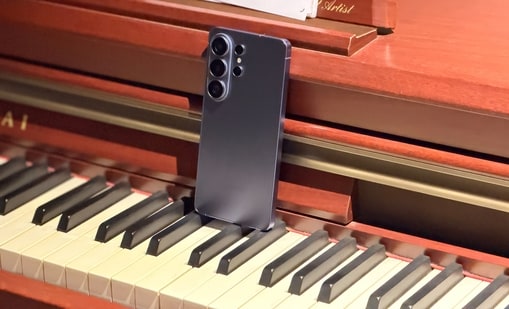
Design has been one area where Samsung has made incremental upgrades over the years. The S26 Ultra marks a departure from titanium, which was first introduced with the S24 Ultra and continued with the S25 Ultra. The S26 Ultra now switches to aluminium, similar to what Apple did with the iPhone 17 series. Truth be told, I do not mind the change. This is one of the most comfortable Ultra phones Samsung has made yet.
The weight distribution is excellent and the phone does not feel heavy in the hand. In fact, it feels surprisingly comfortable despite the large 6.9-inch display. The corners are more rounded, which adds to the comfort and prevents the phone from digging into your palms.

However, because of the rounded design, the S Pen can technically be inserted both ways, but if inserted the wrong way it will stick out slightly.
As for durability, the phone feels extremely solid. I used it without a case for the last 15 days and there are no scratches or dents at all, not even a micro-scratch on the display. This suggests that you may not even need a screen protector, especially considering the privacy display.
That said, not everything is perfect. The camera module is quite large and if you place the phone flat on a table, it does rock slightly. But this is easily fixable using a good quality case.
Battery life, cellular reception, and more – Dependable across the board
The Galaxy S26 Ultra has a 5000 mAh battery, which Samsung has been using for quite some time now. On paper, an Ultra phone with a 5000 mAh battery might sound odd, especially when devices like the Xiaomi 17 Ultra come with a 6000 mAh battery and phones such as the Realme GT8 Pro or OnePlus 15 go upwards of 7000 mAh.
So on paper you might expect poor battery life, but in reality it is not that simple.
In my experience, the S26 Ultra delivered stellar battery life. Standby time is excellent and you can easily get around 8 to 9 hours of screen-on time over a full working day. It can even last a full day for light users, although I would not stretch it much beyond that.
So while the battery may seem concerning on paper, in practice the optimisation is quite good. It is not a silicon-carbon battery. It is a standard lithium-ion battery, yet it still delivers excellent endurance. That said, it is not quite on the level of phones like the OnePlus 15, which can deliver an extra hour or two of screen-on time.
Samsung Galaxy S26 Ultra should be the default Android flagship (for most)
Extremes are easy, but sometimes striking a balance is the key. I think Samsung excels here. The brand has time and again created a premium offering for Android lovers, and this S26 Ultra is not an exception. It nails the basics, delivers a solid camera experience (with room for improvement though), is comfortable in-hand, and even delivers industry-first features like the Privacy Display. That said, the price of entry is ₹1,39,999 now, and this is a big price hike over the last generation. So, if you don’t have budget constraints and want the absolute bleeding edge that Samsung has to offer, the S26 Ultra is a no-brainer. It should be the default Android flagship for most.