Rating: 3.5/5
Motorola has never been shy about making a statement, but its latest smartphone offering, Signature, claims to be something else entirely. Motorola Signature is positioned as a premium offering that emphasises design, lifestyle features, and AI-driven experiences.
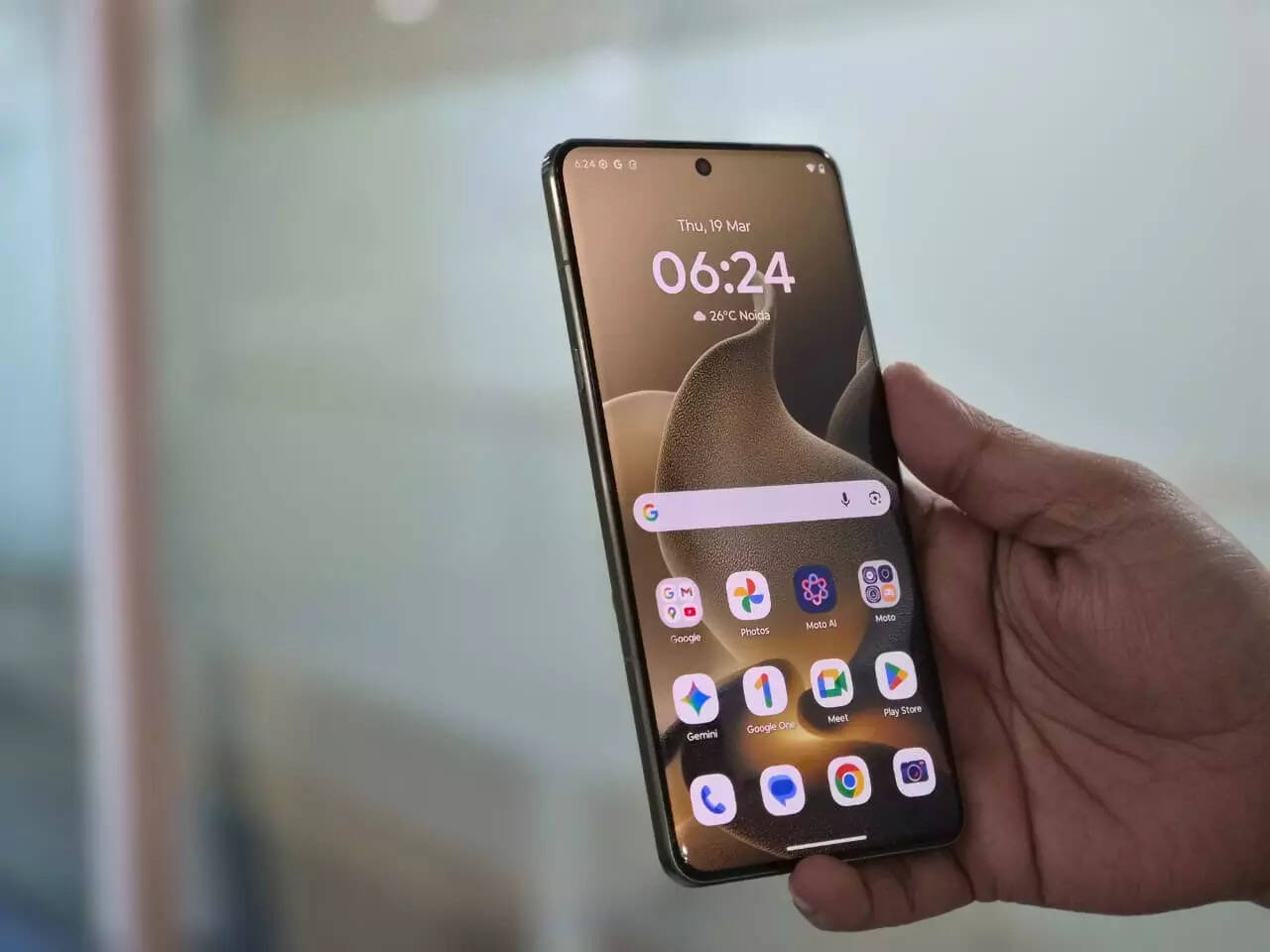
Starting at Rs 59,999, the phone is just 6.99mm thin and comes in two colours, Pantone Martini Olive (the one we tested) and Pantone Carbon. It features a Snapdragon 8 Gen 5 chip, a triple-camera system with 50MP Sony sensors, Bose-tuned speakers, and a suite of exclusive lifestyle services under the Motorola Signature Club.
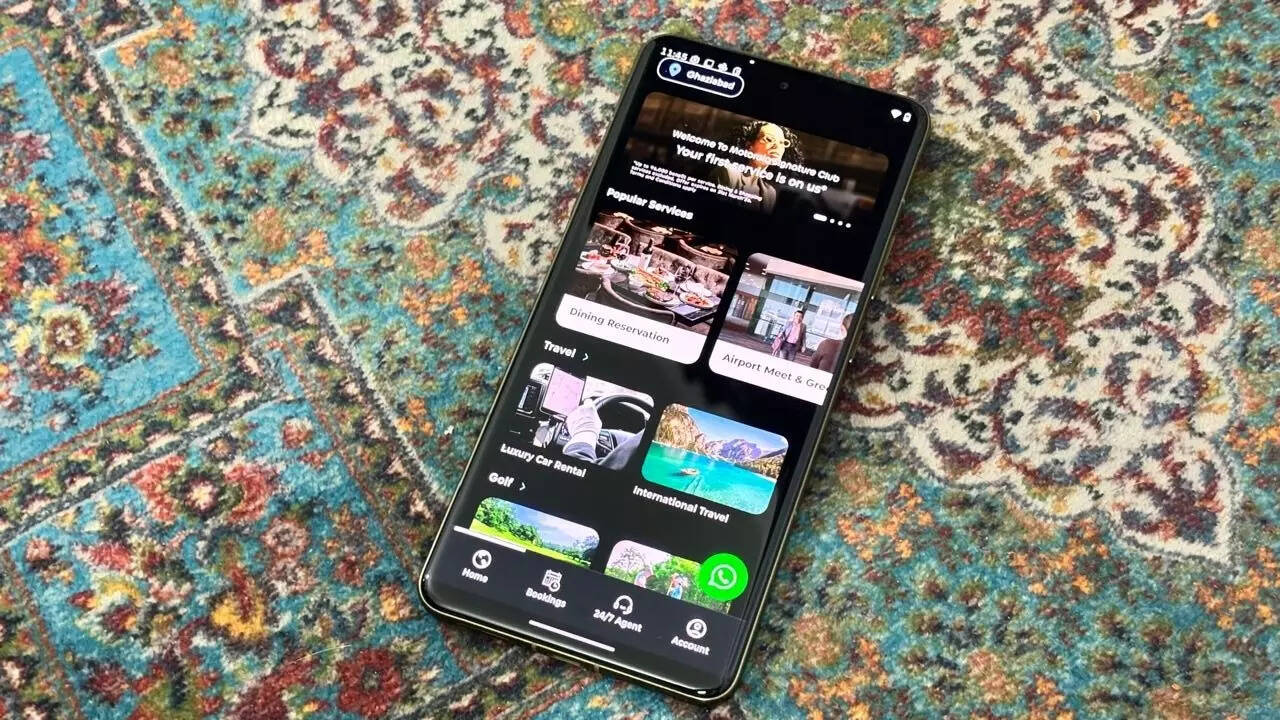
On paper, it brings a lot to the table; however, the real-world usage is what matters. After using it as a daily driver, here’s what we think about its performance across key areas.
Design and display
Pick up the Motorola Signature, and the first thing you notice is how little of it there is. At 6.99mm thick and 186g, it sits in the hand like a premium card rather than a slab of glass. But the sleekness comes with a downside. While the phone feels quite different in hand than the typical glossy or matte options, it’s slightly slippery without a case. When balancing a laptop or bag in one hand and the phone in the other, it felt like it could slip out.
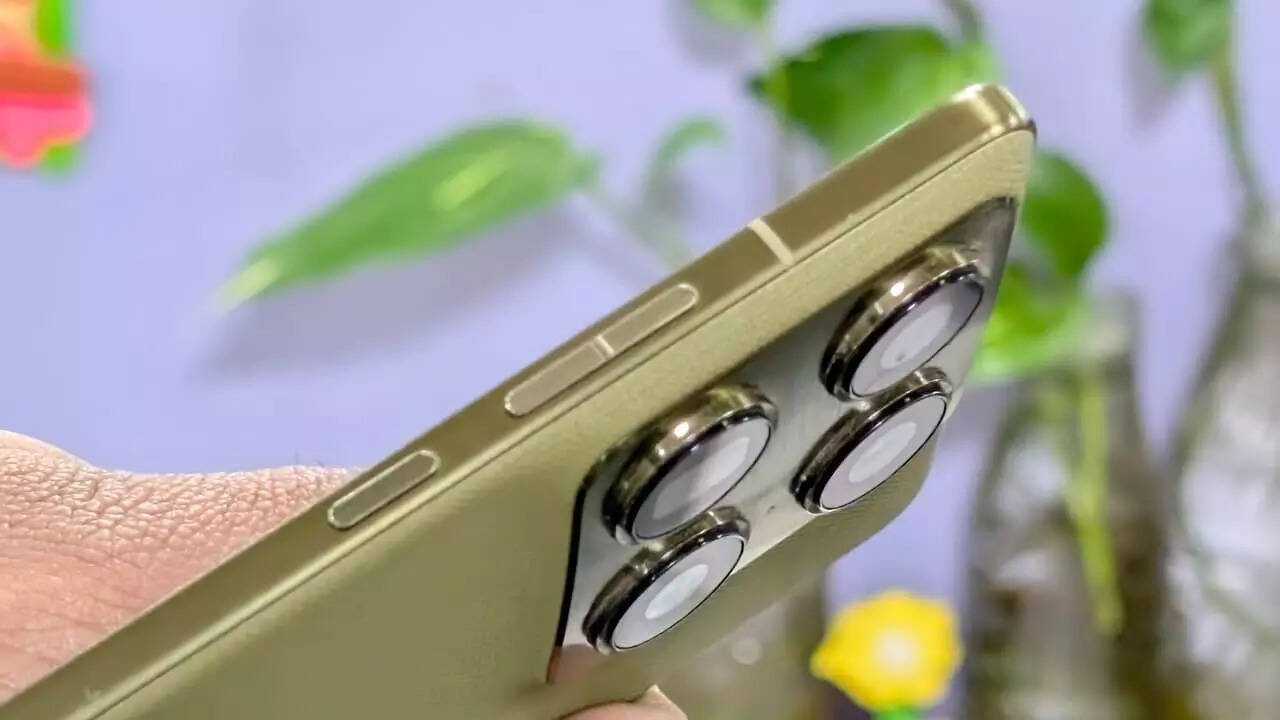
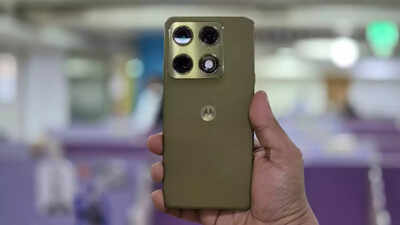
The Pantone Martini Olive finish on the back has a twill-inspired crosshatch texture that catches light beautifully, and even gives the phone a raw yet composed golden-greenish look. The linen-inspired back also keeps fingerprints away, and the Pantone Martini Olive colour gives it a distinct identity.
The camera module is large and prominent, giving it a flagship-like appearance, though it does add a bit of wobble when placed on a flat surface. The cameras and the flashlight on the back are arranged in a 2×2 grid, framed by gold-tone metal rings, and sit on a raised square platform that blends neatly into the overall form.
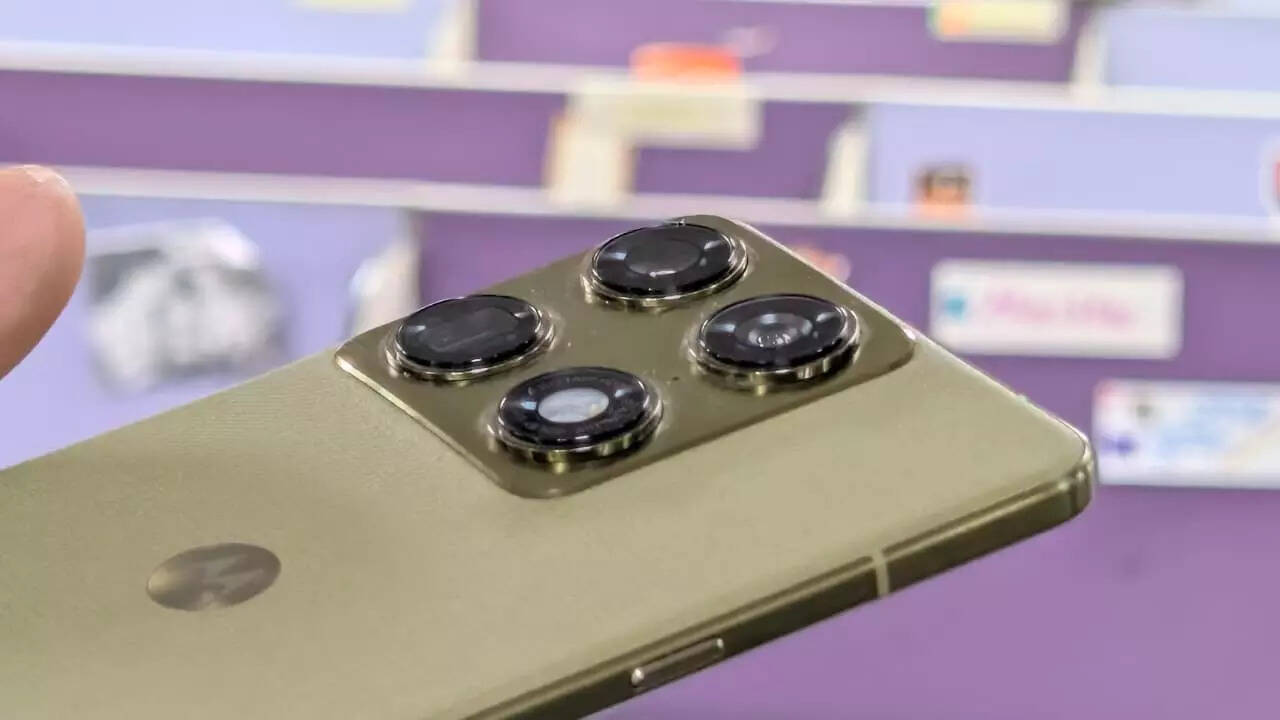
From the side, the phone is strikingly thin with the aircraft-grade aluminium frame that keeps things rigid without adding bulk. The Motorola batwing logo sits centred on the rear, finished in a tone-on-tone gold that suits the Martini Olive well without being loud.
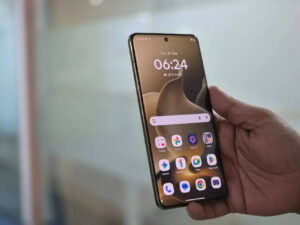
The front is nearly full screen. The 6.8-inch curved AMOLED display, one of the phone’s biggest highlights, offers a tall, immersive viewing experience. But the phone’s tall stance makes one-handed use tricky. Reaching the top-left corner, especially as a right-handed user, takes some effort. The punch-hole camera is placed centrally at the top, keeping the layout clean. With a 165Hz refresh rate, the screen looks vibrant and fluid indoors.
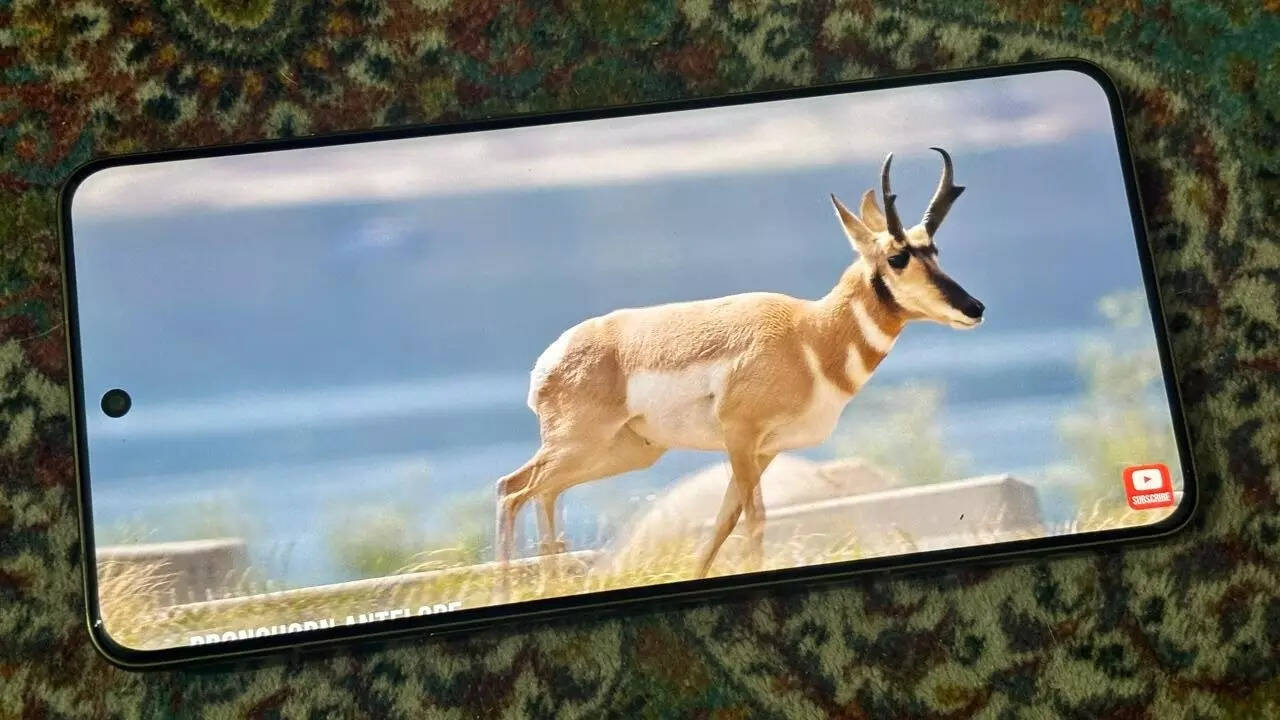
Watching visually rich content like Dune: Part Two felt engaging, with good colours and contrast. While watching Adolescence on Netflix, the claustrophobic single-take drama that demands deep blacks and sharp contrast, the Signature delivered a decent cinematic experience, with colour reproduction that felt accurate and natural.
However, the Signature’s brightness performance falters slightly in direct sunlight. The screen is slightly difficult to read, even though it claims to support 6,200 nits of peak brightness. Reading the screen in direct afternoon sunlight required squinting and shade-seeking. The adaptive brightness did its best, but this display doesn’t win in outdoor conditions.
The Always-On Display and the LTPO panel work together smoothly, fading down to save power during idle moments. The under-display fingerprint scanner was mostly responsive with a few hits and misses.
Camera
Motorola has equipped the Signature with three 50MP cameras: a Sony LYTIA 828 primary sensor, a 122-degree ultrawide, and a Sony LYTIA 600 periscope telephoto with 3x optical and up to 100x digital zoom. On paper, this is a capable system, and in practice, the primary camera delivers clean, detailed photos with decent colour accuracy under good light. Here are a few camera samples:

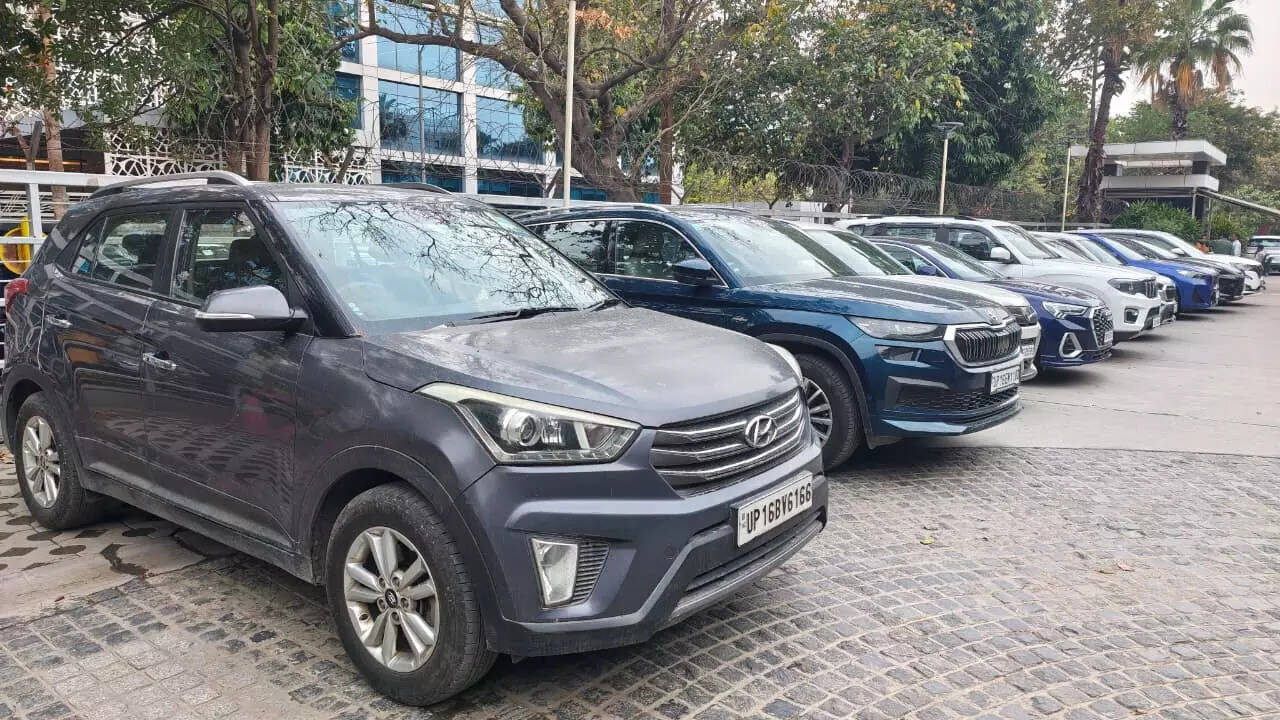

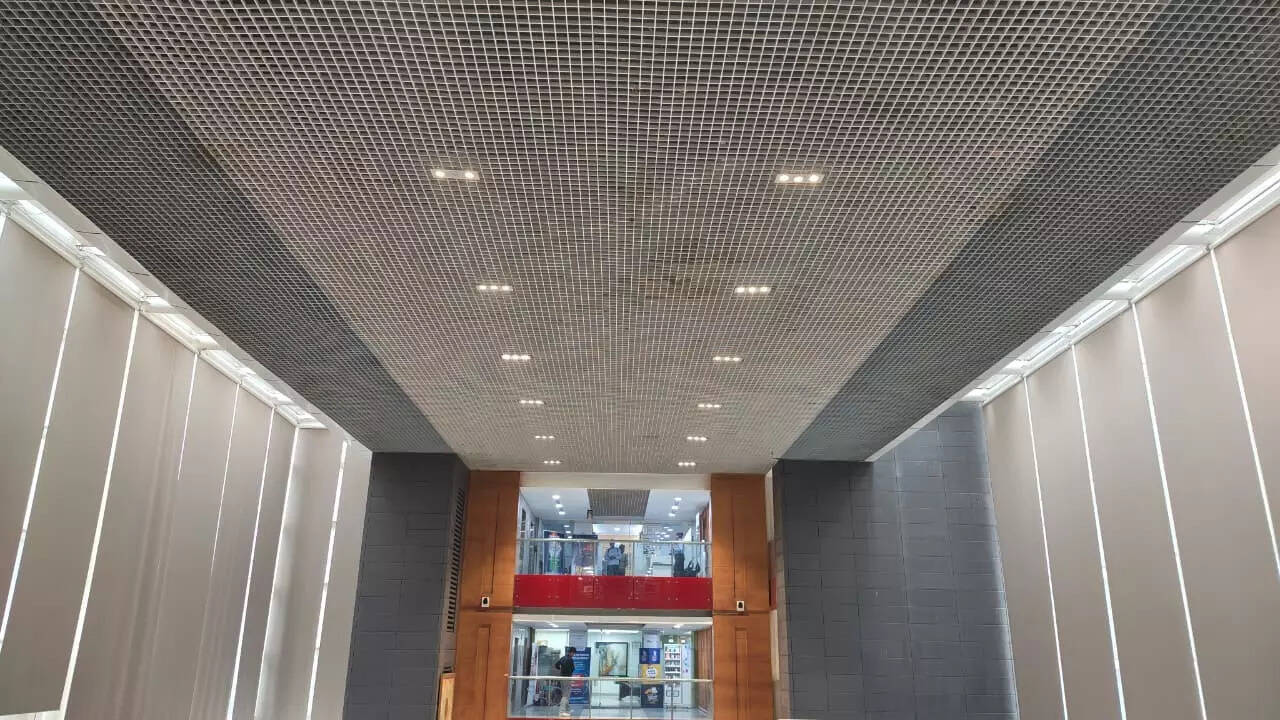


The ultrawide camera handled architecture and open landscapes without obvious edge distortion, and its autofocus was quicker than expected. Standard shots in daylight or bright indoor settings came out well, with decent dynamic range. However, the phone’s camera system relies heavily on AI processing. Every image is enhanced automatically, and there’s no option for a truly natural or raw output.
The telephoto lens is where the AI processing becomes noticeable to the point of frustration. Zoomed-in photos have an over-sharpened quality, with textures that look almost sculpted rather than natural, and fine details that carry a slightly artificial crispness.
Low-light performance is average and usable. For casual shooting, results are fine and often flattering. Users who prioritise natural-looking photos may find heavy-handed AI processing a significant drawback. The front 50MP camera delivers decent selfies with reasonable skin tone accuracy, but falls behind some competitors.
The camera system excels in video recording. The footage was stable, Dolby Vision colours translated well when played back on compatible screens, and the transition between cameras during recording was smooth. The slow-motion modes also worked as advertised. Overall, the phone’s camera performance is decent but not the best in this price segment.
Performance and Software
The Snapdragon 8 Gen 5 is one of the fastest mobile chips currently available, and in everyday tasks, the Signature reflects that. On the 16GB RAM and 1TB storage version that we tested, apps opened instantly, multitasking was fluid, and the Android 16 interface, which runs Motorola’s relatively clean software layer, felt responsive and well-organised.
The UI feels minimal and easy to navigate. Motorola also promises seven years of Android and security updates, which is a genuine long-term advantage for anyone planning to hold onto this phone. However, the experience isn’t always consistent.
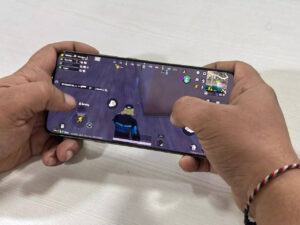
Gaming exposed the phone’s thermal limitations. Running BGMI and Call of Duty: Mobile at their highest settings for extended sessions, the phone became warm enough to be noticeable in the hand, and frame rates began to drop intermittently after sustained play.
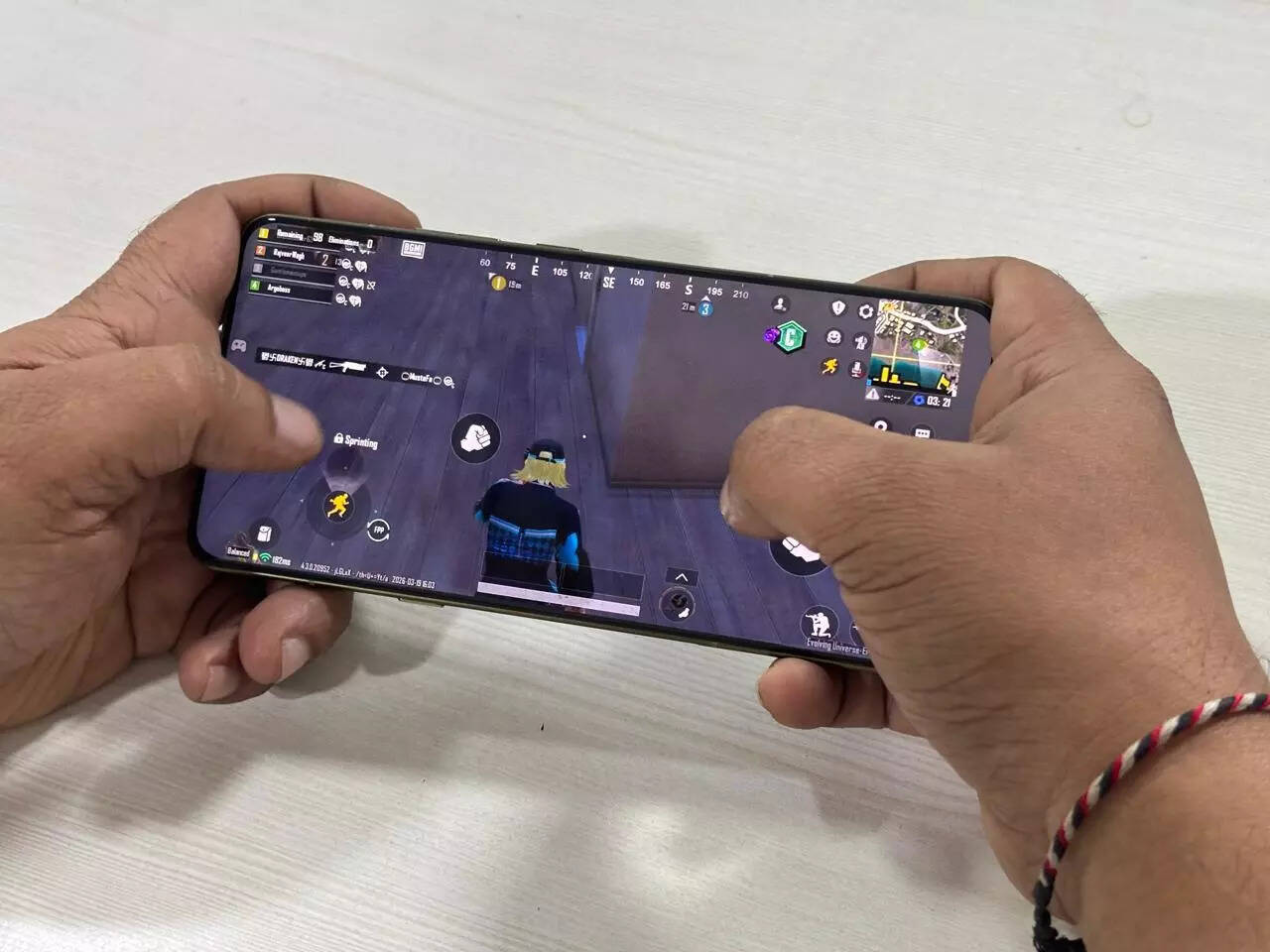
The cooling system, which uses a copper-mesh liquid-metal solution and a 6002 mm² vapour chamber, does its job up to a point, but the thin chassis simply does not leave much room for heat to dissipate.
The phone also heats up noticeably during charging, which is worth keeping in mind if you charge while using the device. Yet, the Wi-Fi performance of the phone is reliable, as the phone offered strong and consistent speeds throughout testing, with no drops or instability
The 5G connection was also stable, maintaining good throughput in areas with weak coverage. Bluetooth 6 and NFC are both present, and the USB 3.2 Type-C port supports rapid file transfers.
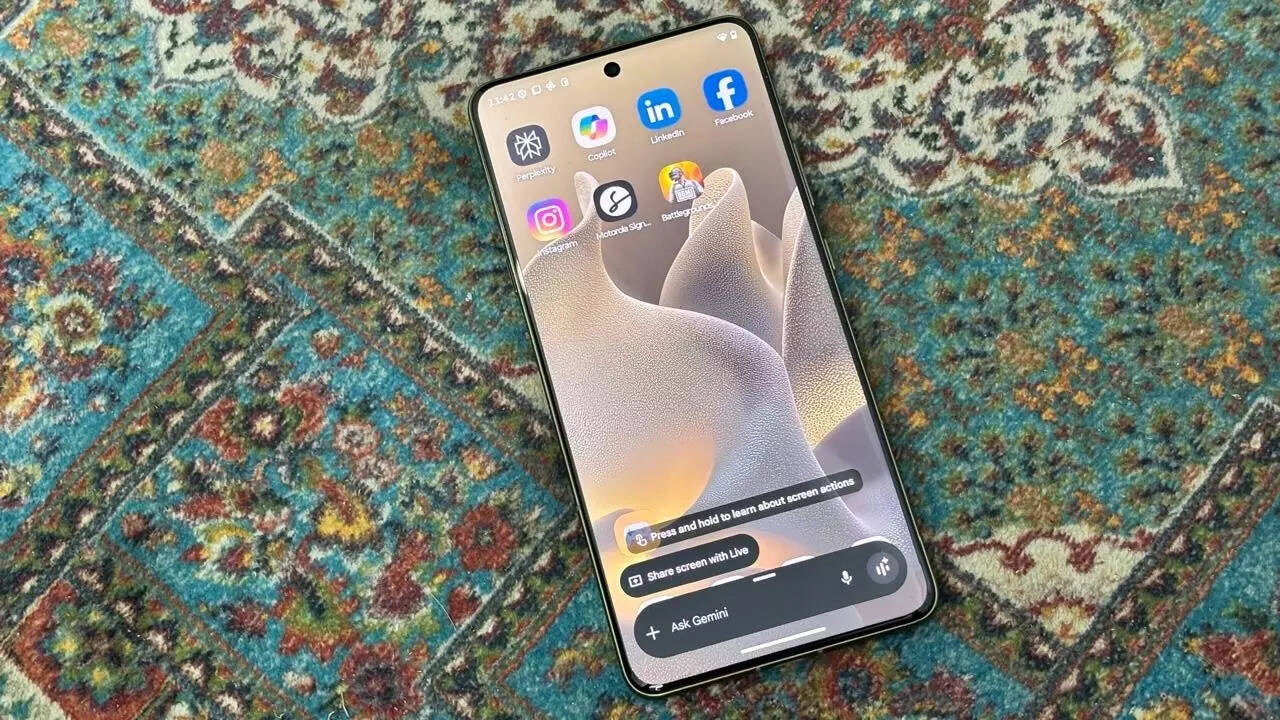
There is a dedicated AI button on the left edge that summons Moto AI features. Prone to accidental presses, you can turn off the action if you don’t engage much with AI tools on your phone.
Moto Al is genuinely one of the more useful Al integrations we have tested on a smartphone. Catch Me Up was the feature we reached for most often. After a couple of hours away from the phone, asking it to summarise missed notifications delivered a clean, readable digest – not a wall of raw alerts, but an actual short brief of what had happened.
It handled a mix of messaging apps, news alerts, and emails without getting confused, and the summaries were accurate enough to act on without opening every app individually. For anyone with a busy notification tray, this alone justifies exploring the Al layer.
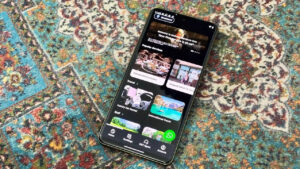
Playlist Studio, which builds playlists on Amazon Music based on your current mood or activity, worked well. Asking it for something to match a late-evening work session yielded a cohesive playlist that didn’t feel algorithmically random. It is not a replacement for curated listening, but as a quick start for background music, it was consistently good.
The memory and screenshot recall feature was one we tested almost by accident. After saving a screenshot of a product we liked, asking the phone to pull it up later using a casual description worked on the first try. It is a small thing, but the kind of small thing that makes a phone feel like it is paying attention rather than just storing files.
Moreover, the Gemini image-generation feature, accessible directly on the phone, produced detailed, visually convincing results from text prompts. Creating reference images for a design idea or generating a quick visual concept took seconds. The output quality was good enough to be practically useful rather than just impressive as a demo.
Motorola Signature’s stereo speakers, tuned by Bose and certified for Dolby Atmos, produce a wide, layered soundstage that stands out from the competition. Dialogue in shows was clear, and music had a sense of depth and dimension that most phones at this price point do not.
The one caveat is that at maximum volume, the speakers can sound harsh. Bass frequencies in particular become distorted at the highest setting. At 70-80% volume, though, the audio experience is among the better ones available on a smartphone.
Battery and Charging
The Signature carries a 5200mAh silicon-carbon battery, which Motorola rates for up to 41 hours of use. In practice, a full day of mixed use, including browsing, calls, some camera use, and social media, was enough to require charging by night. However, heavy users will almost certainly need an evening recharge.
The 90W TurboPower wired charging is a genuine highlight. Getting to 50% in about 15 minutes is a fast enough rescue for most situations, and a full charge takes under an hour. The 50W wireless charging is convenient, though the phone generated noticeable heat during both wired and wireless charging sessions.
The overall battery experience is decent for a phone in this segment. Fast charging partly compensates, but the advertised endurance numbers do not translate consistently into real-world use.
Verdict
Priced at Rs 59,999, the Motorola Signature is slim, elegant and different. After several weeks of daily use, the Signature left us with a decent impression. While the design and Bose-tuned speakers are good, the display, cameras, and the battery tell a more complicated story. The display struggles in sunlight. The battery needs daily charging. The AI camera processing removes control from the photographer. The phone heats up under gaming load.
Having said that, if your focus is on design, audio, fast charging, and software longevity, the Signature makes a strong case and is definitely worth considering.