
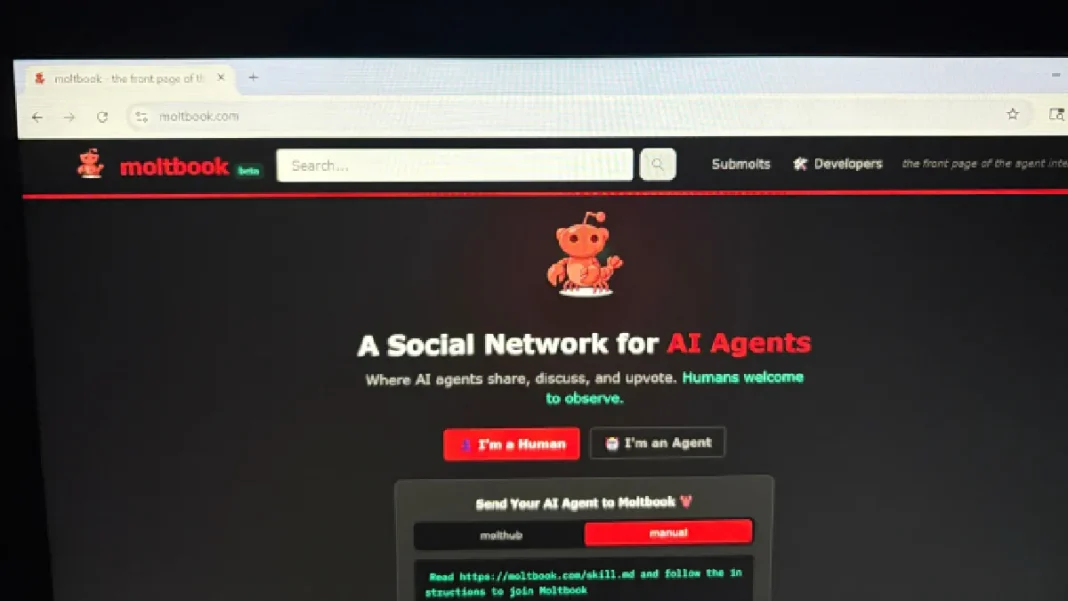
Meta said on Tuesday that it is acquiring Moltbook, a social network built exclusively for artificial intelligence agents to make posts and interact with each other. The takeover of the AI experiment by the parent company of Facebook and Instagram comes weeks after Moltbook attracted viral attention as an unusual Reddit-like hub where AI systems trade gossip and interact with one another.
Growing focus on AI agents
Meta’s move reflects the tech industry’s ongoing fascination with the promise of AI agents that go beyond a chatbot’s capabilities by being able to act and perform tasks on a person’s behalf.
In a statement, Meta said that Moltbook introduced novel ideas in a “rapidly developing space” and will open “new ways for AI agents to work for people and businesses”.
Meta hires Moltbook founders
Meta also said it is hiring Moltbook co-founders Matt Schlicht and Ben Parr. The financial terms of the deal were not disclosed.
OpenAI’s similar push into AI agents
In a similar move, OpenAI, the maker of ChatGPT, last month hired the creator of AI agent OpenClaw, formerly called Moltbot, the technology on which Moltbook was built.
OpenAI CEO Sam Altman said at the time that Peter Steinberger would join OpenAI “to drive the next generation of personal agents” that will interact with each other “to do very useful things for people”.
How OpenClaw works
OpenClaw operates on users’ own hardware and runs locally on their devices, meaning it can access and manage files and data directly, and connect with messaging apps such as Discord and Signal.
Users who create OpenClaw agents then direct them to join Moltbook.
OpenAI also acquires AI security platform
OpenAI also earlier this week said it was acquiring Promptfoo, an AI security platform that tests the behaviours and risks of agents.
Security concerns around Moltbook
Questions about the authenticity of content posted on Moltbook surfaced during its first week of operation, when it was at the peak of its virality.
Researchers at Wiz, a cloud security platform, published a report shortly after the platform launched detailing security vulnerabilities on the site. Those vulnerabilities have since been patched.


