Key Takeaways
- A US lawsuit alleges Meta can read private WhatsApp chats despite encryption.
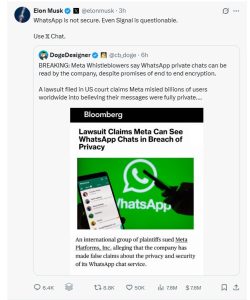
- Elon Musk publicly stated WhatsApp exports user data nightly and is not secure.
- Meta and WhatsApp have firmly denied reading messages or using them for AI training.
- The class-action suit seeks to stop the alleged practices and secure damages for users.
Meta, the parent company of WhatsApp, is facing a major lawsuit in the United States. The legal action claims the tech giant can intercept, read, and use the content of users’ private WhatsApp messages, even though the app promises end-to-end encryption.
What the Lawsuit Alleges
Filed in a California federal court, the lawsuit argues that WhatsApp’s privacy policy grants Meta overly broad permissions. It points to a clause stating user information can be used for “other purposes… with your consent.” The plaintiffs claim this allows Meta to collect message content, metadata, and user data to train its artificial intelligence models.
Elon Musk’s Reaction
Elon Musk reacted swiftly on his social media platform, X. He posted, “WhatsApp exports your user data every night. Some people still think it is secure.” This is not the first time Musk has criticised WhatsApp, having previously advocated for the use of the Signal messaging app instead.
Meta’s Firm Denial
Meta and WhatsApp have categorically denied the allegations. A WhatsApp spokesperson stated, “We build WhatsApp in a way that limits the data we collect while providing the tools people need to communicate. We do not read people’s private messages, and we are not training our AI models on them.” The company reiterated that its end-to-end encryption ensures only the sender and recipient can read messages.
The Legal Demands and Broader Impact
The lawsuit seeks class-action status. It aims to legally stop Meta from the alleged data collection practices and demands monetary damages for affected users. This case underscores the persistent global concerns about data privacy and how major technology companies utilize personal information for advancing AI.