
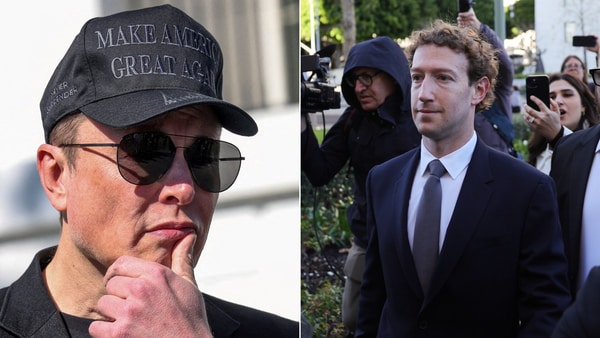
Elon Musk reignited his rivalry with Meta on Thursday by saying he “can’t trust WhatsApp,” the popular personal messaging app. The billionaire was questioning WhatsApp in light of a new class action lawsuit filed against the company, which claims that the Meta-owned app intercepted private messages of users despite its claims of bulletproof end-to-end encryption and even shared them with third parties like Accenture.
Responding to a post on X about the lawsuit, Musk wrote, “Can’t trust WhatsApp”. In another post, the billionaire urged users to switch to X Chat for messaging and voice/video calls, saying it “comes with this great benefit of actual privacy.”
WhatsApp responds to Musk’s post:
WhatsApp responded strongly to the allegations in a reply to Musk’s post, writing, “The claims in this lawsuit are categorically false and absurd. WhatsApp has been end-to-end encrypted using the Signal protocol for a decade, so your messages cannot be read by anyone other than the sender and recipient.”
“WhatsApp’s end-to-end encryption is used when you chat with another person using WhatsApp Messenger,” reads an FAQ on the official WhatsApp website.
“No one outside of the chat, not even WhatsApp, can read, listen to, or share them. This is because with end-to-end encryption, your messages are secured with a lock, and only the recipient and you have the special key needed to unlock and read them,” it adds.
Meta under investigation over end-to-end encryption claims:
A Bloomberg report earlier this year claimed that US law agencies were investigating allegations levelled by a former Meta contractor that the company could access WhatsApp messages despite claims of end-to-end encryption.
The investigation was said to be led by special agents with the US Department of Commerce. The company had also been the subject of a similar whistleblower complaint filed with the US Securities and Exchange Commission in 2024.
Reportedly, two people who did content moderation work for WhatsApp last year told an investigator with Commerce’s Bureau of Industry and Security that some of the staff at Meta had access to WhatsApp messages. They said some employees at consulting firm Accenture also had broad access to the contents of people’s private messages.
“Both sources confirmed that they had employees within their physical work locations who had unfettered access to WhatsApp,” wrote one of the agents.
The report says Larkin Fordyce was a contractor with Accenture who did content moderation work for Meta and claimed that eventually, contractors were granted their own access to the platform. However, even before that, he argued that they could request access to communication and “the Facebook team was able to ‘pull whatever they wanted and then send it.’”


