
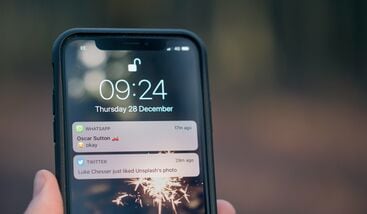
We all know the familiar feeling when you are focused on something, but then a notification from your phone just breaks that flow, and things don’t feel the same again, at least for a while. Well, now a new study has revealed that even a single social media notification can hijack your brain’s cognitive processing for around 7 seconds.
The news comes to light via a new study, which will be published in the June edition of the journal Computers in Human Behavior. The study goes into how notifications on our phones can disrupt our attention and hijack limited cognitive resources.
They also found that the magnitude of notification-induced disruption was higher when users believed the notifications were personally relevant to their own goals or carried emotional weight.
What does the research say?
The researchers observed 180 university students completing a cognitive test called the Stroop task, a cognitive test designed to measure your ability to process conflicting information and maintain attention.
The test was given to the participants while notifications appeared on their phones at unpredictable intervals. After analysing both behavioural responses and physiological markers during the test, the researchers found that the disruption caused by notifications led to a ‘transient slowing of information’.
“Our results show that modern digital cues can hijack attentional resources, even in the absence of explicit personal relevance,” the study notes.
Screen-on time may not be the correct metric for tracking disruption:
It’s become fashionable to talk about high screen-on time, i.e. the amount of time you spend on your phone during the day. However, the new research reveals that the magnitude of cognitive disruption is actually predicted better by the frequency of smartphone interaction, specifically daily notification volume and how often users check their phone, rather than the total amount of time a user spends looking at their device.
In other words, receiving constant notifications and constantly unlocking your phone fragments your attention far more than sitting down for a long, uninterrupted session of focused work.
Hippolyte Fournier, a postdoctoral fellow at the University of Lausanne in Switzerland and the study’s first author, told CNET, “We observed that both the volume of notifications and how often individuals check their smartphones were linked to greater disruption.”
“This pattern suggests that the fragmented nature of smartphone use, rather than simply total usage duration, may be a key factor in understanding how digital technologies influence attentional processes,” Fournier added.


