

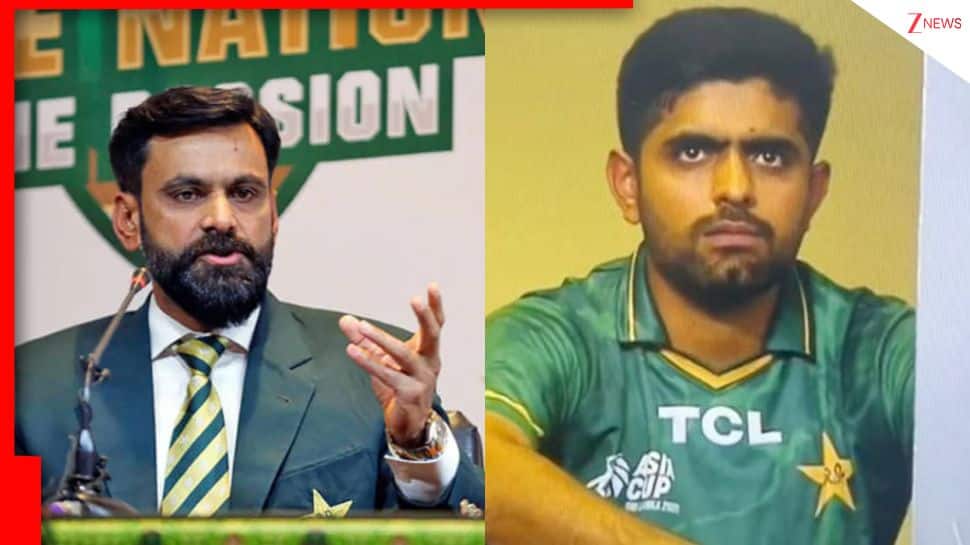
Pakistan’s T20 World Cup 2026 campaign has taken a dramatic turn off the field, with former captain Mohammad Hafeez publicly questioning Babar Azam’s role after head coach Mike Hesson explained the star batter’s demotion due to strike-rate concerns. Hafeez’s blunt reaction — “Toh wo khel kyun raha hai?” — has intensified debate over Babar’s place in Pakistan’s T20 setup at a crucial stage of the tournament.
Why Babar Azam was demoted in the batting order
Babar’s role became a talking point after Pakistan reshuffled their lineup during the group stage.
- Scores: 15 vs Netherlands, 46 vs USA, 5 vs India
- Did not bat vs Namibia after being pushed down the order
- Khawaja Nafay moved to No. 4, Shadab Khan at No. 5
Pakistan’s think tank opted for flexibility, prioritizing aggressive powerplay scoring and late-overs acceleration.
Mike Hesson explains the decision
Pakistan head coach Mike Hesson defended the tactical move, pointing to Babar’s powerplay strike rate. “I think he’s well aware that his strike rate in the powerplay in (T20) World Cups is less than 100. So clearly, that’s not a role that we think here we need. We think he’s a fine player through the middle, if required… once he gets himself set, he can increase his strike rate at that point.” Hesson added that Babar was brought back post-Asia Cup to provide stability through the middle overs.
Hafeez fires back: “Toh wo khel kyun raha hai?”
Former Pakistan captain Mohammad Hafeez, speaking on Game On Hai, strongly criticised the coach’s reasoning. “He (Hesson) made a statement on Babar Azam that I didn’t understand.”
“He said neither he’s a powerplay batter because his strike rate is 100… nor could he bat after the 10th over. Toh wo khel kyun raha hai?” Hafeez added he listened to the statement repeatedly but still could not understand Babar’s defined role in the XI.
Pressure builds as former players weigh in
The criticism comes amid wider scrutiny from former players.
Former pacer Shoaib Akhtar said on the same show: “First of all, Babar should have decided that this format is not my format. Secondly, if you wanted Babar to play, you should have ensured he played in the first six overs. It’s very simple.” Akhtar’s remarks reflect growing debate over whether Babar’s classical batting style fits modern T20 demands.
Why Babar’s strike rate debate matters now
Babar remains Pakistan’s most technically accomplished batter, but T20 cricket increasingly prioritizes tempo.
Key concerns raised:
- Powerplay strike rate under 100 in T20 World Cups
- Limited boundary acceleration early in innings
- Role ambiguity between anchor and aggressor
- Team balance vs individual reputation
Yet, his 46 vs USA showed he can accelerate after settling, reinforcing management’s middle-overs anchor strategy.
Tournament context: Pakistan’s campaign at a crossroads
Pakistan reached the Super Eight despite a heavy defeat to India. Their opening Super Eight fixture against New Zealand in Colombo was washed out due to rain, leaving little margin for tactical missteps moving forward. With knockout qualification at stake, team clarity around Babar’s role could prove decisive.


