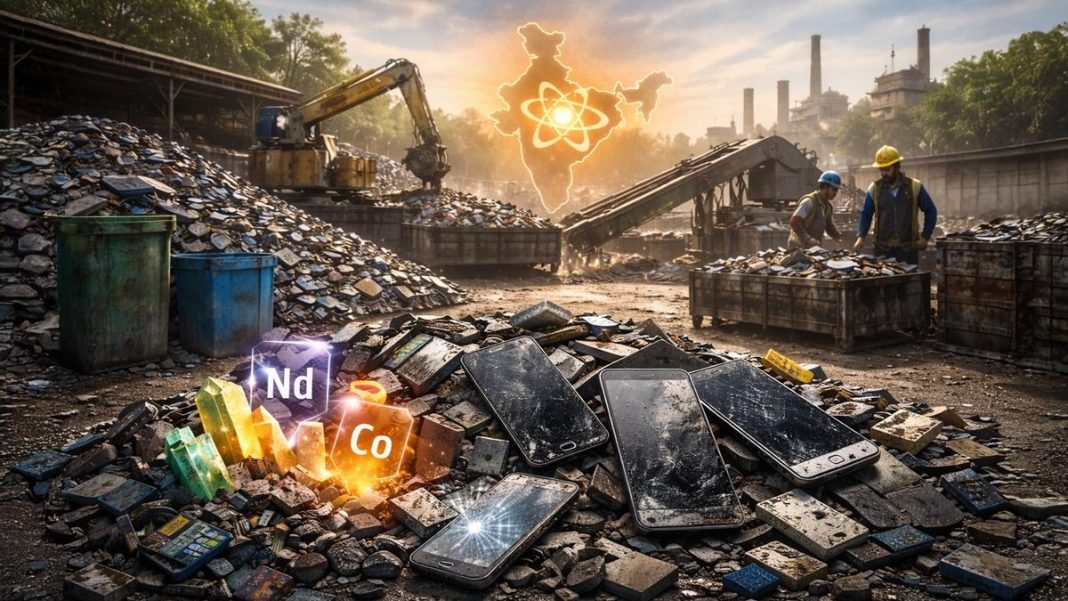
In the quiet corners of Indian households, a silent revolution is brewing. Those dusty drawers filled with old smartphones and laptops are not just electronic junk.
From a scientific perspective, they are high-concentration mineral deposits. As India pushes towards atomic sovereignty, the industry is realising that the country is sitting on a strategic reserve far richer than any traditional mine.
Atomic sovereignty is the ability of a nation to control its own strategic-grade materials at the atomic level.
Strategic-grade materials are high-performance building blocks, such as specialised magnets and super-pure metals, essential for security and advanced technology.
Achieving this means mastering every stage, from extracting minerals to final manufacturing, without depending on foreign powers.
ARE YOUR OLD PHONES AND LAPTOPS A TREASURE TROVE?
Every old laptop and phone is a hidden mine for rare earth magnets. These are used in defence systems such as fighter jets and missiles, electric vehicles, and electronics.
Rare earth magnets are powerful permanent magnets made from alloys of rare earth elements such as neodymium and samarium, which provide significantly stronger magnetic fields in much smaller sizes compared to traditional iron magnets.
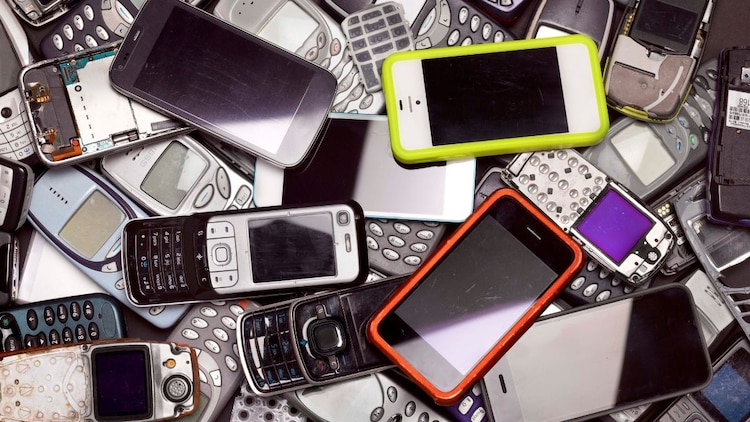
Syed Gazanfar Abbas Safvi, Head of Recycling at Greater Noida-based Lohum, a lithium-ion battery manufacturer and recycler, tells indiatoday.in that “a typical cobalt mine yields just 1 to 2 kg of cobalt per ton of rock, while a ton of spent battery material can contain 50 to 80 kg, making it 40 times more concentrated.”
By reclaiming these atoms, India aims to build a supply pathway that no foreign government can switch off.
This is critical because China currently refines nearly 90 per cent of the world’s rare earths.
India holds some of the richest monazite beach sands on Earth along the coasts of Odisha and Kerala, yet we have historically exported raw sand only to import finished magnets at ten times the price.
Reclaiming these elements from waste is the fastest way to break this monopoly.
WHAT IS THE 900-DEGREE ATOMIC RESET?
Indian labs use a 900-degree fire-reset to make magnets 99.9 per cent pure again, stripping away dirt and old glue, known as binders, to leave behind pure atoms.
Neodymium creates the world’s strongest magnets, while Dysprosium acts as a heat shield.
Gazanfar Safvi explains that at 900 degrees Celsius, the magnet undergoes a deep internal repair. Think of a magnet as billions of tiny crystals held together by a special border material.
At this temperature, that border turns into a liquid and flows into cracks, healing the magnet from the inside.
However, science warns of the Curie Point, the temperature at which a magnet loses its power forever.
For neodymium, this is usually between 310 and 400 degrees Celsius.
While the Curie Point is much lower than 900 degrees Celsius, the magnets do not break because scientists use a precise, quick-heating method in a gas-protected chamber to fix the atoms without burning them.
However, Rahul Singh, Business Head at Gurugram-based Exigo, an e-waste recycling plant, warns that without this precision, the process can “turn the magnet into powder.”
WHAT ARE THE ROADBLOCKS TO INDIA’S ATOMIC SOVEREIGNTY?
A massive gap remains.
Gaurav Dolwani, CEO of Mumbai-based Lico, a clean-tech startup specialising in lithium-ion battery recycling, explained to indiatoday.in that “India only performs mechanical separation and battery packing, leaving the middle steps of the supply chain empty.”
Mechanical separation is the simple process of crushing gadgets to sort plastic from metal. Battery packing is just assembling imported cells into a case.
While much of the industry struggles with this gap, Lohum claims to have built the missing bridge.
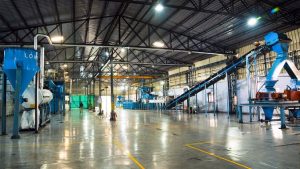
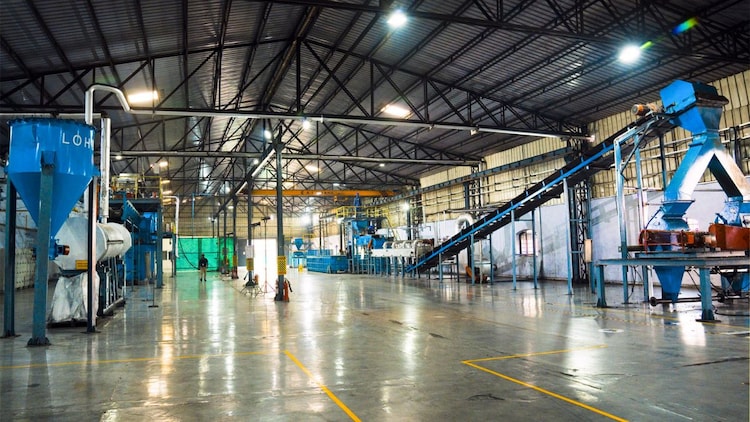
In late 2025, the firm inaugurated in Greater Noida what it calls India’s first integrated rare earth magnet facility, designed to move beyond shredding and into full-scale mineral recovery.
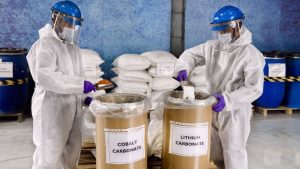
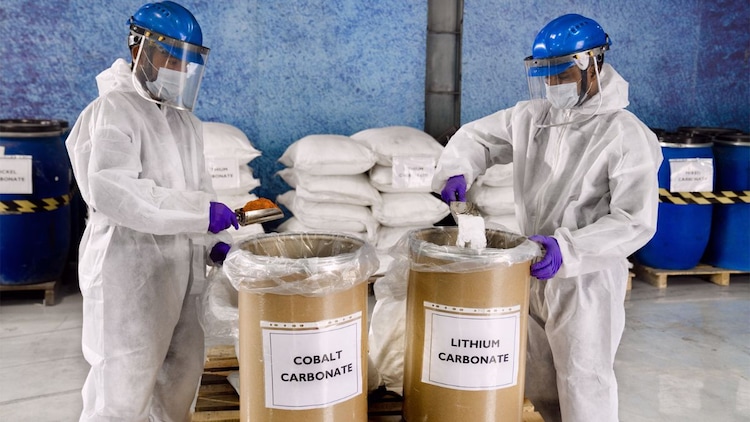
Lohum says that it does not just stop at crushing gadgets; it follows a rigorous path of hydrometallurgical leaching to extract battery-grade lithium, cobalt, and nickel salts.
By chemically refining waste back into its purest form, they aim to ensure that critical materials can go directly back into the battery supply chain, moving India closer to true circularity.
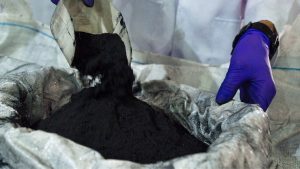
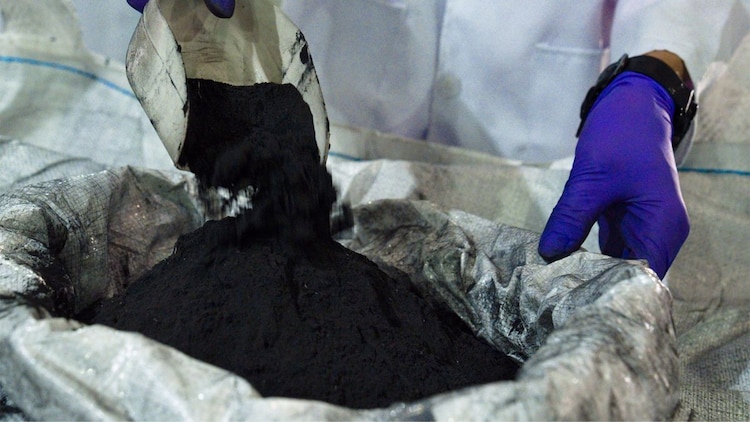
Despite these advancements, the broader industry still only produces Black Mass.
This is a dark, powdery mixture of crushed battery internals containing lithium, cobalt, nickel, and manganese.
The biggest hurdle, according to Dolwani, is that India currently lacks a domestic market for the refined version of this powder, meaning there are effectively no buyers in India for the finished metal chemicals.
Singh points out that India still lacks enough domestic kitchens to cook these ingredients.
Because there are no large-scale factories in India yet that can use these refined metals to manufacture new battery cells, many recyclers are forced to export their products.
As Singh concludes, “We shred batteries into Black Mass and then 100 per cent of the value-critical material is exported.”
HOW DOES RECYCLING DEFINE INDIA’S GLOBAL POWER?
Ultimately, atomic sovereignty is about control.
Gazanfar Safvi states, “When India masters this full chain, it stops being a buyer and becomes a maker.”
By turning an old hard drive magnet into something new, Indian scientists are proving our junk drawers are national security assets.
The goal now is to build the domestic manufacturing loop, so the atoms cleaned in India stay in the country to power the future.