Key Takeaways
- Blue Origin plans a 5,000-satellite ‘TeraWave’ constellation for global internet.
- It promises ultra-fast 6 Tbps speeds, targeting remote and underserved areas.
- The first satellites, called ‘BlueBirds’, aim for launch by 2028 on the New Glenn rocket.
- The project intensifies the space internet race, with Bezos also backing Amazon’s rival Kuiper project.
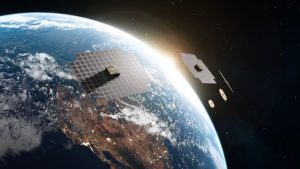
Jeff Bezos’s space venture, Blue Origin, has announced a massive plan to launch 5,000 satellites, creating a new global internet network called ‘TeraWave’. This move directly challenges rivals like SpaceX’s Starlink and even Amazon’s own Project Kuiper.
The TeraWave Vision: Speed and Global Reach
The TeraWave constellation will operate in low Earth orbit (LEO) and is designed to deliver data speeds of up to 6 terabits per second (Tbps). This high-speed connectivity aims to bridge the digital divide by providing internet access to remote and underserved regions worldwide.
Potential applications span telemedicine, online education, autonomous systems, and scientific research.
Launch Plans and Regulatory Hurdles
Blue Origin stated that the satellites, dubbed “BlueBirds,” will be launched using its reusable New Glenn rocket. The company is targeting the first batch for deployment by 2028.
It has already filed necessary paperwork with the International Telecommunication Union (ITU) and the US Federal Communications Commission (FCC) to secure orbital slots and spectrum rights, a critical regulatory step.
“TeraWave is not just about internet; it’s about building the nervous system for our planet’s future,” a Blue Origin spokesperson said.
The Bezos Factor: Synergy or Competition?
The project, estimated to cost tens of billions of dollars, leverages Bezos’s deep investment in space infrastructure. However, its timeline coincides with Amazon’s ongoing deployment of its 3,236-satellite Kuiper constellation, raising questions about synergy or competition between the two Bezos-backed ventures .
Experts note significant challenges ahead, including space debris mitigation, astronomical interference, and the sheer scale of deployment and maintenance.
If successful, TeraWave could reshape global communications. Yet, its path over the next decade is lined with formidable technical, regulatory, and economic hurdles.