Too cold, too wet, too late: Baby birds are losing the climate game

Baby birds are tougher than they look, but climate change may be pushing them past their limits.

A new study from the University of Oxford has found that extreme cold and heavy rain can stunt growth in great tit chicks, which are small, woodland birds recognisable by their yellow breasts and black stripes, and reduce their chances of surviving into adulthood.

The good news? Breeding early in the season offers some protection.

HOW DID SCIENTISTS STUDY BABY BIRD SURVIVAL?

The research, published in the journal Global Change Biology, draws on an extraordinary dataset: 60 years of records covering more than 83,000 individual great tits living in Oxford’s Wytham Woods, paired with daily historical weather records going back to 1965.

Oxford's Wytham Woods has hosted one of the world's longest-running bird studies since 1947. (Photo: Reuters)

Oxford’s Wytham Woods has hosted one of the world’s longest-running bird studies since 1947. (Photo: Reuters)

Researchers identified the coldest, wettest and hottest days of each breeding season and tracked how these extremes affected body weight at fledging, the moment a chick leaves the nest. Heavier fledglings survive better. That part is well established.

Heavier fledging simply means the chick weighs more than normal at that moment. In this study, the researchers weighed each chick at 15 days old, which is when their weight typically plateaus before they fly the nest.

WHAT DOES EXTREME WEATHER DO TO BABY BIRDS?

The findings are striking. A cold snap during a chick’s first week of life, before it can even regulate its own body temperature, is particularly damaging.

Newborns divert energy toward staying warm instead of growing. Six consecutive extremely cold days could push fledging weight down by nearly three standard deviations.
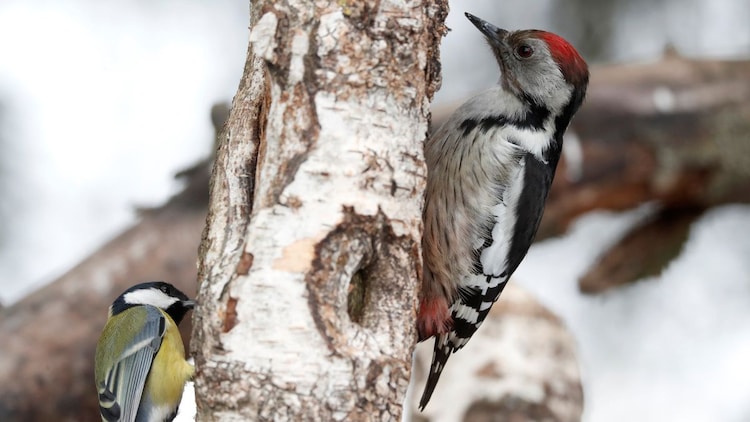
Newly hatched great tits cannot regulate their own body temperature. Cold forces them to burn energy on warmth instead of growth, leaving them underweight when they fledge. (Photo: Reuters)

Newly hatched great tits cannot regulate their own body temperature. Cold forces them to burn energy on warmth instead of growth, leaving them underweight when they fledge. (Photo: Reuters)

Heavy rain becomes more harmful as chicks grow older, partly because it knocks caterpillars off trees, cutting food supply at a time when nestlings need to eat almost constantly.

When heat and rain hit together during early development, fledging weight can fall by up to 27 per cent.

DOES HEAT ACTUALLY HELP BABY BIRDS GROW?

Surprisingly, moderate warm spells in Oxfordshire appear to benefit chicks rather than harm them.

Nestlings exposed to seven consecutive hot days were predicted to weigh around 4.5 per cent more than those with no heat exposure at all.

Warmer conditions boost insect activity, making caterpillars easier for parents to find, and chicks burn less energy on staying warm.

In temperate Oxfordshire, warm spells boost caterpillar activity and make foraging easier for parent birds. The effect reverses in hotter climates like the Mediterranean, where heat becomes a threat. (Photo: Reuters)

In temperate Oxfordshire, warm spells boost caterpillar activity and make foraging easier for parent birds. The effect reverses in hotter climates like the Mediterranean, where heat becomes a threat. (Photo: Reuters)

This is the opposite of what happens in hotter regions like the Mediterranean, where summer temperatures regularly cross 35 degrees Celsius and can become life-threatening for nestlings.

Chicks that experienced warm spells also showed better survival odds in initial models, though the researchers caution that this association largely reflects the broader advantage of being born earlier in the season rather than a direct benefit of heat.

CAN BIRDS ADAPT TO CLIMATE CHANGE?

Great tits in Wytham have already begun breeding earlier in the season to match the earlier emergence of caterpillars in warmer springs. This helps, but it brings a catch: earlier broods now face more cold spells early in the year.
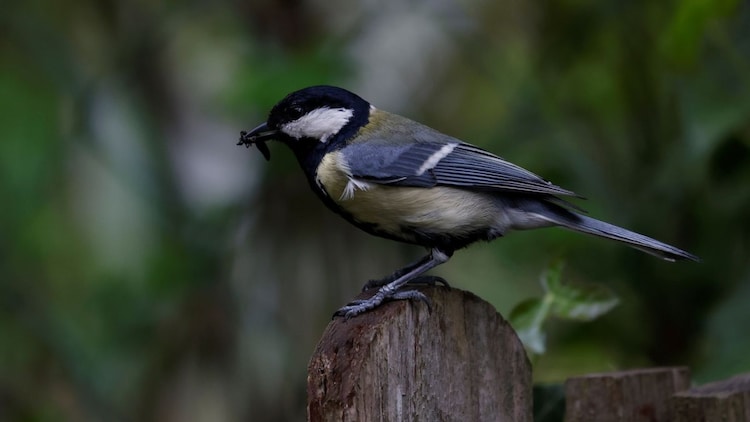
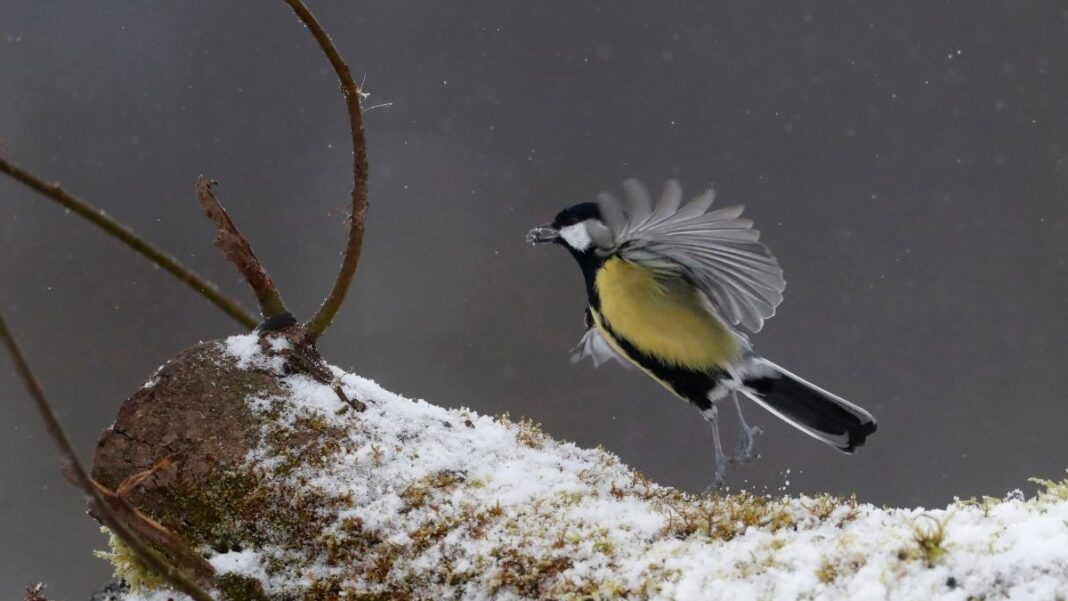
Great tits have shifted their breeding season earlier to track caterpillar emergence. But earlier broods now face cold late-spring snaps, and selection against smaller chicks is intensifying. (Photo: Reuters)

Great tits have shifted their breeding season earlier to track caterpillar emergence. But earlier broods now face cold late-spring snaps, and selection against smaller chicks is intensifying. (Photo: Reuters)

The paper also notes that selection pressure against smaller nestlings has strengthened over time, meaning even small growth deficits caused by cold or rain now carry heavier survival costs than they did decades ago.

Lead researcher Devi Satarkar of Oxford’s Department of Biology warns that as extreme weather grows more frequent and intense, it will become harder for birds to keep pace.
Latest

Nasa to launch Artemis-II mission to the Moon on April 1

Nasa said preparations are continuing at the Kennedy Space Centre, where engineers are completing final work on the rocket and spacecraft inside the Vehicle Ass

Assam is drowning every year. India’s nuclear plan wants to fix that, and much more

Every monsoon, floodwaters devastate Assam and poison drinking sources for millions. But atomic science may finally have a solution.

Isro reveals new details about SpadeX space docking mission

The satellites, SDX01, acting as the chaser, and SDX02, serving as the target, performed a series of precision manoeuvres to approach, dock, separate and manoeu

Northwest India to face severe heat wave on Friday, Northeast to see rain

The IMD predicts severe heat wave conditions in Gujarat and Madhya Pradesh on March 13. Meanwhile, heavy rain and snowfall are expected in Arunachal Pradesh and

Eight lakh neurons played video games without a brain or body

Scientists grew 8,00,000 human neurons in a laboratory, connected them to video games, and watched them learn them in five minutes with no body, no senses, and

Topics

Planning to buy a 2-ton AC? Here are the top 10 options, starting at ₹33,000

Cooling large rooms during peak summer can be challenging. Here are 2-ton air conditioners that offer strong cooling, energy control, and useful features.

After 18 years, Shantanu Narayen prepares to hand over Adobe reins

The CEO who guided Adobe from boxed software to cloud subscriptions, wants to transition after laying the groundwork for an AI era

BuzzFeed flags ‘going-concern’ risks, explores options to stave off insolvency

In 2025, BuzzFeed had a loss of $57.3 million, as against its current market valuation of $27 million, meaning the company has negative net worth.

Adobe CEO Shantanu Narayen’s resignation shows how AI takes its toll

Adobe CEO Shantanu Narayen's resignation shows that guidance of steady revenue may no longer be enough to satisfy Wall Street without a clear AI agenda.

Dell agrees with Sam Altman on Pentagon, says: Any company doing business with the government can’t tell …

Tech News News: OpenAI CEO Sam Altman and Dell Technologies CEO Michael Dell may be on the "same page" about the Pentagon's decision to cancel Anthropic's dea

Kritika Kamra holds husband Gaurav Kapur close at their wedding reception; fans call them ‘classy, new favourite couple’

Kritika Kamra and Gaurav Kapur hosted a grand reception for industry friends on March 12. The newlyweds had fans praising their chemistry. 

Ashish Chanchlani admits Ekaki led to ‘huge loss’, reveals writing Stranger Things-like scene 3 years ago

Ashish Chanchlani's YouTube series Ekaki blends sci-fi, horror, and comedy, inspired by his fascination with aliens. 

Allu Sirish gushes about being in love with wife Nayanika Reddy: ‘Want to keep her as happy as her dad did’

In an interview with Hindustan Times, Allu Sirish speaks about his love for wife Nayanika Reddy, their honeymoon plans, and the kind of husband he wants to be.
spot_img

Related Articles

Popular Categories

spot_imgspot_img