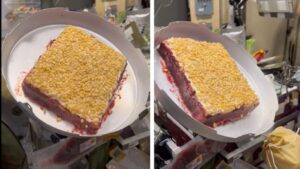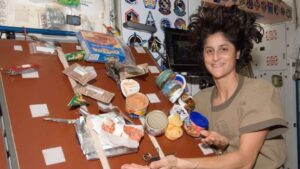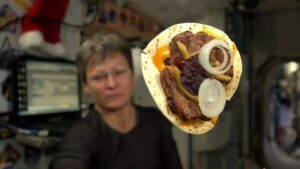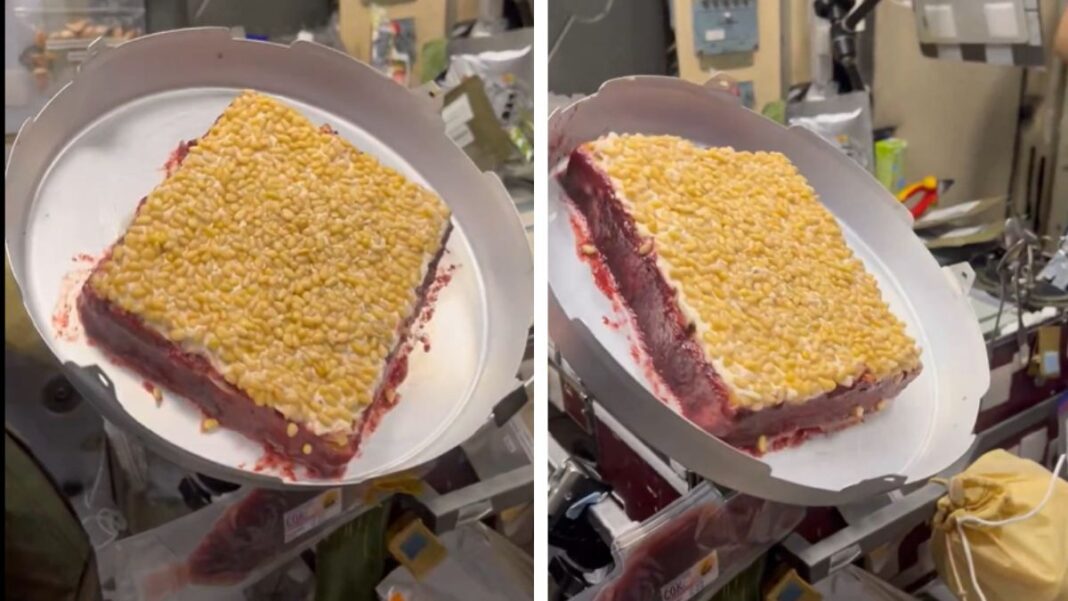
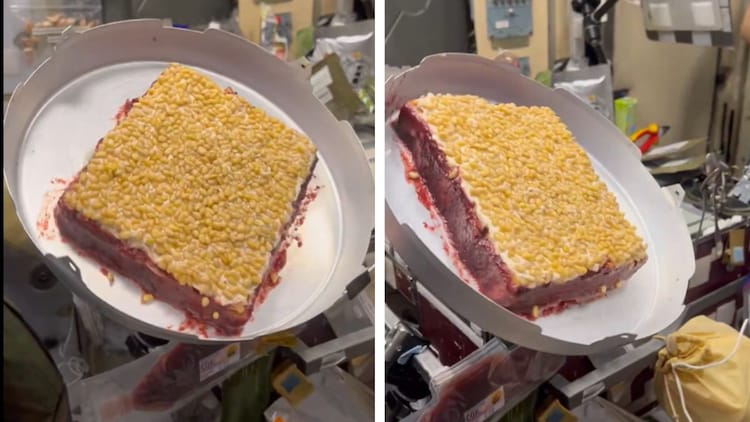
Somewhere 400 kilometres above Earth, travelling at 7.6 kilometres per second, astronauts sat down to eat cake. Not a protein bar. Not a freeze-dried pouch. An actual cake, with layers.
Group Captain Shubhanshu Shukla, India’s first astronaut to be a part of a commercial mission to the International Space Station (ISS), was the first to admit he had nothing to do with making it. He flew to the orbital outpost as part of the Axiom Mission 4 (Ax-4).
Baking, he confessed, is decidedly not among his admirable qualities. His crewmates, he said, were far more gifted in that department.
He never named who deserves the credit, but whoever it was pulled off something genuinely remarkable.
WHY IS BAKING IN SPACE SO HARD?
The ingredients were humble: bread, condensed milk, dried fruits, and a touch of jam. Yet Shukla called the result extraordinary, describing it as the “finest space cake” he had ever had, and perhaps the most memorable.
The science behind why this is impressive is worth understanding. On Earth, baking relies on convection: hot air rises, circulates, and cooks food evenly.
In microgravity, convection simply does not happen. Heat travels only through radiation and direct contact, making temperature distribution wildly uneven.
When Nasa tested a zero-gravity cookie oven aboard the ISS in 2019, cookies that take 16 minutes on Earth needed up to 130 minutes in space.
Crumbs and liquid droplets also float freely, posing genuine inhalation and fire hazards. The crew’s choice of ingredients was clever whether intentional or not.
Condensed milk and jam are viscous and shelf-stable. Dried fruits add texture without loose particles. No oven required.
WHAT DOES FOOD DO FOR ASTRONAUTS’ MENTAL HEALTH?
Shukla was clear that the moment meant more than the cake itself.
In between experiments and responsibilities, he wrote, the crew carved out time to come together: astronauts from different corners of the world, sharing food, laughter, and stories. He called these moments precious.
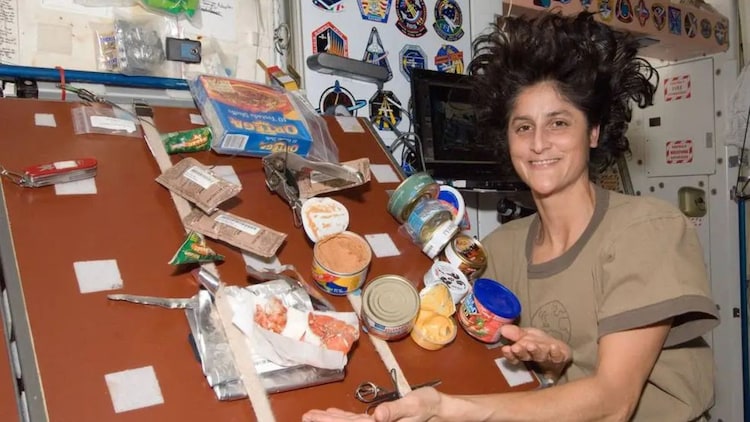
That is not just poetry. Nasa and Isro both study shared meals as a documented countermeasure against the psychological strain of isolation during long missions.
On the ISS, where astronauts carry out countless experiments from different countries, mental wellbeing is as mission-critical as data.
WHY DOES THIS MATTER FOR INDIA’S SPACE FUTURE?
Isro’s own Ax-4 experiments included growing moong and methi seeds in microgravity and cultivating microalgae as a potential food source.
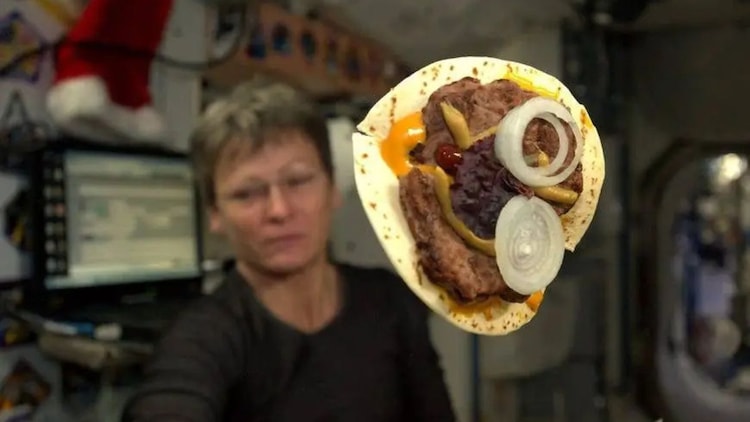
The space cake mirrors these efforts at a human level: how do you feed people well, far from home, with almost nothing?
As Shukla put it, looking down at a borderless Earth, whatever flags we carry, we are all citizens of it.