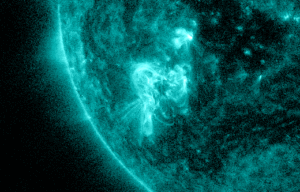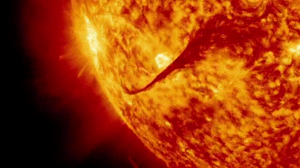
A powerful explosion on the Sun has triggered disruptions across parts of Southeast Asia and Australia, after an active sunspot unleashed a major solar flare on Monday.
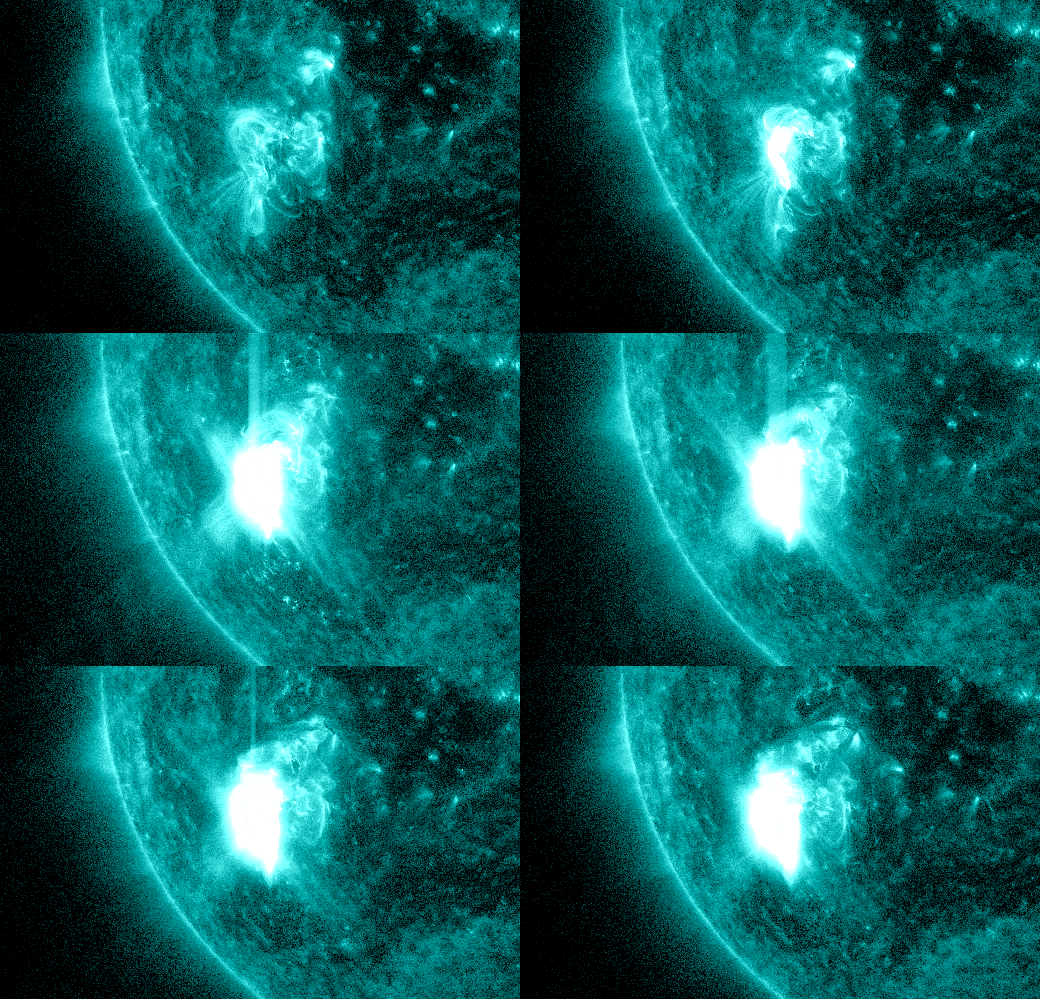
The event, linked to growing sunspot region 4405, produced an intense X1.5-class solar flare, among the stronger categories of solar eruptions.
The flare was captured by NASA’s Solar Dynamics Observatory, which recorded the hours-long eruption in extreme ultraviolet wavelengths. Scientists say the burst of radiation rapidly ionised the upper layers of Earth’s atmosphere, particularly above Southeast Asia and Australia.
WHAT DOES AIR BEING IONISED MEAN?
Air being “ionised” means its atoms or molecules gain or lose electrons, turning into charged particles (ions).
Normally, the air in Earth’s atmosphere is neutral, its atoms have balanced positive and negative charges. But during events like a strong solar flare, high-energy radiation (especially extreme ultraviolet and X-rays) hits the upper atmosphere and knocks electrons off atoms and molecules.
Solar radiation temporarily turns part of the atmosphere into a charged, signal-disrupting region.
WHAT HAPPENED ON MONDAY?
This ionisation led to a temporary shortwave radio blackout in affected regions. High-frequency radio signals, especially those below 30 MHz, were significantly degraded or completely lost.
Amateur radio operators and aviation communication systems relying on these frequencies likely experienced disruptions during the peak of the event.
Solar flares of this magnitude release vast amounts of electromagnetic energy, travelling at the speed of light and impacting Earth within minutes.
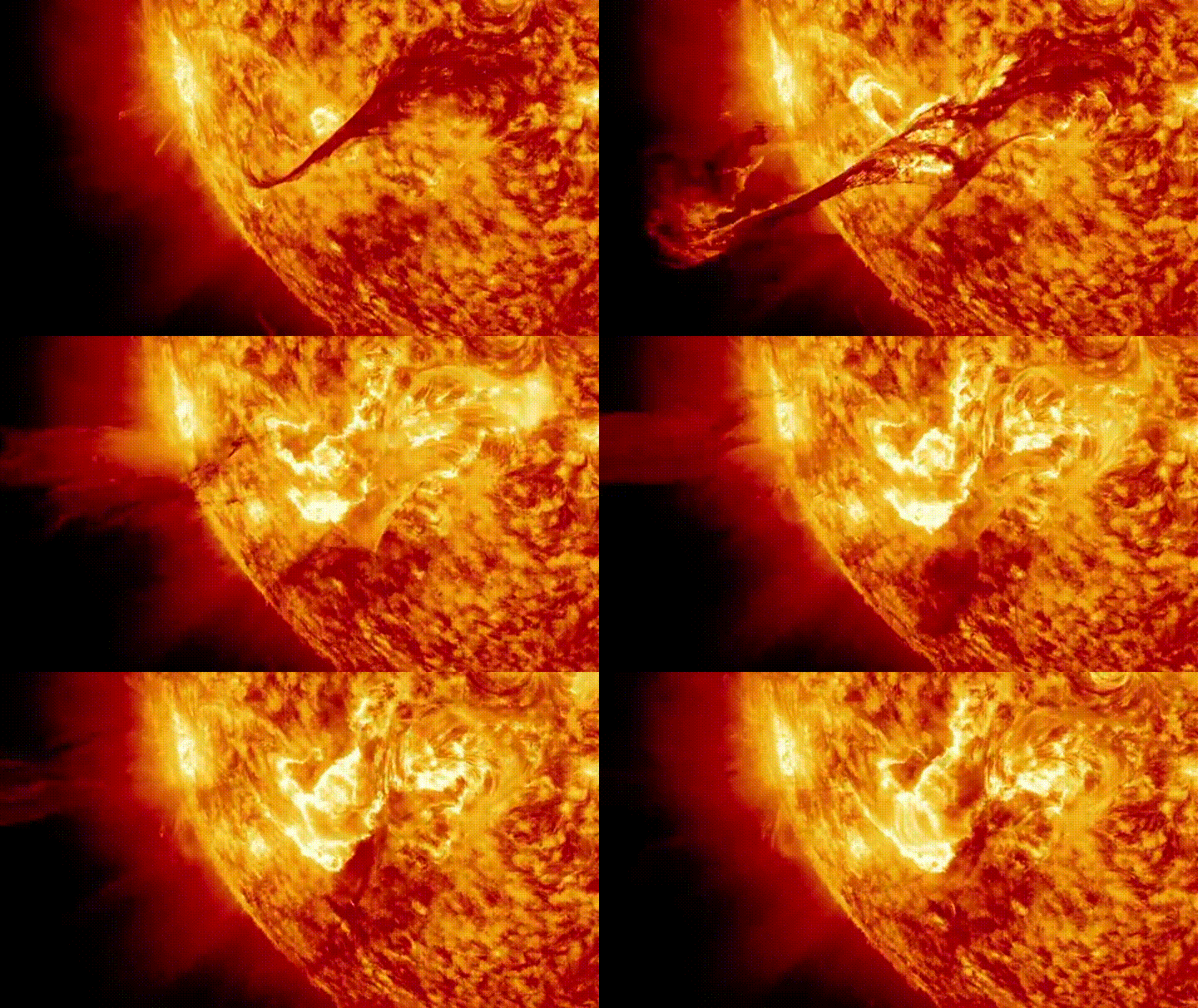
While such flares primarily affect communication systems rather than causing direct harm to people, they serve as a reminder of the Sun’s volatile nature during periods of heightened activity.
Of greater concern to scientists, however, is the associated coronal mass ejection (CME), a massive cloud of charged solar particles hurled into space following the flare. Preliminary observations suggest that this CME is both fast and substantial, with a possible Earth-directed component.
If confirmed, the incoming CME could interact with Earth’s magnetic field in the coming days, potentially triggering geomagnetic storms. These storms can enhance auroral displays at higher latitudes but may also disrupt satellite operations, navigation systems, and power grids in extreme cases.
Space weather agencies are now closely monitoring the trajectory and speed of the CME to determine its potential impact. Forecast models are expected to provide clearer predictions within the next 24-48 hours.
The event comes as the Sun approaches the peak of its 11-year solar cycle, a period marked by increased sunspot activity and more frequent solar storms.
Experts say such incidents may become more common in the months ahead, underscoring the importance of continuous solar monitoring.