
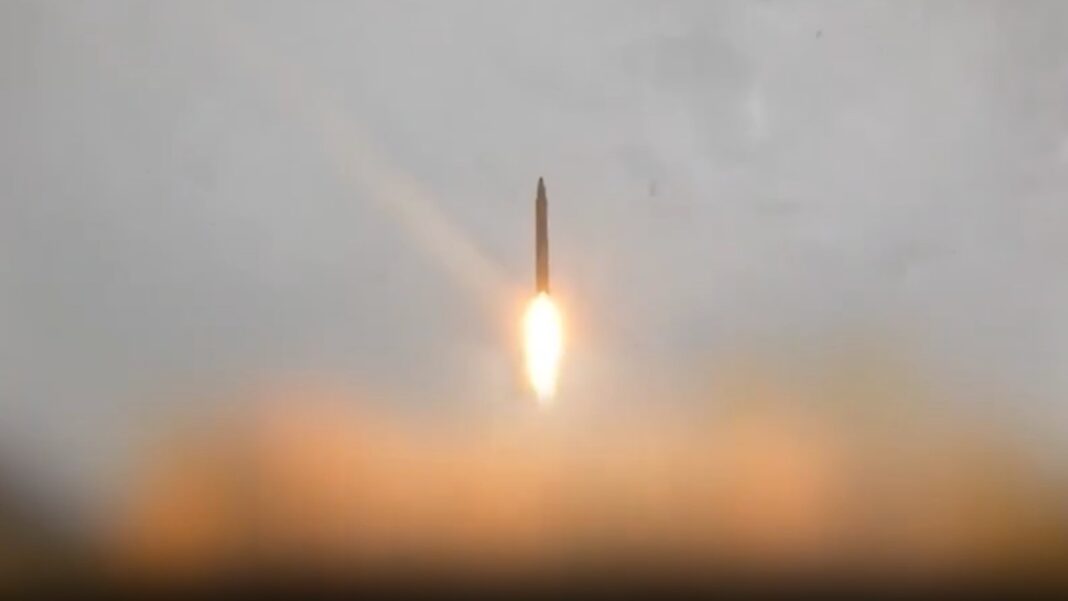
Iran launches Sejjil missile against US: Why is it called the dancing missile?

Iran has reportedly deployed one of its most advanced ballistic weapons, the Sejjil missile, drawing global attention to the capabilities of Tehran’s missile program.

The weapon, which analysts say can strike targets up to 2,000 kilometres away, has been nicknamed the “dancing missile” because of the way it manoeuvres during flight, making it difficult for air-defence systems to intercept.

WHAT IS SEJJIL MISSILE?

The Sejjil is a two-stage, solid-fuel medium-range ballistic missile (MRBM) developed domestically by Iran as a successor to older liquid-fuel missiles such as the Shahab series.
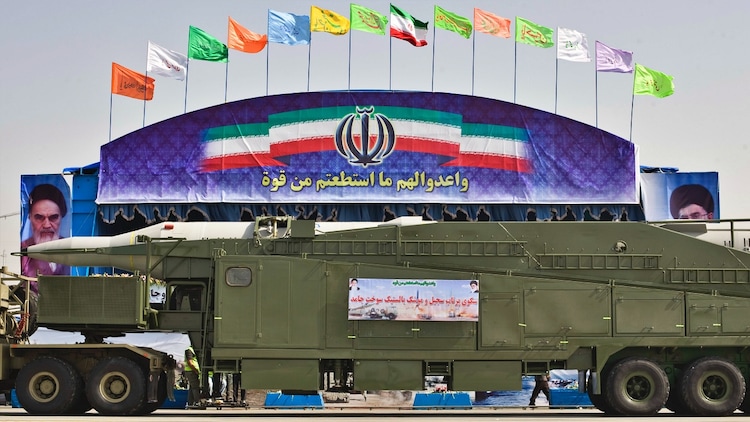
Sejjil missile

Sejjil missile is being moved along the reviewing stand during a military parade in Tehran. (Photo: Reuters)

Solid fuel is one of its key technological advantages. Unlike liquid-fuel missiles, which require longer preparation before launch, solid-fuel systems can be fired quickly and from mobile launchers, making them harder to detect and destroy before take-off.

According to defence analysts, the missile can carry a payload of around 500-1,000 kilograms, which may include conventional high-explosive warheads and potentially other types depending on configuration.

The missile measures roughly 18 metres in length and weighs over 23 tonnes at launch.

With a maximum range of roughly 2,000-2,500 kilometres, the Sejjil is capable of reaching targets across much of the Middle East from Iranian territory.

This range means it could strike locations including Israel, US bases in the Gulf region, and other strategic points in the region.

WHY IS SEJJIL CALLED THE DANCING MISSILE?

The missile has gained the nickname “dancing missile” because of its ability to change trajectory and manoeuvre during flight.

Defence experts say its agile path can confuse missile-tracking radars and interception systems, forcing them to constantly adjust predictions about where the missile will travel.

This erratic flight behaviour gives the weapon a better chance of evading air-defence systems.

Another reason the Sejjil attracts attention is its speed and survivability. Ballistic missiles like the Sejjil travel at hypersonic speeds during parts of their flight, and combined with manoeuvrability, they become significantly harder to shoot down.

Iran first tested the Sejjil missile in 2008, marking a major milestone in its missile development program. Experts say the shift from liquid-fuel to solid-fuel ballistic missiles signalled a significant leap in Iran’s indigenous missile technology.

The recent launch highlights the growing importance of ballistic missiles in regional military strategy, where speed, range and the ability to evade defence systems increasingly shape the balance of power.

Latest

US startup wants to sell sunlight at $5,000/hour, send 50,000 big mirrors to space — the idea is controversial

California-based Reflect Orbital has proposed deploying 50,000 large mirrors into orbit around Earth. The company wants to sell sunlight — brighting up the ni

Snowing in March: Unseasonal snowfall could enhance Ladakh’s water crisis

In the past, heavy snow arrived between December and February and stayed long enough to recharge underground water and keep springs flowing through summer. Now

Indian scientists discover how meditation rewires the brain

Scientists discovered that experienced meditators also exhibit higher activity in the gamma frequency range, which is associated with attention, perception and

How do ravens find wolf kills before the blood dries? We now know

Ravens rely on their memory to revisit spots favourable for finding carcasses hunted by wolves.

Collision of two planets seen from Earth reveals big secret about our Moon

The collision bears a striking resemblance to the one thought to have created the Earth and Moon about 4.5 billion years ago.

Topics

Reliance, Samsung sign $3-billion contract for green ammonia supply

The Reliance-Samsung deal, one of the largest of its kind globally, signals Chairman Mukesh Ambani's ambition to dominate the renewable energy value chain.

Sensex, Nifty set for muted open today due to higher-for-longer crude oil prices

Brokerages Citi and Nomura have lowered their year-end Nifty 50 targets, citing the impact of the surge in crude oil prices on India's growth and earnings.

Actor Navnindra Behl, known for Ishqbaaz, Queen, dies at 76; son Kanu Behl pens moving note: ‘Until you birth me again’

Veteran actor Navnindra Behl, best known for her work in Ishqbaaz and Bollywood film Queen, passed away at the age of 76. 

Hema Malini says ‘it’s a shame’ Dharmendra was left out of Oscars In Memoriam segment: ‘He was recognised everywhere’

Hema Malini criticised the Oscars for not including Dharmendra in the In Memoriam segment, stating that the late actor meant so much to people worldwide.

Pay first, fill later: Oil marketing firms suspend fuel on credit to pumps amid West Asia crisis

Oil marketing companies (OMCs) have suspended fuel on credit to limit offtake by retail outlets, four people aware of the development said.

‘Firms need to move to adaptive, energy-efficient AI models’

Sarah Hooker is convinced that the future lies in AI systems that use less computing power, cost less to run and can adapt to the needs of users.

Khushbu Sundar comes out in support of Trisha amid her viral pics with Vijay: ‘She is one of the most dignified women’

Khushbu Sundar has addressed the online chatter surrounding the public appearance of Vijay and Trisha Krishnan, after the divorce petition filed by Sangeeta.

Shocked Karan Johar reveals his 9-year-old son Yash’s ‘business proposal’ as he wants to pay rent to him. Watch

Karan Johar and his son Yash had a fun conversation as they discussed a business proposal. Watch their banter here.
spot_img

Related Articles

Popular Categories

spot_imgspot_img
