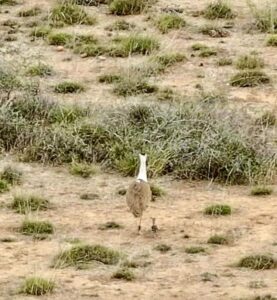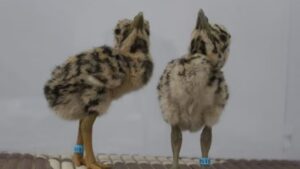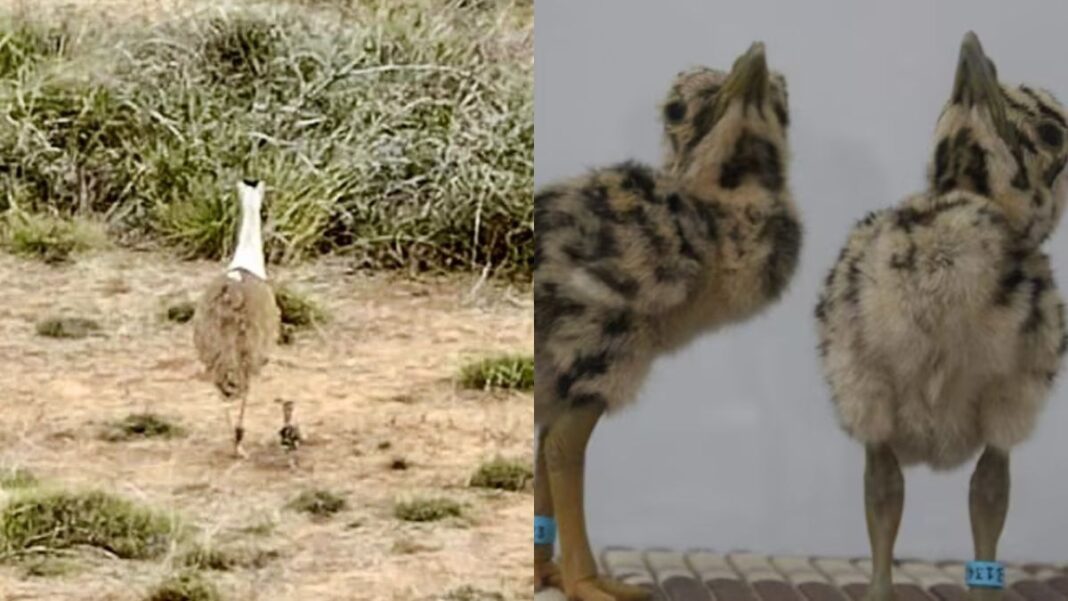
The silence in the grasslands of Kutch has finally been broken by a sound that conservationists have waited 10 years to hear: the chirping of a Great Indian Bustard (GIB) chick.
This biological breakthrough is the result of a cross-country mission that feels like a script from a Hollywood movie, involving a 19-hour road trip, a portable incubator, and a foster mother who had lost all hope of a lineage.
This miracle was made possible by a novel conservation strategy known as the jumpstart approach.
WHAT IS THE JUMPSTART APPROACH IN WILDLIFE CONSERVATION?
The jumpstart approach is a proactive management strategy used when a wild population is too small or fragmented to reproduce on its own. It involves using captive-bred resources, like fertile eggs, to jumpstart the reproductive cycle in the wild.
In Kutch, the situation was particularly dire because the local GIB population had lost all its males long ago. Without a mate, a lone female laid an infertile egg in August 2025.
A female bird can produce an egg through her natural ovulation (reproductive) cycle regardless of whether she has mated, but since no male was present to provide sperm, the egg lacked the genetic material necessary to develop into a chick and was therefore infertile.
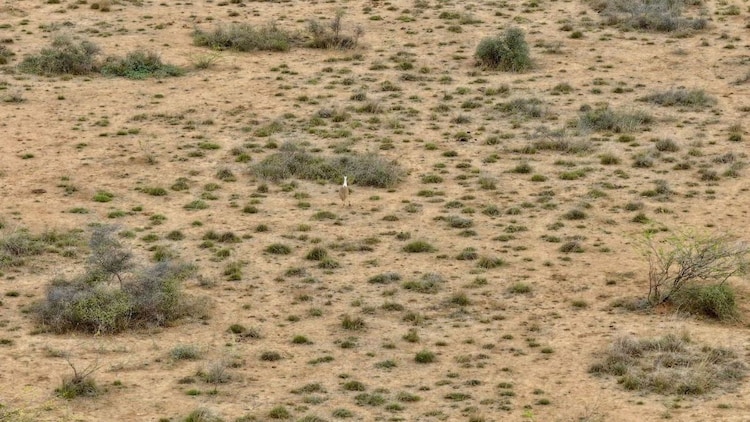
Such an egg is also called a dud.
By using the jumpstart method, the Ministry of Environment, Forest and Climate Change, alongside the Wildlife Institute of India and forest departments of Rajasthan and Gujarat, decided to intervene.
They replaced the dud egg with a fertile egg from a breeding centre. This allowed the female to use her natural maternal instincts to raise a chick she could not have produced herself, effectively restarting the biological cycle in a habitat that had gone silent.
HOW ARE CAPTIVE BRED BIRDS PRODUCED?
Captive-bred birds are individuals born and raised in controlled environments specifically designed to protect them from external threats.
The science behind this involves ex-situ conservation, where scientists collect eggs from the wild or from resident breeding pairs and hatch them in high-tech laboratories.
Ex-situ conservation is a scientific strategy where endangered species are protected and bred outside their natural habitats.
These birds are made through carefully monitored artificial incubation and, in some cases, artificial insemination, to ensure maximum genetic diversity and survival rates that are far higher than those in the predator-filled wild.
The primary purpose of captive-bred eggs is to provide a biological insurance policy for critically endangered species, allowing scientists to bypass the high mortality rates of the wild by hatching and raising chicks in a controlled environment to eventually rebuild dwindling populations.
HOW WAS THE FERTILE EGG TRANSPORTED TO GUJARAT?
On March 22, a fertile egg from a conservation breeding centre in Rajasthan began a tumultuous journey.
These centres act as a genetic bank where birds are kept in a protected environment to ensure they can mate without the threat of predators or habitat loss.
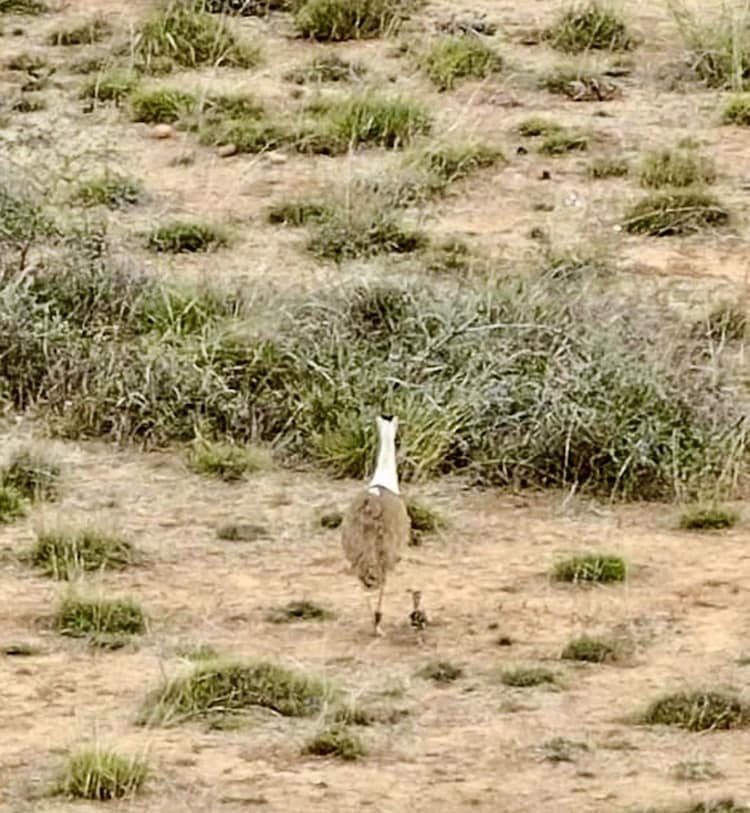
The egg was nestled inside a handheld portable incubator, a device designed to mimic the exact warmth and humidity of a mother bird. It was driven over 700 kilometres by road for 19 hours.
Every bump was a risk. Once it arrived in Kutch, the field team swapped the eggs. The foster mother accepted the new egg, incubating it with the same dedication she would her own.
WHEN DID THE GREAT INDIAN BUSTARD CHICK HATCH?
The mission reached its climax on March 26, when the egg finally hatched. Field monitoring teams confirmed that the female was successfully rearing the young chick.
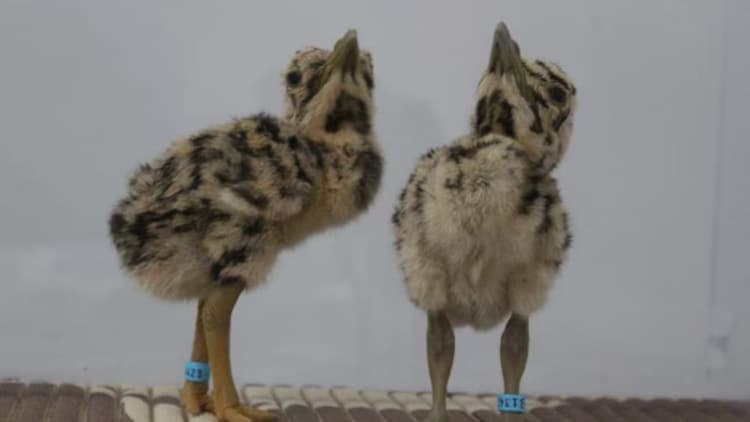
This marks the first time in a decade that Gujarat has seen a GIB chick, a massive milestone for Project GIB, which was envisioned by Prime Minister Narendra Modi in 2011 and launched in 2016.
WHAT IS THE FUTURE OF REWILDING IN INDIA?
The success of this experiment provides a blueprint for rewilding.
This is the process of reintroducing captive-bred birds back into their natural environment so they can live independently.
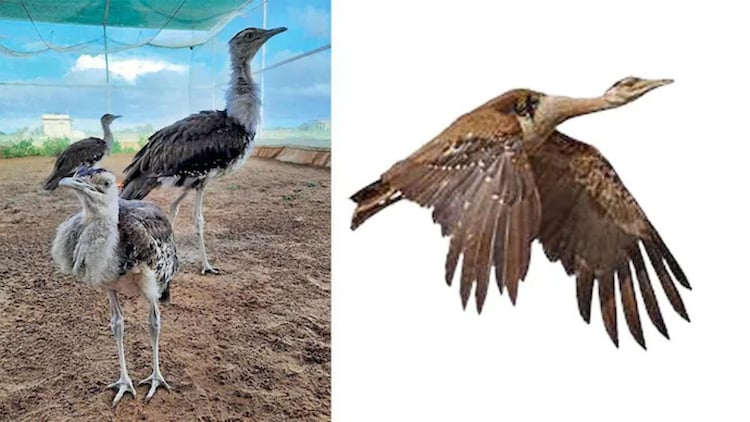
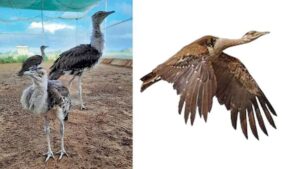
Currently, the breeding centres in Rajasthan house 73 birds. With five new chicks added this season, the goal is to move these birds back into the wild.
While the survival of this specific chick remains delicate, the foster mother’s success proves that human intervention can bridge the gap left by a fragmented ecosystem.