India’s ambitious human spaceflight programme, Gaganyaan Mission, could face another delay as the Indian Space Research Organisation (Isro) has significantly increased safety checks following two PSLV failures in 2025 and 2026, senior officials said.
The first uncrewed Gaganyaan mission, known as G1, had been targeted for launch in March 2026. However, officials speaking to indiatoday.in on condition of anonymity indicated that the timeline now appears difficult to achieve.
After the dual PSLV setbacks, there is zero appetite for risk at Isro. Every component, fitting, system, and subsystem of Gaganyaan is being re-examined in minute detail to ensure mission success.
The PSLV, traditionally regarded as Isro’s workhorse launcher, suffered rare back-to-back failures over the past two years, prompting a comprehensive review of quality assurance and mission readiness protocols across launch vehicles.
While Gaganyaan is slated to fly aboard the Human-Rated Launch Vehicle Mark-3 (HLVM3), an upgraded version of the GSLV Mk-III, the recent setbacks have cast a shadow over the broader launch ecosystem.
Earlier, Union Minister of State for Science and Technology Jitendra Singh had informed Parliament that preparations for the G1 mission were in their final stages, marking a significant milestone toward India’s first crewed spaceflight. The mission is designed to validate systems before Indian astronauts are sent into low-Earth orbit on a subsequent flight.
Isro has already completed rigorous testing of several critical systems required for human spaceflight. Propulsion elements and structural components of the HLVM3 have undergone extensive qualification to meet stringent human-rating standards.
Engineers have reinforced inspection regimes, adding additional layers of redundancy and verification in response to recent failures.
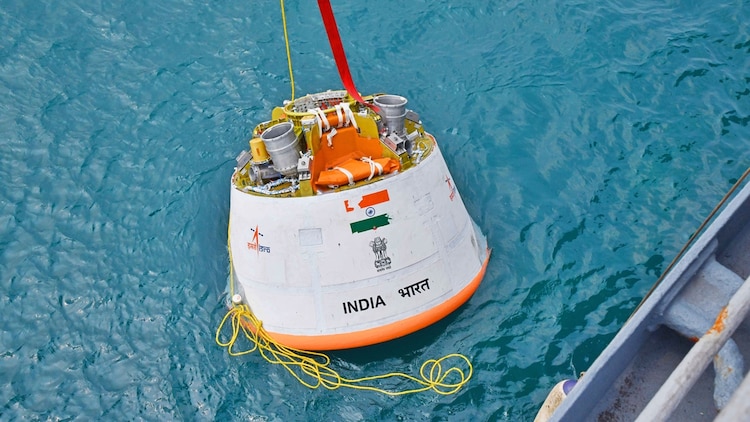
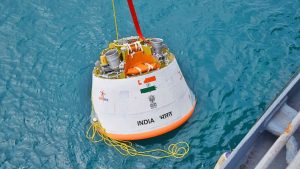
Crew safety systems, considered the backbone of the programme, have also delivered encouraging results. The parachute-based deceleration system, which ensures the safe splashdown of the Crew Module, has been successfully tested under simulated conditions.
Likewise, the Crew Escape System (CES), designed to rapidly pull astronauts away from the rocket in case of an emergency during launch, has completed multiple static motor tests, demonstrating reliable performance.
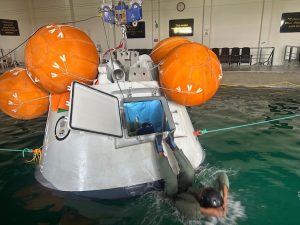
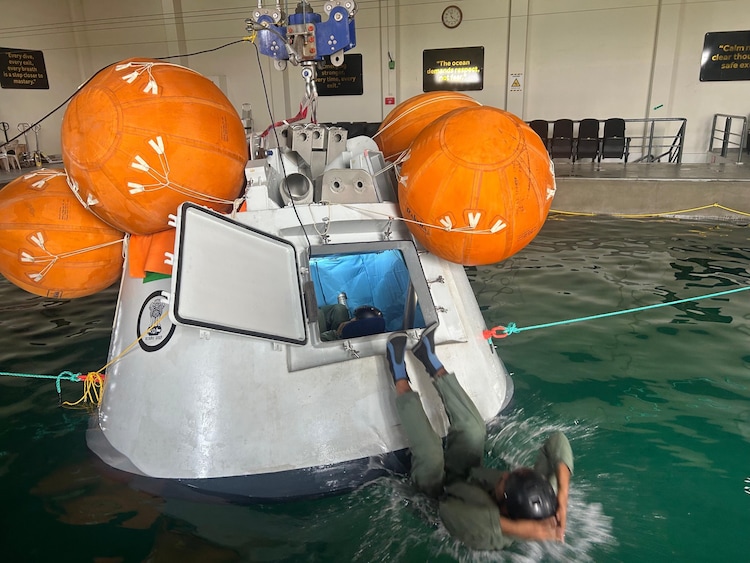
Meanwhile, Isro has completed crew egress protocols marking another milestone for Mission Gaganyaan. At the Southern Naval Command’s Water Survival Training Facility at INS Garuda, the Indian Navy is fine-tuning recovery operations to ensure India’s Gaganyatris are fully prepared for any contingency during splashdown and post-landing procedures.
Despite the progress, officials said Isro is unwilling to rush the mission. “Human spaceflight leaves no margin for error. Even a minor anomaly can have serious consequences,” a senior official at Isro noted.
If the March 2026 window slips, it would mark another recalibration for India’s most ambitious space endeavour. But within Isro, the emphasis appears clear: safety first, schedule second.