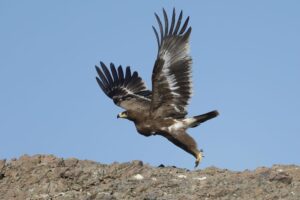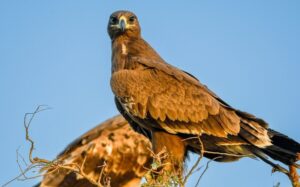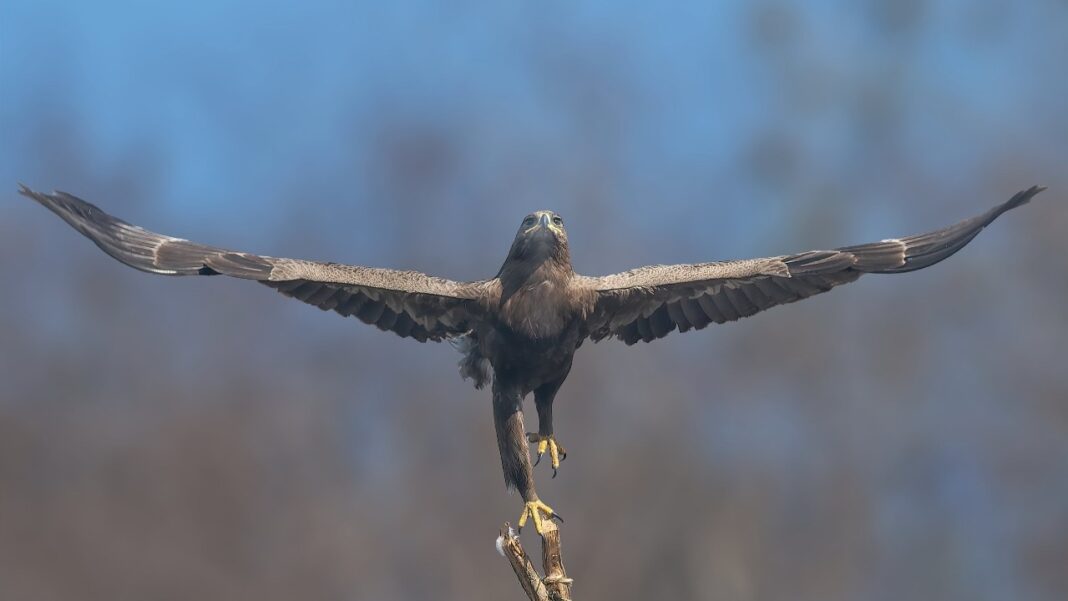
Every winter, thousands of steppe eagles make one of nature’s most dramatic journeys, flying from the freezing grasslands of Kazakhstan and Mongolia all the way to warmer lands in South Asia and Africa, including Iran and Iraq.
This season, however, birdwatchers and wildlife experts in Rajasthan have noticed something strange.
More of these majestic raptors than usual are showing up in Bikaner and Jaisalmer. And the reason, researchers believe, may lie far away. It may lie in the conflict-torn skies of Iran and the neighbouring regions.
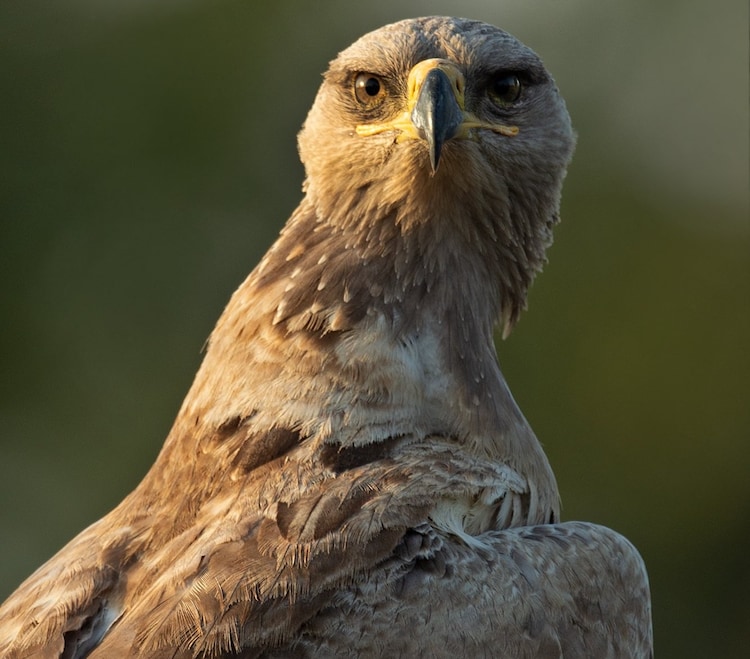
WHAT ARE STEPPE EAGLES?
The steppe eagle is a large raptor with a wingspan of over two metres. While it mainly breeds in central Asian countries, including Kazakhstan, Russia, and Mongolia, it undertakes an annual southward migration as temperatures drop.
The decline in the bird’s population over the past decades has landed the steppe eagle on the IUCN Red List, where it is classified as Endangered. Loss of steppe habitat, collisions with power lines, human persecution, and illegal trafficking have all contributed to the dwindling numbers of the majestic creature.
Eagles from central Kazakhstan use two main migration routes; the Afro-Eurasian route and the central Asian route.
The central Asian route runs from the Arctic and Siberia through Kazakhstan to South Asia.
India sits squarely on this flyway, making its protected areas critical buffer zones, especially when conflict destabilises the Middle Eastern leg of the journey.
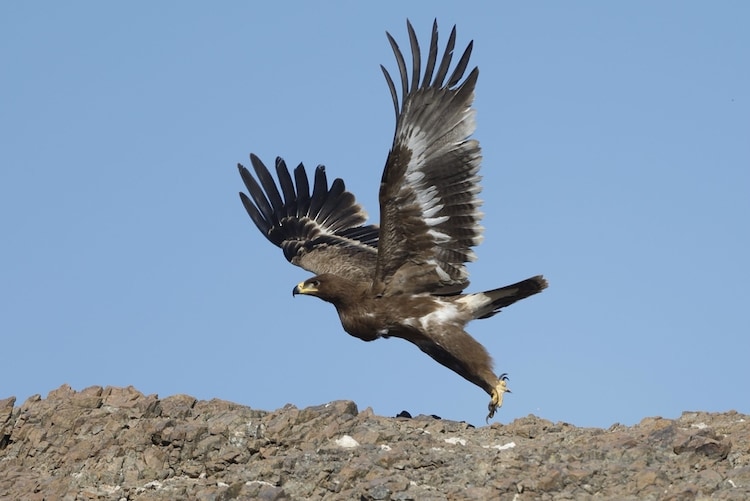
WHY ARE MORE EAGLES COMING TO RAJASTHAN?
Each autumn, steppe eagles embark on journeys that can span up to 30 countries across Eurasia and Africa.
Their migratory route includes Azerbaijan, Armenia, Iran, and Afghanistan before reaching India and Nepal.
Iran and Iraq have traditionally served as important wintering and transit zones for these birds.
Steppe eagles regularly spend winter in eastern Iraq and western Iran, where they feed at slaughterhouses, dump sites, and wetlands.
But the ongoing instability in both countries due to the war waged by the US in the region is hurting the planned trip for the birds, experts told Dainik Bhaskar.
The ongoing conflict is causing increased aerial activity and unsafe ground conditions that appear to be pushing birds away from those zones, nudging them further east toward the relative calm of the Thar Desert in India’s western corner.
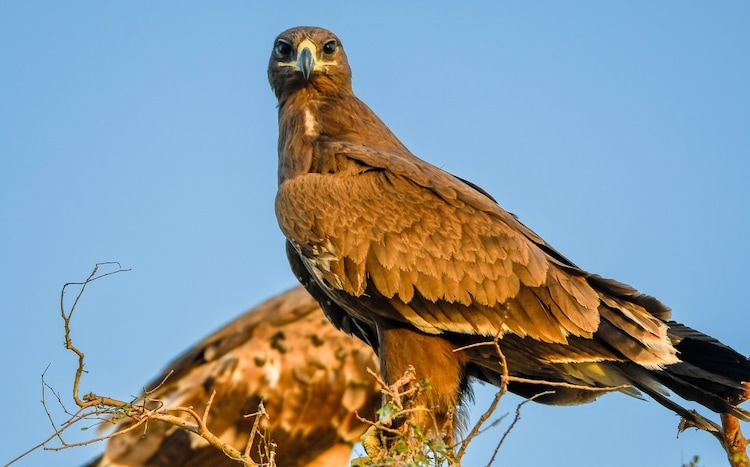
WHAT MAKES RAJASTHAN SPECIAL?
Rajasthan’s western belt has become one of the most important eagle sanctuaries on Earth.
Jorbeer Conservation Reserve near Bikaner and Desert National Park near Jaisalmer are now part of the Global Action Plan for Conservation of the Steppe Eagle for 2026–2035, an international initiative approved under the Convention on the Conservation of Migratory Species.
Both sites have recorded over 2,000 steppe eagles in recent surveys.
The increasing inclusivity of these birds of prey is the reason the eagles prefer to fly for the comfort and convenience offered by India. This emerging pattern has once again highlighted how India is becoming an ideal host for a number of migratory birds.
For Rajasthan, it has become obvious that the desert state is not just a tourist draw but also an emerging lifeline for one of the world’s most threatened eagles, a bird that now depends on India’s conservation effort more than ever.