Earth behaved strangely during two massive solar events. Aditya-L1 reveals why

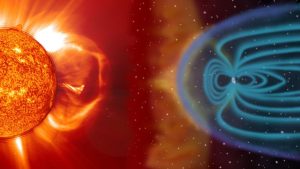
Earth is protected by an invisible magnetic shield called the magnetosphere, which guards us against the constant stream of particles from the Sun. However, even this shield can be pushed to its limits during powerful solar storms.

Recent findings from the Indian Space Research Organisation (Isro)’s Aditya-L1 mission have helped scientists solve a puzzle about why certain parts of our planet reacted strangely during two massive solar events in 2024.

WHAT HAPPENED DURING THE 2024 SOLAR EVENTS?

On May 10 and October 10, 2024, the Sun unleashed intense energy that triggered spectacular auroras across the globe.

Think of an aurora as a giant cosmic neon sign. The Sun constantly releases a stream of charged particles called the solar wind.

Occasionally, it lets out a massive burp of plasma known as a Coronal Mass Ejection.
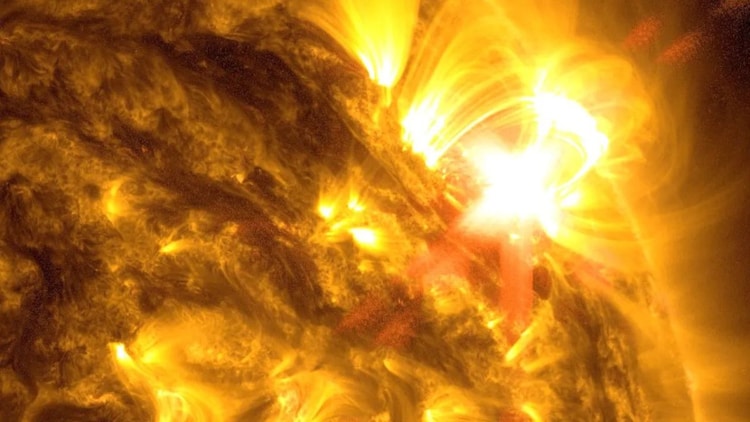
Solar wind pressure measurements from Aditya-L1 confirmed the cause of ground-level disturbances during two massive solar events in 2024. (File Photo)

Solar wind pressure measurements from Aditya-L1 confirmed the cause of ground-level disturbances during two massive solar events in 2024. (File Photo)

When these particles hit Earth’s magnetic field, they are funnelled towards the poles. As they crash into gases like oxygen and nitrogen in our atmosphere, they release energy as light.

While these light shows were beautiful, they were accompanied by unusual magnetic disturbances.

To understand this, think of Earth’s magnetic shield like a balloon being squeezed. When the solar wind blows harder, or has high pressure, it squashes the balloon, making the magnetic strength increase.

When the wind dies down, or has low pressure, the balloon expands, and the magnetic strength decreases.
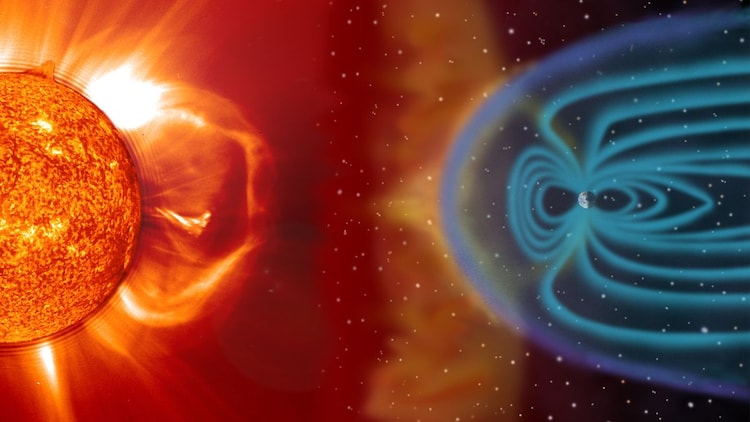
Coronal mass ejections trigger auroras. (File Photo)

Coronal mass ejections trigger auroras. (File Photo)

However, during these 2024 storms, the dawn sector, or the area of Earth’s magnetosphere just waking up to sunrise, behaved like a mirror.

When the rest of the world saw the magnetic field get stronger, the dawn side saw it get weaker.

When the rest of the world saw it weaken, the dawn side saw it get stronger.

In other words, the dawn sector witnessed the exact opposite of what was happening everywhere else.

HOW DID ADITYA-L1 SOLVE THE MYSTERY?

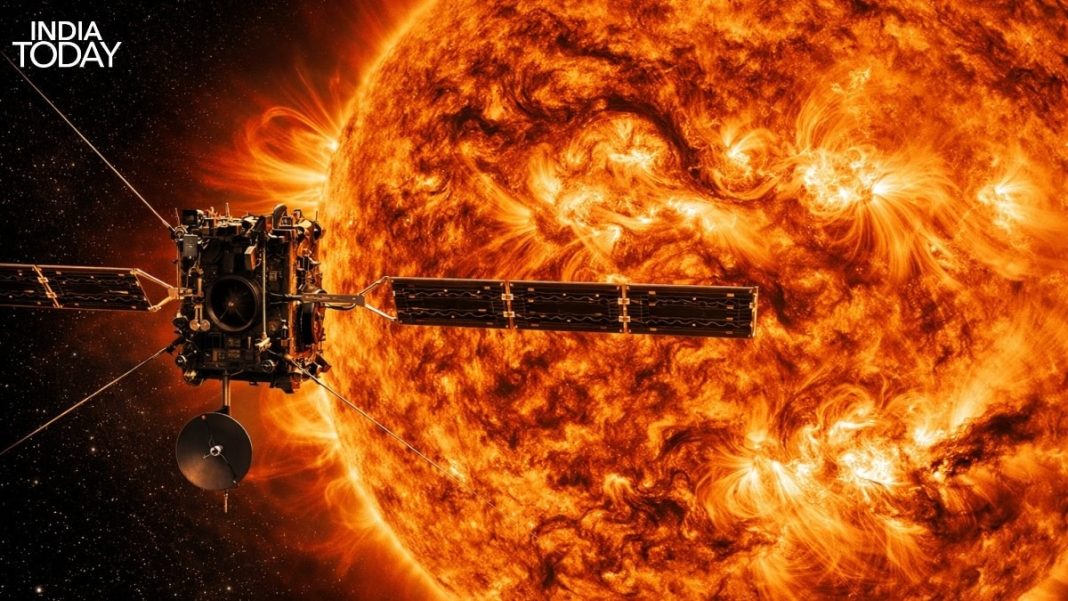
Researchers from the Indian Institute of Geomagnetism in Colaba and Isro used data from the ASPEX (Aditya Solar wind Particle EXperiment) instrument on board Aditya-L1 to track these changes.

By comparing space measurements with ground-based data, they discovered that the culprit was a high-altitude electric current.

Normally, intense electrical currents in space stay far away, near the North and South Poles.

But these 2024 storms were so violent that they pushed these polar currents towards the equator.
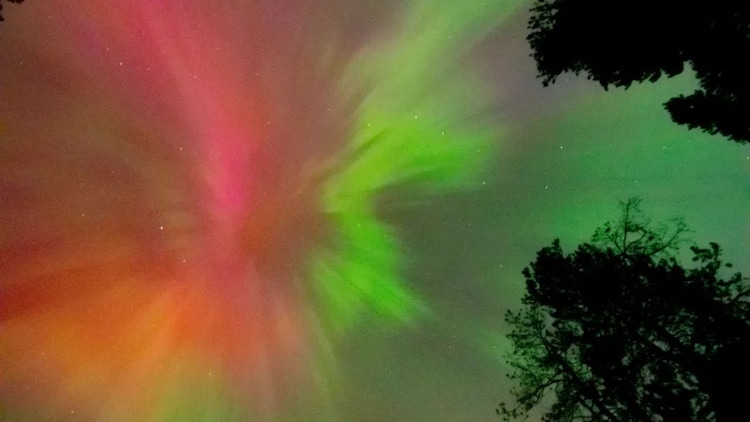
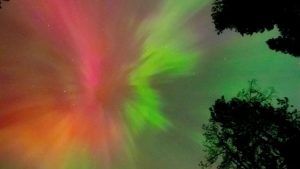
Auroras, commonly known as the northern lights in the Northern Hemisphere, are shimmering displays of colourful light in the night sky caused by charged particles from the Sun colliding with gases in Earth's atmosphere. (File Photo)

Auroras, commonly known as the northern lights in the Northern Hemisphere, are shimmering displays of colourful light in the night sky caused by charged particles from the Sun colliding with gases in Earth’s atmosphere. (File Photo)

During the 2024 storms, these currents crowded into the dawn side of Earth like uninvited guests. Once they arrived, they created their own magnetic force that fought against Earth’s normal field and flipped the readings backwards.

This means that while the magnetic field should have increased, it actually decreased, and when it should have decreased, it actually increased.

The Indian spacecraft provided a front-row seat to the solar wind behaviour. When the October storm hit, Aditya-L1 recorded a sudden drop in solar wind pressure.
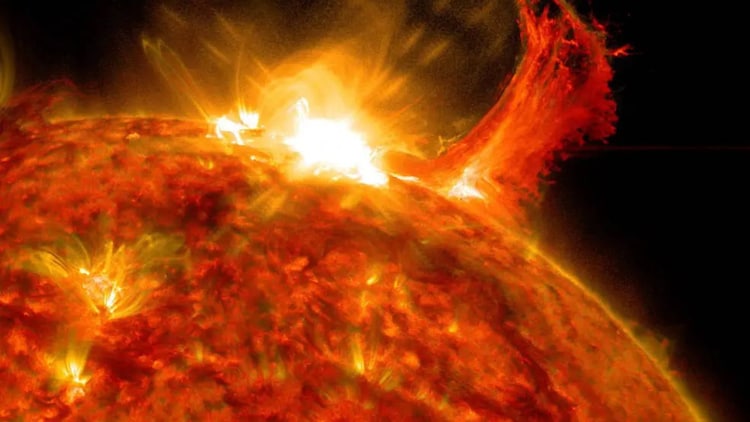
The dawn sector of Earth experienced unique magnetic shifts due to encroaching polar currents occurring as a result of powerful solar storms. (File Photo)

The dawn sector of Earth experienced unique magnetic shifts due to encroaching polar currents occurring as a result of powerful solar storms. (File Photo)

While most of the world saw a corresponding dip in magnetic strength, the dawn side saw an increase.

This confirmed that the Earth’s magnetic environment becomes highly unpredictable during peak solar cycles.

WHY SHOULD WE CARE ABOUT MAGNETIC DISTURBANCES?

These fluctuations are not just academic curiosities. Because we rely so much on technology, these magnetic flips are dangerous. They can scramble GPS for pilots, mess up satellite signals, and even cause power outages by overloading electricity grids.

By understanding how these auroral currents move during a crisis, scientists can better protect our modern technology. The research, published in the journal Geophysical Research Letters, marks a significant milestone for India’s first solar mission in its quest to understand the temperamental nature of our star.
Latest

Delhi braces for a massive heatwave on Sunday, heavy rain to lash the Northeast

The India Meteorological Department predicts heavy rain for Assam and Meghalaya while Delhi faces a steep temperature rise. Heatwave alerts have been issued for

Indian-born cheetah in Kuno welcomes 4 cubs, the 1st recorded birth in the wild

A 25-month-old Indian-born female cheetah has given birth to four cubs in Kuno National Park. This marks the first wild birth by a second-generation cheetah sin

The scientific genius of India’s tabla and mridangam

The tabla produces musical harmony like a string instrument, something physics said was impossible for drums. CV Raman's 1920 research revealed how Indian craft

Chandrayaan-4: Why India’s next Moon mission is changing rockets mid-way

Isro is changing the launch vehicle for Chandrayaan-4. The engine it now depends on has never flown.

What is next after Artemis II? Nasa chief Jared Isaacman reveals Moon landing plans

Nasa Administrator Jared Isaacman confirms that work has begun on the Artemis III Moon mission following the Artemis II splashdown on April 11. Discover when hu

Topics

Word of the day: What ‘Cogent’ means and how to use it right

The word of the Day for April 10 is: Cogent. Learn what it means and how to use it in daily conversation. Add it to your vocabulary and impress everyone around

Quote of the day by Ankur Warikoo: A lot of us will never be successful in our lives, because…

Ankur Warikoo inspires readers to rethink success based on personal awareness and values

If China does that, Trump warns Beijing over possible Iran arms shipment

President Donald Trump warned China would face “big problems” if it sends weapons to Iran, after US intelligence suggested Beijing may secretly route air de

Tristan Stubbs lashes out after glove change denial proves costly in Chennai

Tristan Stubbs was left frustrated after being denied a glove change in humid Chennai, a moment that disrupted his rhythm and proved costly as Delhi Capitals fe

Bank FDs vs small savings schemes: Compare PPF, NSC, Sukanya Samriddhi and fixed deposit interest rates this year

The Centre has kept small savings schemes returns unchanged for the April-June 2026 quarter. When it comes to bank fixed deposits vs small savings schemes, here

2 US Navy destroyers begin mine clearing ops in Hormuz amid ceasefire talks

Earlier in the day, US President Donald Trump had posted on social media that US forces had begun 'clearing out' the Strait of Hormuz and that all of Iran's min

Why Islamabad’s Serena Hotel is hosting US-Iran ceasefire talks?

Spread across landscaped gardens near the Margalla Hills and Rawal Lake, the Serena Hotel in Islamabad fuses traditional Islamic architecture with modern luxury

Pakistan deploys fighter jets and military personnel in Saudi Arabia amid US-Iran ceasefire talks

The deployment follows recent Iranian strikes on the Gulf nation, which damaged essential energy infrastructure and resulted in a Saudi casualty
spot_img

Related Articles

Popular Categories

spot_imgspot_img