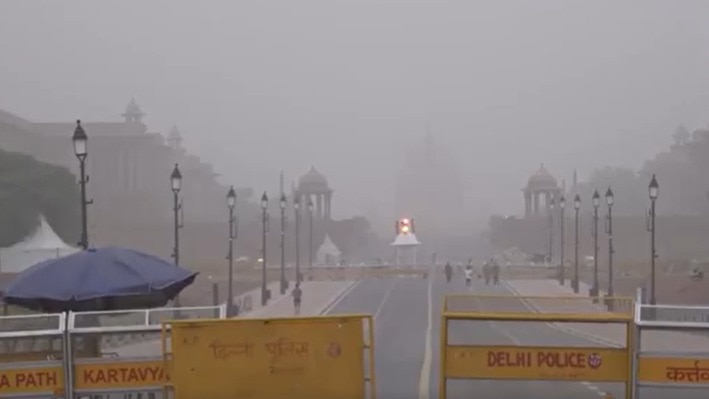
Delhi-NCR woke up to hazy skies and dust-laden winds today as a powerful dust storm swept across the region, reducing visibility and sending air quality levels soaring.
The sudden change in weather, which also brought gusty winds and patchy rain to some areas, is the result of a combination of regional and atmospheric factors, according to weather experts.
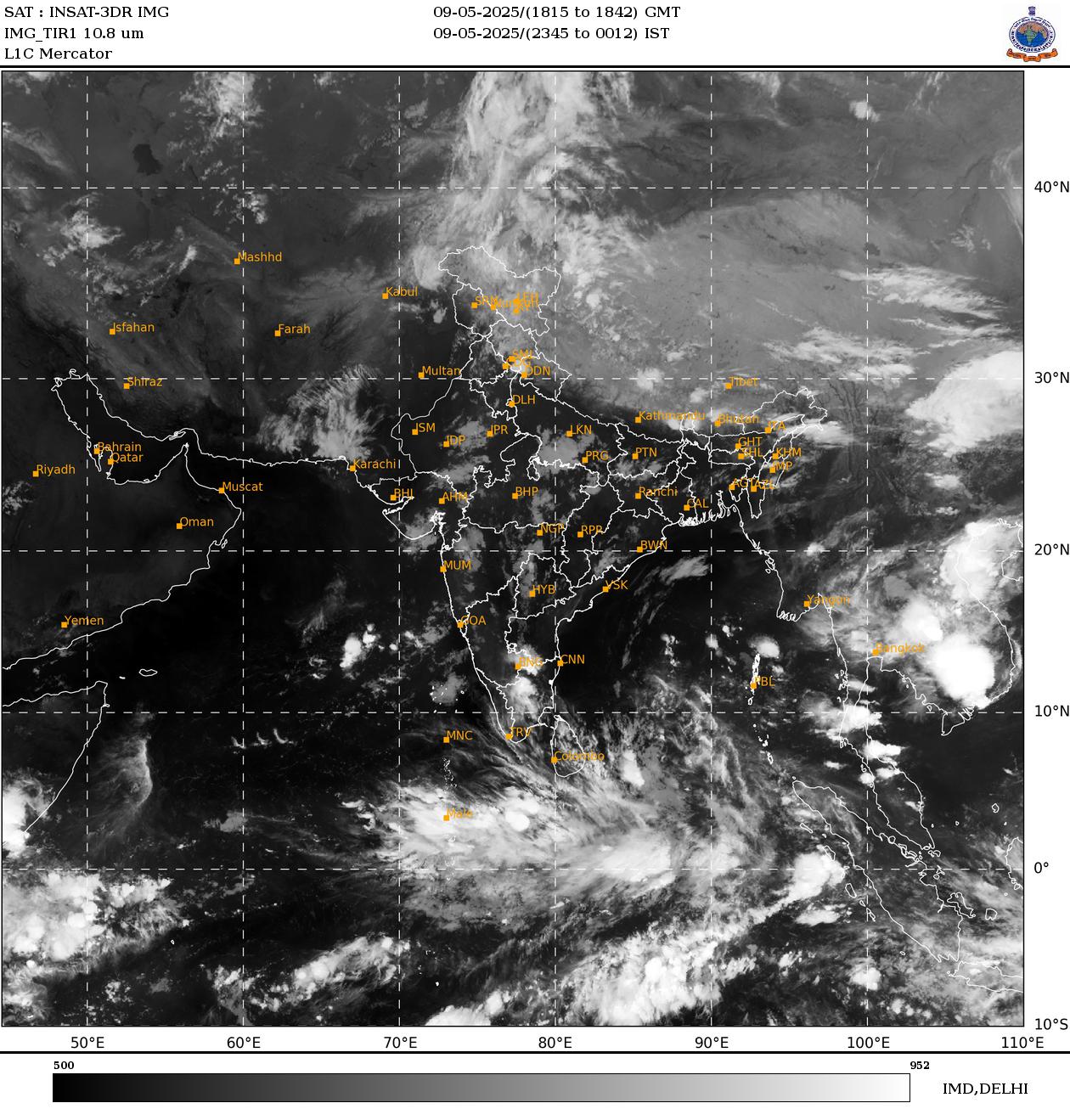
At the heart of the phenomenon is a western disturbance, a weather system that originates over the Mediterranean region and travels eastwards toward north India.
These systems are known to trigger abrupt weather changes, including thunderstorms, strong winds, and dust storms, especially during the transition from winter to summer.
In recent days, this disturbance interacted with unusually warm surface temperatures over north India, creating atmospheric instability. As a result, strong winds, often reaching speeds of 40–50 km/h, developed across Delhi-NCR, kicking up large amounts of loose dust.
WHERE DID THE DUST COME FROM?
Meteorologists say the dust blanketing the capital is not locally generated alone. Instead, it has been carried over long distances by strong winds blowing in from arid regions.
Desert areas such as the Thar Desert in Rajasthan and parts of Balochistan and central Pakistan are key sources.
These winds lift fine sand and dust particles high into the atmosphere and transport them across hundreds of kilometres.
When wind speeds drop over Delhi-NCR, the particles remain suspended in the air, creating the thick haze seen today.
Adding to the problem is the lack of recent rainfall, which has left the soil dry and loose, making it easier for winds to pick up dust.
Rising temperatures ahead of summer have further worsened conditions, intensifying dust activity.
WHY DOES IT HAPPEN SO SUDDENLY?
Dust storms in Delhi are often brief but intense because they are tied to fast-moving weather systems.
Warm air near the surface rises rapidly, pulling in cooler air and moisture from upper layers, which then generates strong gusty winds.
This explains why residents experience a dramatic shift, from clear skies to dusty winds, within a matter of hours.
WHAT NEXT?
The India Meteorological Department (IMD) expects such unstable weather to continue in short spells over the coming days, with the possibility of more dust storms followed by rain, which typically helps settle airborne particles.
For now, the dusty conditions once again shows Delhi’s vulnerability to regional weather systems, where winds from distant deserts can quickly turn the capital’s skies brown.