India’s most complex upcoming Moon mission was already a challenge. Then the Indian Space Research Organisation (Isro) decided to change its rocket.
Chandrayaan-4, India’s first lunar sample return mission, is targeted for launch in October 2027.
It will attempt to land on the Moon’s south polar region, drill and collect up to three kilograms of lunar soil, seal it in a vacuum-tight container, launch back off the Moon’s surface, dock with a waiting spacecraft in lunar orbit, and return the samples to Earth.
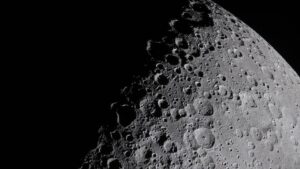
No country has ever done this from the lunar South Pole.
The United States, the Soviet Union, and China have returned Moon samples, but none from the polar region.
This is already an extraordinary undertaking. And yet, in the middle of development, Isro made a significant decision: it decided to change the rocket.
WHY DOES CHANDRAYAAN-4 NEED TWO ROCKETS?
To understand the switch, you first need to understand why Chandrayaan-4 requires two rockets at all.
The mission comprises five spacecraft modules: an Ascender Module, a Descender Module, a Re-entry Module, a Transfer Module and a Propulsion Module.
Think of Chandrayaan-4 as a relay race with five runners. Together, these weigh approximately 9,200 kg.
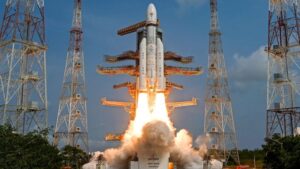
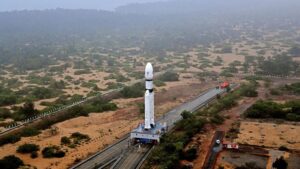
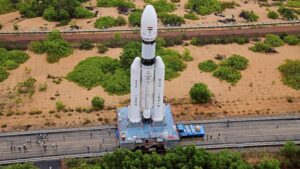
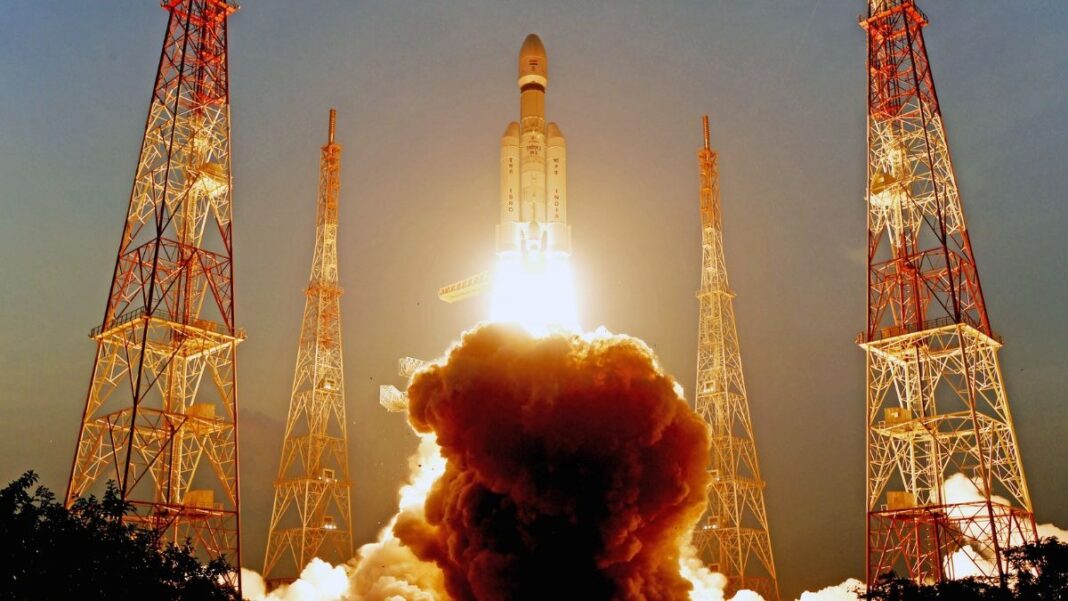
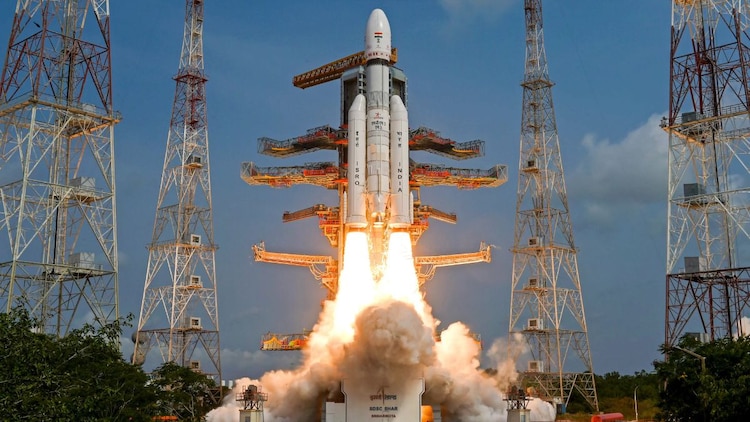
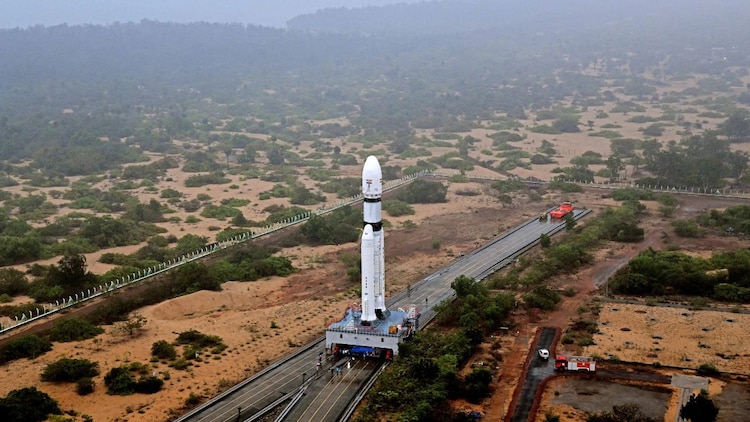
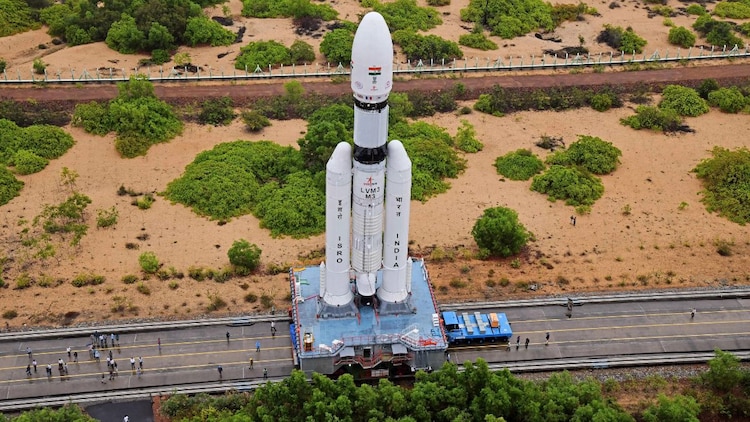
India’s most powerful operational rocket, the Launch Vehicle Mark-III (LVM3), can carry around 8,000 kg to low Earth orbit.
Each of Chandrayaan-4’s two separate LVM3 launches, carrying different modules, pushes close to or beyond what the standard LVM3 can comfortably lift.
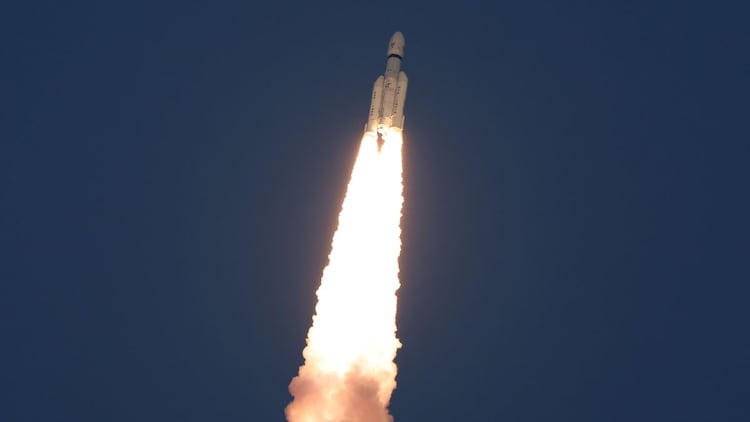
So Isro’s solution was to split the spacecraft across two separate LVM3 launches.
The mission begins with the first LVM3 rocket carrying the landing stack, which includes the Descender and Ascender modules, into Earth orbit.
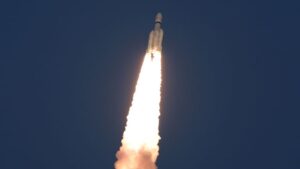
Shortly after, the second LVM3 rocket launches with the remaining modules, the Propulsion, Transfer, and Re-entry units, to meet the first group in space.
Once both are in Earth orbit, the two stacks perform a docking manoeuvre to lock together into a single integrated unit.
Only after this orbital handshake is complete does the combined spacecraft use its engines to travel to the Moon as one piece.
Once they reach lunar orbit, the stacks separate again for surface operations.
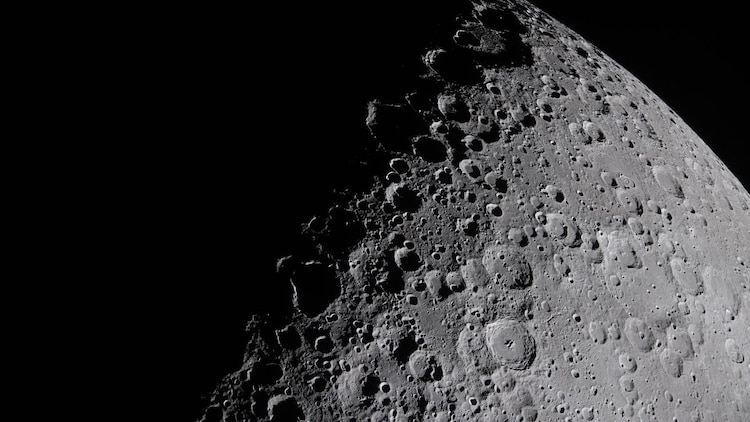
The Descender Module lands on the Moon and the Ascender Module lifts the collected soil samples back off the surface into lunar orbit.
The Transfer Module takes the hand-off and moves the samples into the Re-entry Module, the capsule that physically carries them back to Earth.
The Propulsion Module is the engine room of the whole operation, powering the combined spacecraft from Earth orbit all the way to the Moon and back.
The two stacks refer to the five mission modules divided into two separate groups because their combined weight is too heavy for a single rocket.
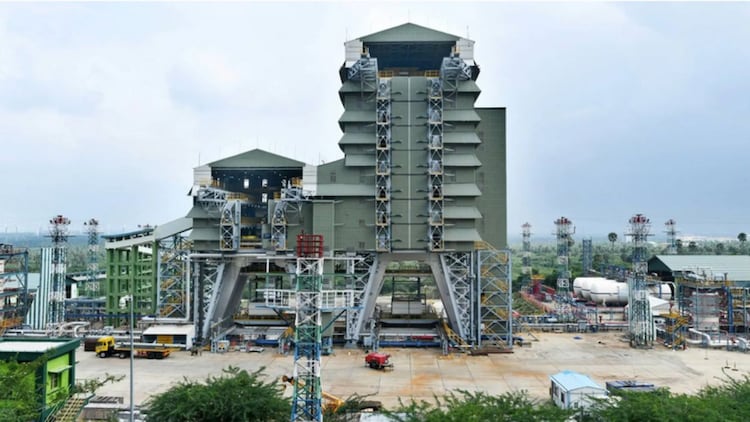
These two independent units launch on separate LVM3 rockets and dock together in Earth orbit to form a single integrated spacecraft for the journey to the Moon.
While it might seem that splitting the 9,200 kg load would make it easier, each half of the mission is still too heavy for the standard rocket to carry into the precise high orbit required for docking.
Isro is using the upgraded SE2000 engine on both rockets to provide the extra muscle needed to ensure both halves have enough fuel to find each other and lock together in space.
WHAT ROCKET CHANGE DID ISRO MAKE?
The Rajya Sabha Standing Committee report tabled in March 2026 confirms that procurement of raw materials for the launch vehicle was deferred mid-year because Isro changed the rocket configuration to incorporate a semi-cryogenic engine.
A semi-cryogenic engine uses a liquified gas as an oxidiser, and a liquid hydrocarbon as fuel.
The standard LVM3 uses a liquid-fuelled core stage called the L110, which burns a propellant combination of unsymmetrical dimethylhydrazine and nitrogen tetroxide.
Unsymmetrical dimethylhydrazine is used as fuel, and nitrogen tetroxide is the oxidizer that helps it burn.
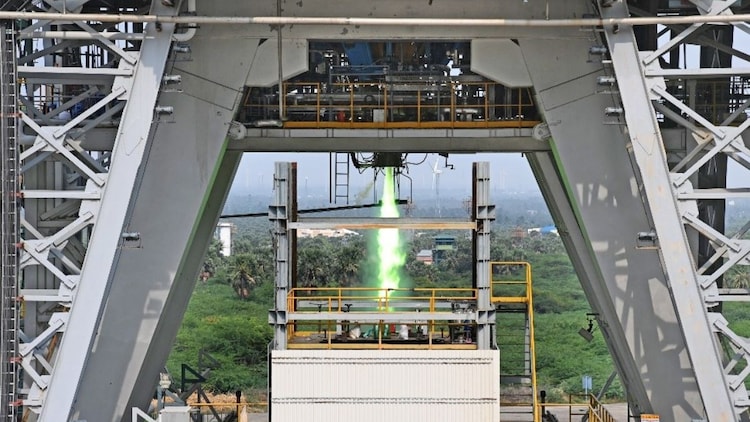
The term unsymmetrical simply means the building blocks of the fuel are attached in a lopsided way to make it more stable for long space missions.
These two liquids are special because they ignite instantly the moment they touch each other, providing the massive power needed to push the rocket into space.
Isro has been developing a replacement for this stage called the SC120 stage, powered by the SE2000 semi-cryogenic engine.
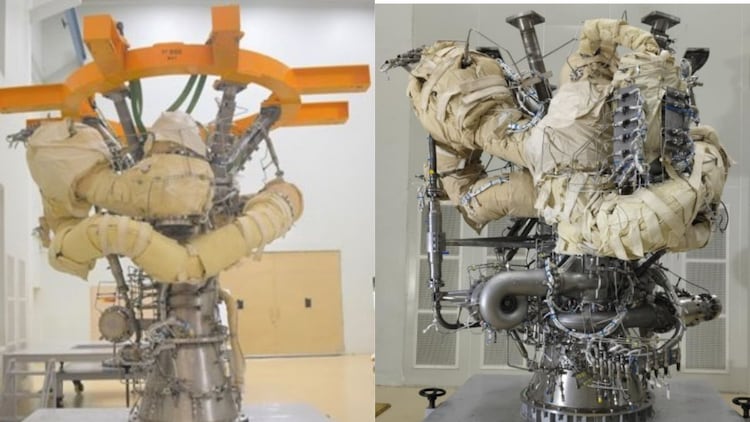
A semi-cryogenic engine burns kerosene and liquid oxygen.
Kerosene is far denser than liquid hydrogen, which means more propellant fits into a smaller tank, generating significantly more thrust in a compact package.
This upgraded version of the LVM3, sometimes referred to as SC LVM3, would push its payload capacity to geostationary transfer orbit, a high elliptical orbit used as a stepping stone for deep space missions, from around 4,200 kg up to approximately 5,200 kg.
That extra margin is what Chandrayaan-4 needs to make each of its two stacks viable.
WHY DID ISRO’S BUDGET COLLAPSE?
The consequence was immediate and visible in Isro’s finances.
Of Rs 150 crore allocated to Chandrayaan-4 for 2025-26, only Rs 34.6 crore was spent by January 2026.
The parliamentary committee flagged this directly, noting that procurement of components planned for that year was simply deferred because the launch vehicle configuration was still being finalised.
WILL THE ROCKET BE READY IN TIME?
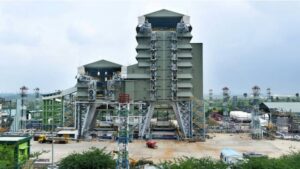
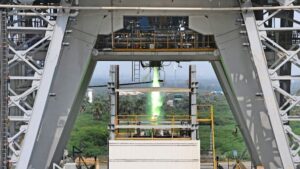
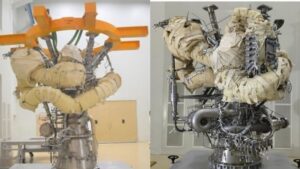
This is where the timeline gets complicated. The SE2000 semi-cryogenic engine completed its third Power Head Test Article hot test in May 2025 at the Isro Propulsion Complex in Mahendragiri, Tamil Nadu.
A Power Head Test Article is an intermediate prototype that tests all engine systems except the thrust chamber.
The thrust chamber is the business end of a rocket engine where the fuel and oxidiser are mixed and burned at intense pressure to produce the high-velocity exhaust that pushes the rocket upward.
A Power Head Test Article acts like a car engine being tested without its exhaust pipe and wheels, focusing only on the complex internal pumps that move fuel at high speeds.
This allows Isro to confirm that the delicate machinery works perfectly before they attach the combustion chamber, where the actual fire and heavy thrust are created.
The first fully integrated engine hot test is targeted for the end of 2026. The SC LVM3, equipped with this engine, is expected to be ready only by 2028–29 per the official mission calendar.
Chandrayaan-4 is targeted for October 2027. Isro has not publicly reconciled this gap.
The engine the mission now depends on may not complete testing before the mission’s stated launch date.
Parliament’s standing committee has already recommended stronger monitoring of the mission’s pace.
Whether Isro holds October 2027 or adjusts the timeline again remains to be seen.
What is certain is that India’s most ambitious Moon mission is now tied to the success of an engine that has never flown.