Asia’s largest tulip garden is now open: Why Kashmir is India’s tulip paradise

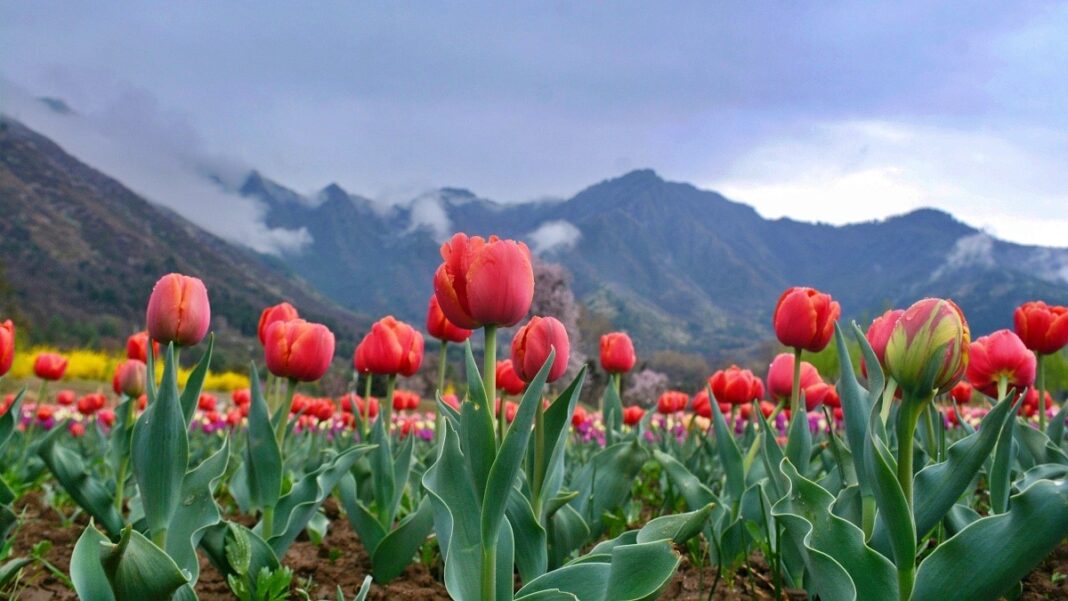
Asia’s largest tulip garden in Srinagar opened to visitors on Monday, once again transforming the Kashmir Valley into a sea of colour as millions of tulips bloom against the backdrop of the Zabarwan mountains.

Jammu and Kashmir Chief Minister Omar Abdullah inaugurated the Tulip Show-2026 at the Indira Gandhi Memorial Tulip Garden in Srinagar and toured the sprawling garden.

This year, nearly 18 lakh tulips across more than 70 varieties have been planted at the garden. In addition, close to one lakh other bulbous flowers, including Daffodil, Hyacinth and Narcissus, have also been cultivated, bringing a burst of colours to the Kashmir Valley’s spring landscape.

Beyond the spectacle, scientists say Kashmir’s unique climate and soil make it one of the few places in the country naturally suited for tulip cultivation.

tulip

Jammu and Kashmir Chief Minister Omar Abdullah poses for a selfie during a visit to the Tulip Garden, in Srinagar. (Photo: PTI)

WHY DO TULIPS BLOOM SO WELL IN KASHMIR?

Tulips are temperate flowers that grow from underground bulbs and require a specific temperature cycle to bloom successfully.

According to horticulture experts, the bulbs must undergo a prolonged cold period during winter before they can break dormancy and produce flowers in spring. This chilling requirement is naturally fulfilled in the Kashmir Valley, where winters are cold enough to trigger the bulb’s biological reset.

The tulip bulb needs a cold phase followed by a mild spring to develop properly. Kashmir provides this ideal sequence of cold winters and cool springs, allowing tulips to bloom naturally without artificial chilling methods often required in warmer regions.
tulip

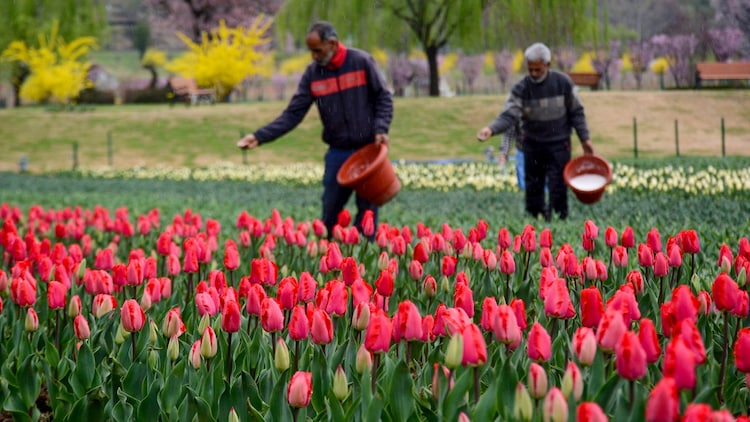
Srinagar: Gardeners tend to blooming tulips at the Tulip Garden ahead of its opening for the public, in Srinagar. (PTI Photo)

Another key factor is soil. Tulips thrive in well-drained, fertile soil, as waterlogged conditions can rot the bulbs. The tulip garden in Srinagar is built on the gentle slopes of the Zabarwan Range, which naturally allows excess water to drain away.

This sloping terrain, combined with loose, nutrient-rich soil, creates ideal growing conditions for the delicate bulbs.

The valley’s altitude and spring climate also play a crucial role. Unlike the plains of India, where temperatures rise rapidly after winter, Kashmir experiences a long, cool spring. This gives tulip plants enough time to grow stems, develop buds and produce vibrant blooms before the onset of summer heat.

These environmental advantages explain why large-scale tulip cultivation is rare in most parts of India. While tulips can be grown elsewhere using pre-chilled bulbs or controlled greenhouse conditions, few regions offer the natural climate that Kashmir provides.
Tulip

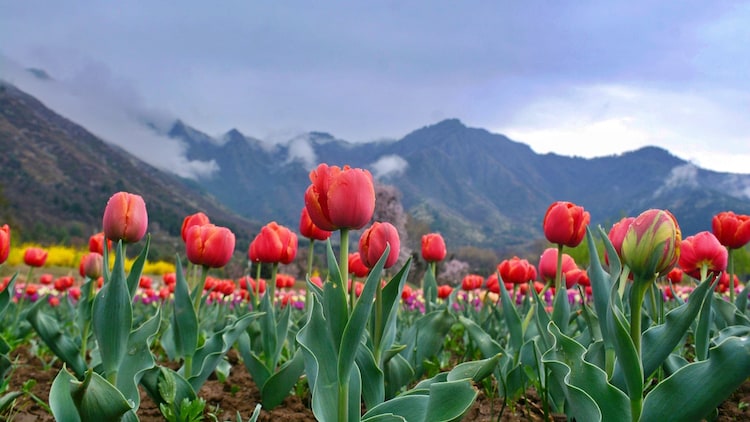
Tulips bloom at the Tulip Garden ahead of its opening for the public, in Srinagar. (Photo: PTI)

Spread across dozens of hectares and featuring more than a million tulip bulbs of multiple varieties, the Srinagar garden has grown into a major tourism draw since its opening in 2007.

Every spring, the blooming fields attract thousands of visitors during the annual Tulip Festival.

The vibrant display highlights not just Kashmir’s beauty but also the rare combination of climate, soil and altitude that allows one of the world’s most famous spring flowers to flourish naturally in the Himalayas.

Latest

US startup wants to sell sunlight at $5,000/hour, send 50,000 big mirrors to space — the idea is controversial

California-based Reflect Orbital has proposed deploying 50,000 large mirrors into orbit around Earth. The company wants to sell sunlight — brighting up the ni

Iran launches Sejjil missile against US: Why is it called the dancing missile?

The missile can carry a payload of around 500-1,000 kilograms, which may include conventional high-explosive warheads and potentially other types depending on c

Snowing in March: Unseasonal snowfall could enhance Ladakh’s water crisis

In the past, heavy snow arrived between December and February and stayed long enough to recharge underground water and keep springs flowing through summer. Now

Indian scientists discover how meditation rewires the brain

Scientists discovered that experienced meditators also exhibit higher activity in the gamma frequency range, which is associated with attention, perception and

How do ravens find wolf kills before the blood dries? We now know

Ravens rely on their memory to revisit spots favourable for finding carcasses hunted by wolves.

Topics

The Iran war is roiling commodities far beyond oil

The Gulf states, it is rapidly becoming clear, matter for the supply of much more than oil and gas.

Renault bets on Duster revival to power India turnaround

The original Renault Duster, launched more than a decade ago, effectively created the compact SUV category in India.

Reliance, Samsung sign $3-billion contract for green ammonia supply

The Reliance-Samsung deal, one of the largest of its kind globally, signals Chairman Mukesh Ambani's ambition to dominate the renewable energy value chain.

Sensex, Nifty set for muted open today due to higher-for-longer crude oil prices

Brokerages Citi and Nomura have lowered their year-end Nifty 50 targets, citing the impact of the surge in crude oil prices on India's growth and earnings.

Actor Navnindra Behl, known for Ishqbaaz, Queen, dies at 76; son Kanu Behl pens moving note: ‘Until you birth me again’

Veteran actor Navnindra Behl, best known for her work in Ishqbaaz and Bollywood film Queen, passed away at the age of 76. 

Hema Malini says ‘it’s a shame’ Dharmendra was left out of Oscars In Memoriam segment: ‘He was recognised everywhere’

Hema Malini criticised the Oscars for not including Dharmendra in the In Memoriam segment, stating that the late actor meant so much to people worldwide.

Pay first, fill later: Oil marketing firms suspend fuel on credit to pumps amid West Asia crisis

Oil marketing companies (OMCs) have suspended fuel on credit to limit offtake by retail outlets, four people aware of the development said.

‘Firms need to move to adaptive, energy-efficient AI models’

Sarah Hooker is convinced that the future lies in AI systems that use less computing power, cost less to run and can adapt to the needs of users.
spot_img

Related Articles

Popular Categories

spot_imgspot_img