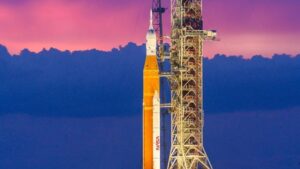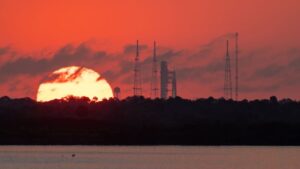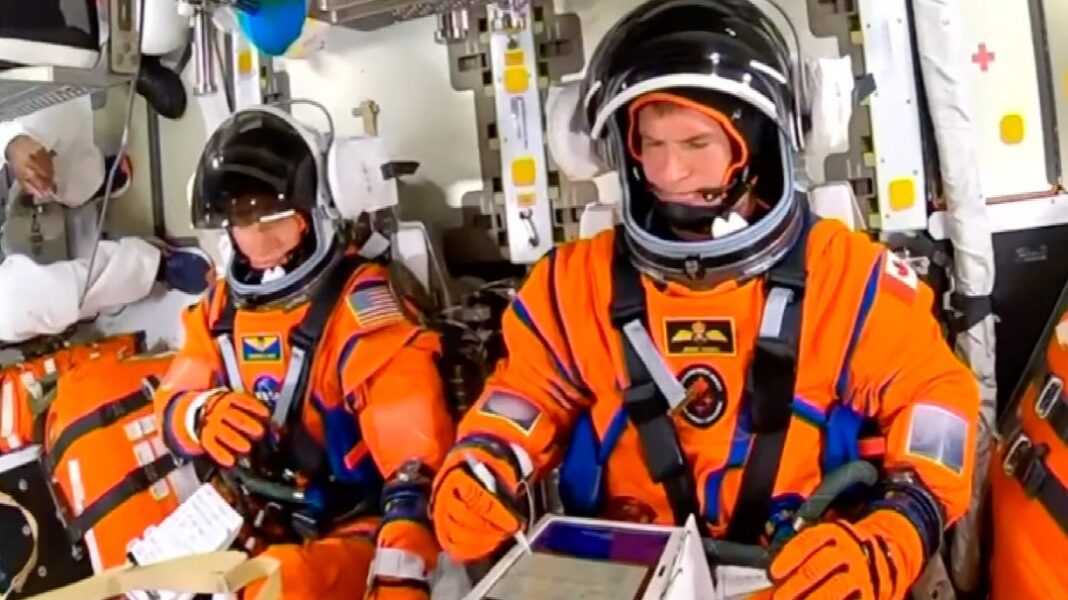
The Space Launch System (SLS), Nasa’s most powerful rocket since the Saturn V of the Apollo era, cleared the launch tower on Thursday, thundering its way to the moon.
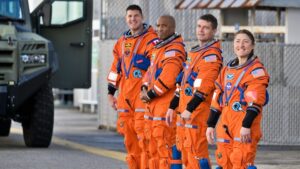
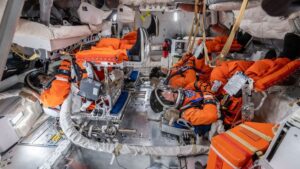
The Orion capsule, named Integrity by its crew, is in space, carrying four human beings for the first time in the vehicle’s history.
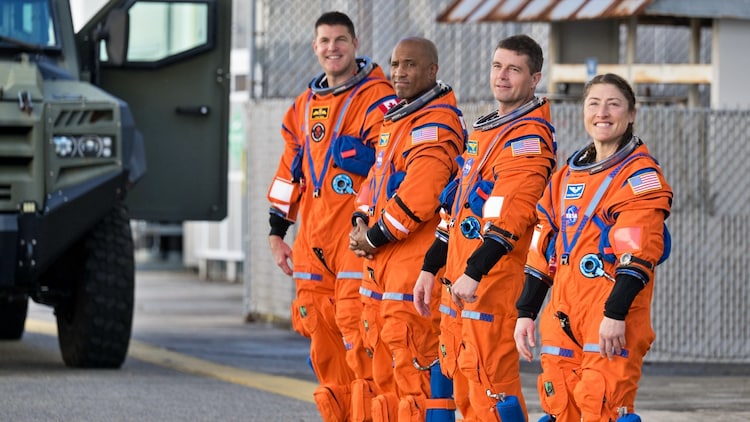
Getting off the ground was the easy part. What comes next, in the first 48 hours of this mission, is where Artemis-II will truly be put to the test.
You can explore the journey of the four astronauts in this detailed Artemis II interactive story.
WHAT HAPPENED IN THE FIRST HOUR AFTER LAUNCH?
The first eight minutes of Artemis-II were among the most intense in human spaceflight.
The SLS rocket acts like a powerful, multipart lift to reach space.
First, the two massive white boosters on the sides provided the initial thrust before falling away.
Then, the tall orange core stage finished the job of pushing the crew out of Earth’s atmosphere.
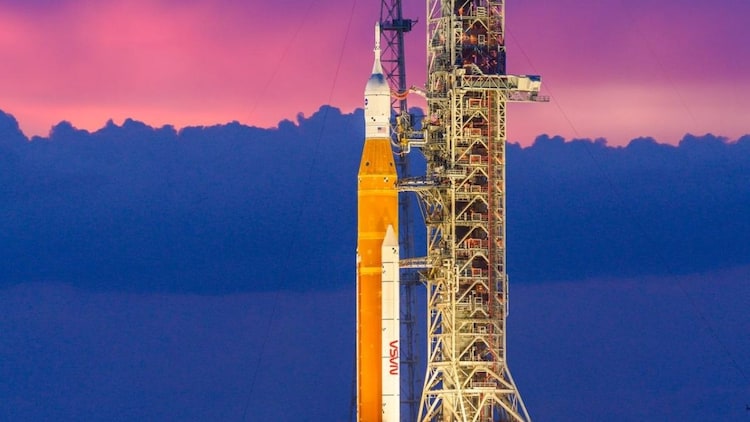
Finally, the rocket deposited the Orion capsule and its upper stage, called the Interim Cryogenic Propulsion Stage or ICPS, into a low Earth orbit roughly 161 kilometres above the planet.
An upper stage is the topmost section of a rocket, designed to fire its engine separately in space to give the spacecraft a final push into its intended orbit. Once in orbit, the ICPS fires again to raise Orion into a higher, more stable orbit before separating from the capsule.
It is not done yet, however. It has one more critical role to play.
WHAT IS THE PROXIMITY OPERATIONS TEST?
After entering high Earth orbit, the crew will use the spent ICPS as a target for a proximity operations demonstration, one of the most nail-biting tests of the entire mission.
Proximity operations, or prox ops, refers to the precise, controlled flying required when one spacecraft must manoeuvre close to another. Think of it as precision parking in a vacuum.
This skill will be essential in future Artemis missions when Orion must dock with a lunar lander or the planned Gateway space station in lunar orbit.
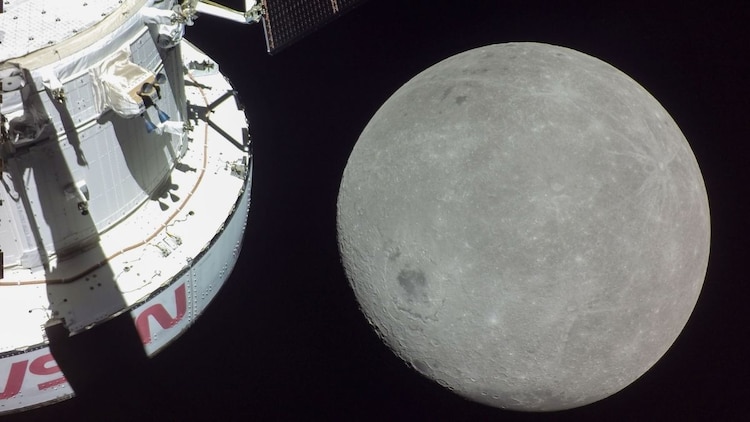
Docking means two spacecraft physically connecting in space, and it requires extraordinary precision.
Pilot Victor Glover will take manual control of Orion and perform this test while still within range of Earth’s GPS satellites.
For 90 minutes after launch, the astronauts will be in low orbit.
They will confirm whether all systems are functioning, then head out to 70,811 kilometres from Earth for a 24-hour checkout of life support systems.
WHAT HAPPENS ON THE FIRST SLEEP PERIOD?
After approximately eight and a half hours in space, the astronauts will sleep for just four hours before being woken to perform an additional engine burn, placing Orion in the correct orbital position for the next manoeuvre.
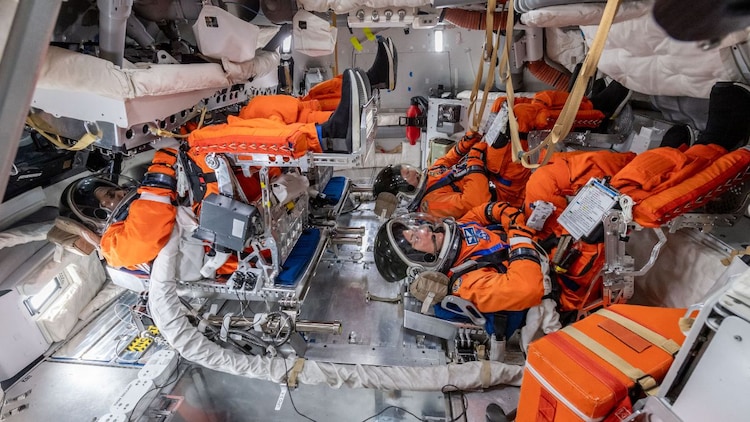
They will also conduct an early checkout of the Deep Space Network, the global system of large radio antennas that Nasa uses to communicate with spacecraft far from Earth.
This checkout happens at the most distant point of their high Earth orbit, ensuring communications work before they are truly needed.
WHAT IS THE BIG TEST ON DAY TWO?
The second flight day belongs to mission specialist Christina Koch, who will spend her morning preparing Orion for the translunar injection burn.
This is the last major engine firing of the mission and the one that commits the crew to their path to the Moon.
A translunar injection, or TLI, is an engine burn that accelerates a spacecraft enough to break free of Earth’s gravitational grip and begin coasting toward the Moon, much like throwing a ball hard enough to escape the pull of a magnet.
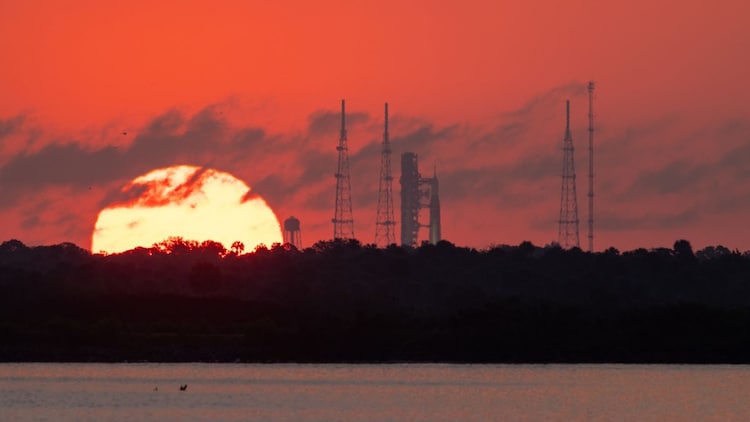
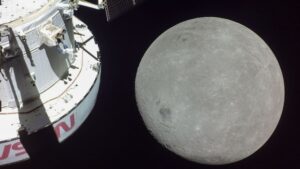
The six-minute-five-second firing will boost the spacecraft’s velocity by about 1,448 kilometres per hour, just enough to send Orion onto the trajectory that will carry it around the Moon and back to a Pacific Ocean splashdown, expected around April 10.
After the burn, the crew will settle in, adjust to their environment and take part in the first live video communication of the mission with Earth.
The harder days lie ahead: the lunar flyby, the communications blackout as Orion swings behind the Moon’s far side, and the record-breaking distance from Earth that awaits them all.