The journey back to the Moon has officially entered its final countdown. On March 27, 2026, the four astronauts of the Artemis II mission performed a dramatic arrival at the Kennedy Space Center in Florida.
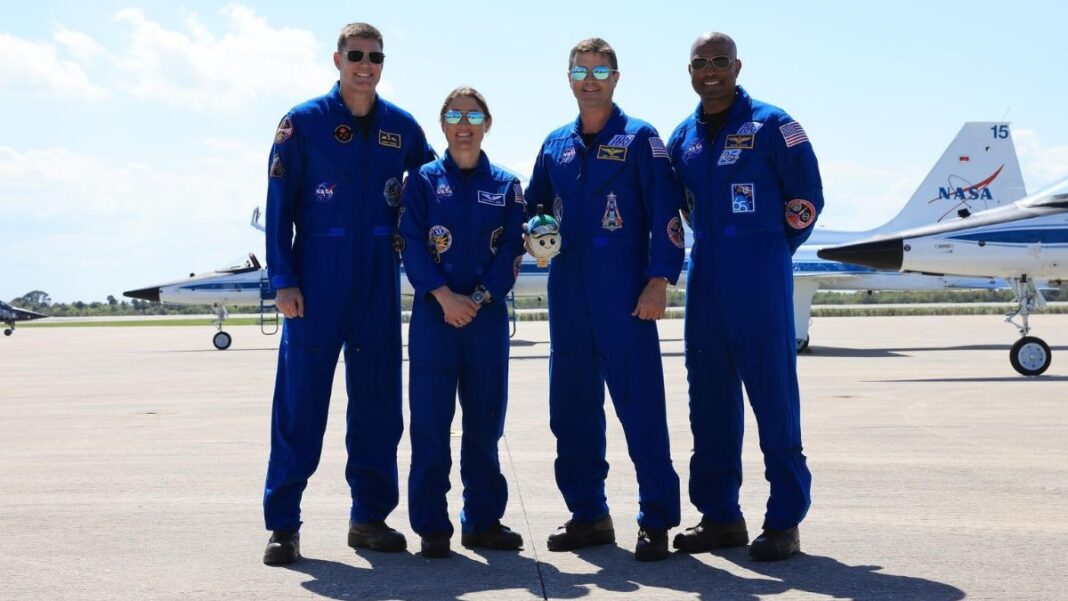
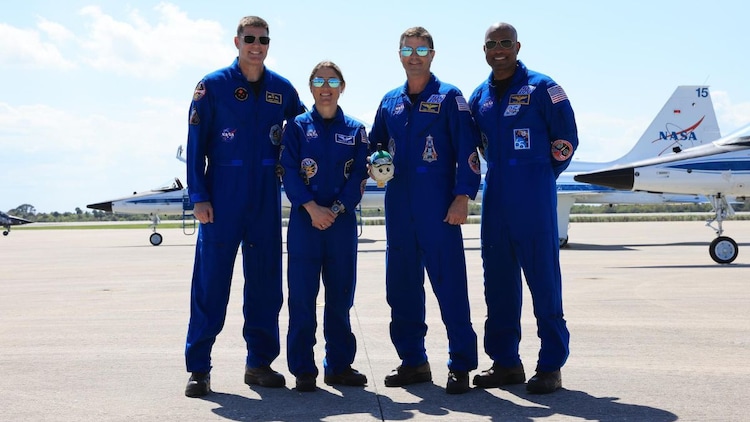
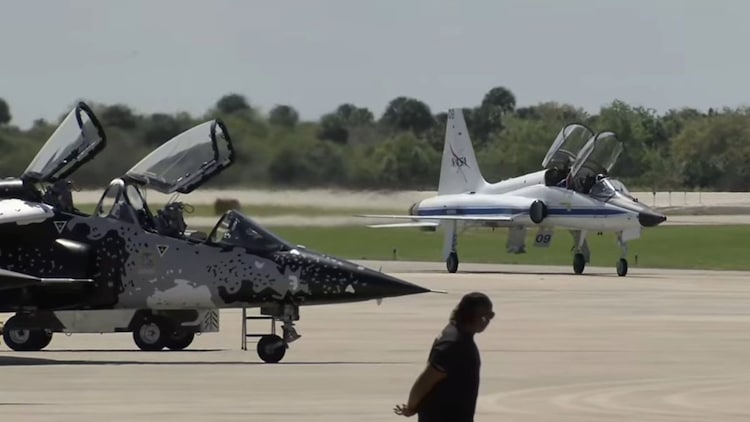
Commander Reid Wiseman, Pilot Victor Glover, and Mission Specialists Christina Koch and Jeremy Hansen touched down at the historic Shuttle Landing Facility after piloting three T-38 Talon supersonic fighter jets from Houston.

This arrival signifies the start of the final week of preparations before humanity returns to the lunar vicinity for the first time in over 50 years.
HOW DID THE CREW ARRIVE AT THE LAUNCH SITE?
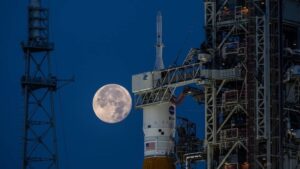
The arrival was more than a simple transport flight. Before landing, the crew performed a low-altitude flyover of Launch Pad 39B, where their 322-foot-tall Space Launch System rocket and Orion spacecraft are currently stationed.
Seeing the massive rocket from the cockpit of their fighter jets provided a unique perspective on the scale of the upcoming mission. Commander Reid Wiseman remarked that seeing the vehicle on the pad from the air made the reality of their 10-day journey feel immediate.
Following the landing, the crew was greeted by Nasa officials and local supporters. The use of T-38 jets is a long-standing tradition for astronauts, as these high-performance aircraft require the same level of focus and rapid decision-making as a deep-space mission.

WHO IS THE NEW ARTEMIS-II MASCOT?
A highlight of the arrival was the unveiling of the mission mascot, a plush toy named Rise. This small figure will serve as the zero gravity indicator for the mission.

When the Orion spacecraft reaches the weightlessness of orbit, Rise will begin to float, providing a visual cue to the crew and ground controllers that they have officially entered space.
The mascot is intended to represent the collective ambition of the Artemis program to reach higher and stay longer on the lunar surface.
WHAT ARE THE FINAL STEPS BEFORE LAUNCH?
The crew has now entered a strict pre-flight quarantine to protect their health before the scheduled liftoff on April 1, 2026. During this period, they will conduct final flight simulations and review mission protocols.
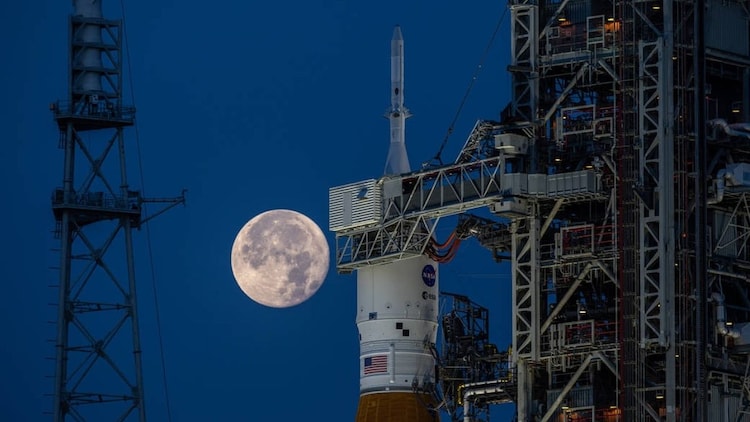
The Artemis-II mission will take the crew 400,000 kilometres away from Earth, looping around the Moon to test life-support systems before future missions attempt a lunar landing.
If every system performs as expected, this mission will pave the way for a sustained human presence on the Moon.