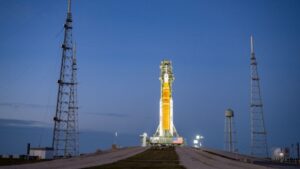
Artemis 2 reaches the Moon, set to break record for farthest human spaceflight

For 53 years, every human being who has ventured into space has done so within a narrow band of sky that barely scratches the surface of the cosmos.

That changed on April 6, when four Artemis-II astronauts reached the Moon’s gravitational sphere of influence.
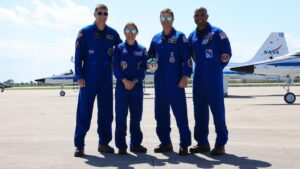
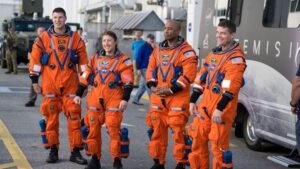
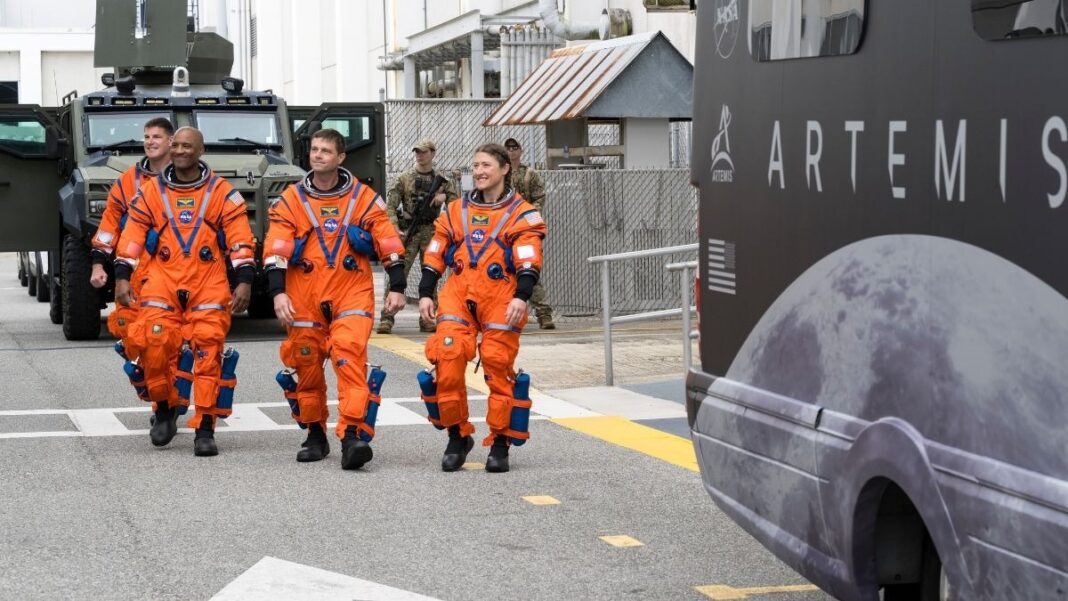
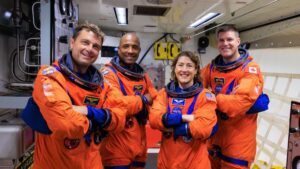
No human has left Earth's orbit since December 1972. Nasa's Artemis II ended that on April 2, 2026, taking four people on a journey farther into space than anyone in history. (Photo: Nasa)

No human has left Earth’s orbit since December 1972. Nasa’s Artemis II ended that on April 2, 2026, taking four people on a journey farther into space than anyone in history. (Photo: Nasa)

The four astronauts are set to break the record for farthest human spaceflight, reaching a distance of 4,06,773 kilometres from Earth.

This is around 2,500 kilometres more than the record set by Apollo 13 in 1970.

WHEN WILL ARTEMIS II CONDUCT LUNAR FLYBY?

The Artemis-II crew is set to begin the lunar flyby on April 7, 2026, at 12:15 am IST.

The crew will swing around the far side of the Moon before heading home.

To put that in perspective, the International Space Station (ISS) orbits at 400 kilometres above Earth. The Moon itself sits roughly 3,84,633 kilometres away.
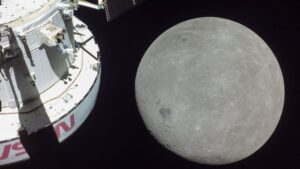
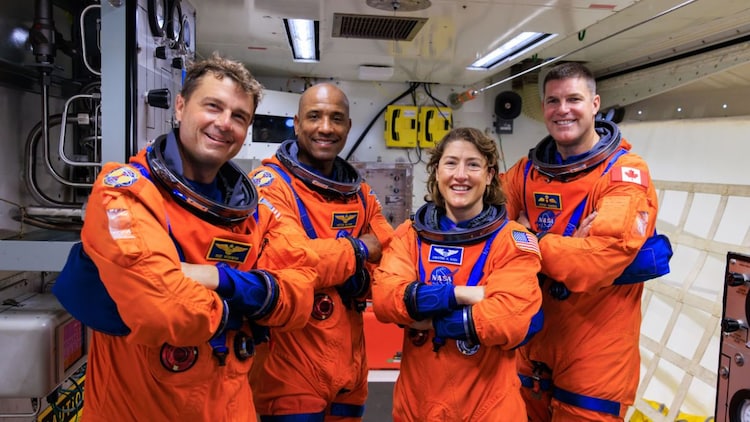
Artemis-II will travel farther than the previous human distance record, pushing past the Moon's far side into deep space for the first time since the Apollo era ended in 1972. (Photo: Nasa)

Artemis-II will travel farther than the previous human distance record. It entered Moon’s gravitational sphere of influence on April 6. (Photo: Nasa)

Artemis-II will go past the Moon and beyond, into territory no human has visited since the Apollo era.

The Apollo 13 record stands at 4,00,171 kilometres.

Artemis II will surpass that by roughly 2,500 kilometres, with full preparation and purpose.

WHAT IS A FREE-RETURN TRAJECTORY, AND WHY DOES IT MATTER?

Artemis-II will travel on what is called a free-return trajectory.

This means the spacecraft uses the Moon’s own gravitational pull to slingshot itself naturally back toward Earth, without needing a separate engine burn to come home.
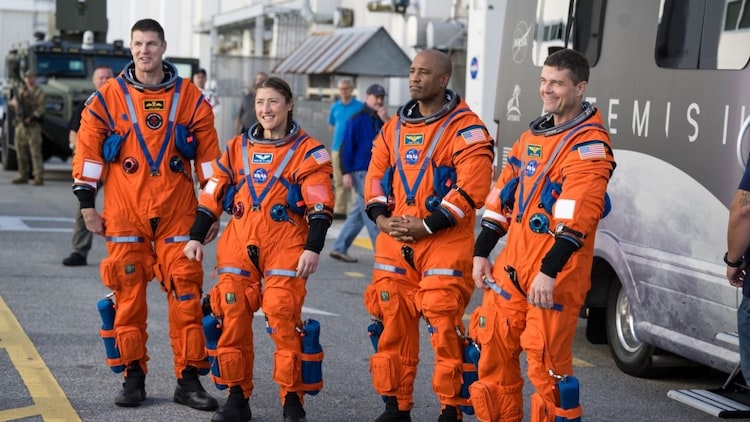
Using the Moon's gravitational pull, Orion will slingshot naturally back toward Earth without a separate engine burn, giving the crew a safe path home even if the propulsion system fails mid-mission. (Photo: Nasa)

Using the Moon’s gravitational pull, Orion will slingshot naturally back toward Earth without a separate engine burn, giving the crew a safe path home even if the propulsion system fails mid-mission. (Photo: Nasa)

The Moon does the steering. It is an elegant application of orbital mechanics, the science of calculating how objects move through space under the influence of gravity, and it doubles as a crucial safety net.

Even if Orion’s main propulsion system failed completely mid-mission, the crew would still return to Earth safely.

WHAT MAKES DEEP SPACE SO DIFFERENT FROM THE SPACE STATION?

Beyond low-Earth orbit, the region up to about 2,000 kilometres above the planet, spacecraft and astronauts lose the protection of Earth’s magnetic field.

This field acts as an invisible shield, deflecting harmful radiation from the Sun and from deep space.
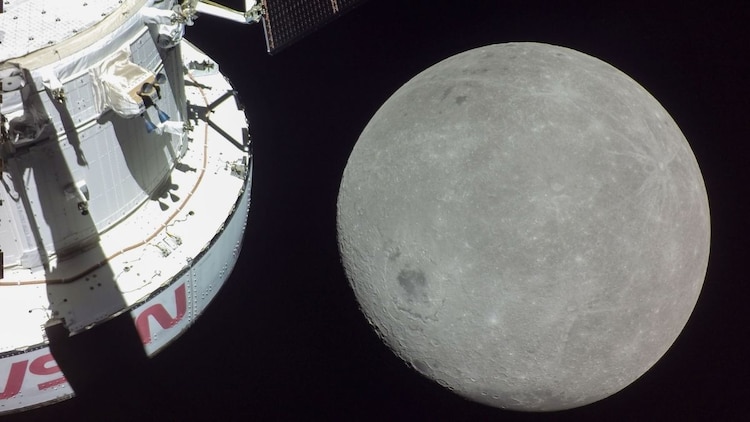
Orion's heat shield will endure temperatures of around 2,760 degrees Celsius as the spacecraft screams back into the atmosphere. (Photo: Nasa)

Orion’s heat shield will endure temperatures of around 2,760 degrees Celsius as the spacecraft screams back into the atmosphere. (Photo: Nasa)

Astronauts on Artemis-II will be exposed to levels of cosmic radiation, high-energy particles travelling at nearly the speed of light that no human has experienced since the Apollo era.

Monitoring how the crew’s bodies respond to this environment is one of the most scientifically significant aspects of the entire mission.

WILL ARTEMIS-II ALSO SET A SPEED RECORD?

Yes. When Orion re-enters Earth’s atmosphere at the end of the mission, it will be travelling at approximately 40,200 kilometres per hour, faster than any crewed spacecraft has ever returned to Earth.
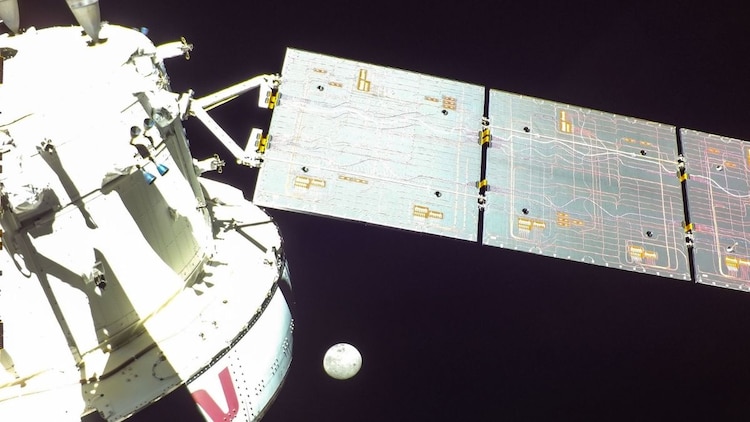
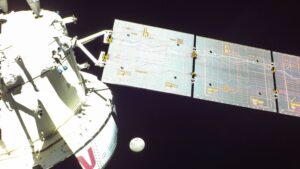
Nasa's Orion capsule. (Photo: Nasa)

Nasa’s Orion capsule. (Photo: Nasa)

Re-entry is the phase when a spacecraft plunges back through the atmosphere at extreme velocity, generating ferocious heat through air compression.

Orion’s heat shield will face temperatures of around 2,760 degrees Celsius, nearly half the surface temperature of the Sun, and it must hold without fail.

WHY DOES ALL OF THIS MATTER BEYOND THE MOON?

Every piece of data gathered during Artemis-II, on radiation exposure, spacecraft performance and human physiology in deep space, feeds directly into Nasa’s plan to eventually send humans to Mars.
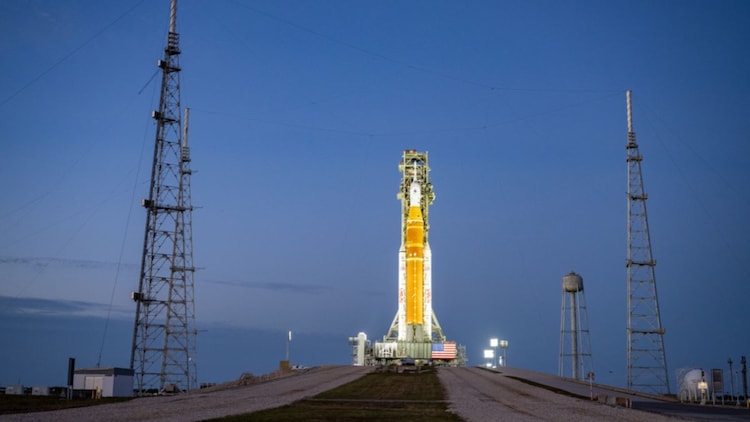
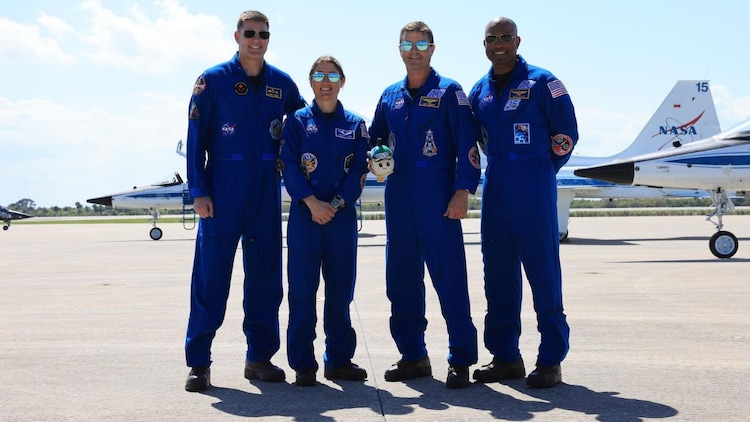
Artemis II will travel 4,02,336 kilometers from Earth, the farthest any human has ever been. (Photo: Nasa)

Artemis II will travel 4,02,336 kilometers from Earth, the farthest any human has ever been. (Photo: Nasa)

The Moon is not the destination. It is a rehearsal.

And Artemis-II is the most important rehearsal humanity has attempted in more than five decades.
Latest

Four astronauts begin historic journey around Moon. Watch LIVE

Witness history as the Artemis 2 crew loops around the lunar far side. Watch the live broadcast of humanity returning to the Moon for the first time in decades.

Frozen pee, vent clogged: Artemis II, set for Moon flyby, faces toilet problem

More than three lakh kilometres from Earth and days before their lunar flyby, astronauts aboard Artemis II found themselves dealing with a clogged toilet vent a

Artemis II Lunar Flyby LIVE Updates: Seven-hour Artemis II lunar flyby marks key step for NASA science

Artemis II Lunar Flyby LIVE Updates: The Artemis II mission includes a lunar observation period lasting approximately seven hours. This is the timeframe during

Artemis-II enters fifth day in space. See stunning pics captured by crew so far

The 10-day mission is Nasa's first crewed trip to the Moon in over fifty years, and is expected to help humanity inch closer to the longer goals of delivering a

Lava from Piton de la Fournaise volcano seen moving toward Indian Ocean

The volcano is more than 5,00,000 years old and is one of the most active on Earth.

Topics

Mona Singh recalls warning excited Gaurav Gera to keep Dhurandhar under wraps: ‘Do you remember you’ve signed NDA?’

Mona Singh advised her friend Gaurav Gera to maintain discretion about his role in Dhurandhar, stressing on the importance of confidentiality in the industry.

BVS Ravi warns ‘beginning of the end’ for Telugu producers due to Dhurandhar: ‘Aditya Dhar made 8-hr film on ₹260 crore’

Rana Naidu writer, BVS Ravi, spoke about Aditya Dhar and Ranveer Singh's Dhurandhar and had high praise for the film. 

Byron Allen net worth: How rich is the ‘Comics Unleashed’ host? Allen Media Group empire in focus

Byron Allen is worth about $1B. He built a vast media empire with Alen Media Group from his stand-up comedy career, through decades of smart business moves.

Who is Byron Allen’s wife, Jennifer Lucas? All on ‘Comics Unleashed’ host’s family, children amid CBS launch

Jennifer Lucas is a California writer and producer married to Byron Allen since 2007; they have three children. 

Byron Allen’s political views: Is he conservative? All about Stephen Colbert replacement

Byron Allen is taking over the late night slot at CBS, as Stephen Colbert's show is coming to an end after the host took repeated shots at Donald Trump.

New Mexico earthquake: Tremors felt in Carlsbad, Roswell, Artesia and Atoka

Moderate quake of M 4.3 recorded by USGS in New Mexico as Carlsbad, Roswell, Artesia and Atoka feel tremors. 

Artemis II kicks off trip around the moon after surpassing Apollo 13’s distance record

Moments after breaking Apollo 13's record, the astronauts asked permission to name two fresh lunar craters already observed.

A rescue call for 45 hours 56 mins: Details on how US F-15E airman’s extraction was carried out inside Iran

The US-Iran conflict has hit Donald Trump's approval ratings and intensified anxiety among Republicans about November's midterm elections.
spot_img

Related Articles

Popular Categories

spot_imgspot_img