
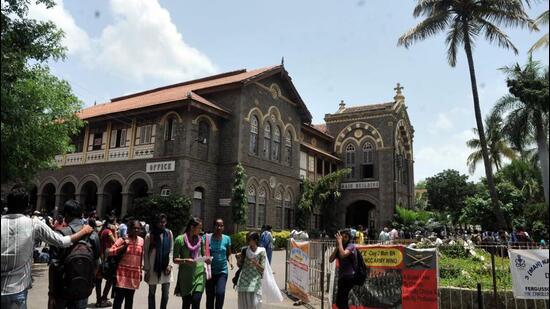
For decades, the courts in India have worried that “campus politics” encourage “tension and lawlessness” at the cost of “academic atmosphere”. Kerala, which has experienced hundreds of instances of campus violence linked to political parties, has been at the forefront of this discussion. Now, in response to a public interest litigation, the Kerala High Court has called on educational institutions to formulate rules that will ensure a “congenial atmosphere” and keep them “free from political influence”.
This directive may set up a clash between two different ways of managing the influence of political parties on campuses. On one side, the Kerala High Court has upheld the right of educational institutions to promulgate a “code of conduct” that prohibits party “political activities” and to require student representation to be channeled through prescribed forums. On the other, in Council of Principals (2006), the Supreme Court sought, more modestly, only to “disassociate student elections from political parties” by ordering that “during the period of the elections no person, who is not a student on the rolls of the college or university, shall be permitted to take part in the election process in any capacity.”
What should the way forward be: Should educational institutions be permitted to “strictly ban” party-political activities or should they be required to follow rules that only “minimise” their influence during election time? The Lyngdoh Committee, whose report formed the basis of Council of Principals (2006), agonised over the question of undue “political influence” on campuses in view of the “indiscretions that political parties are known for”. It nonetheless chose not to proscribe political parties from student elections for two reasons. One worry was that “placing restrictions on affiliation to political parties may be viewed as contrary to the fundamental right of association, as provided for in the Constitution”. Another concern was that “the aim of prescribing a system of elections” was to “provide a base for young students to learn the basic fundamentals of representing others, as well as the principles of good governance”.
The Lyngdoh Committee’s observations stand in some tension with the doctrine that has gradually emerged in the Kerala High Court. This doctrine comprises three distinct strands. The first stresses institutional purpose. The earliest invocation was in Sree Narayana College (1996) where Justice KS Radhakrishnan argued that “educational institutions are springboards for academic excellence and not for political exercise”.
This point was subsequently pressed in Ponnani College (2017) where the court warned a recalcitrant student activist that “educational institutions are meant for imparting education and not politics”. The dharna-prone student had a clear choice, then chief justice of the Kerala High Court Navaniti Prasad Singh said: He ought to “concentrate on his studies” or “withdraw from college to continue his political career”.
The second strand emphasises institutional autonomy. Drawing on Pai Foundation (2002), which recognised education as an “occupation”, the Kerala High Court argued in Sojan Francis (2003) that educational institutions have a right to “maintain discipline”. Thus, a rule “strictly banning” political activism, Justice Radhakrishnan argued, constituted a “reasonable restriction”; it did not violate freedom of speech and association granted under Article 19 of the Constitution, because its reach was “confined to the campus”.
The third strand underlines individual rights. Here the argument is that even if it is true that Article 19 of the Constitution grants students qua individuals the right to speech and association, these rights do not allow them to “violate the fundamental rights of other students to pursue their academics”. On this view, as Justice Suresh Kumar underlined in Raju Kuruvilla (2020), students should utilise “appropriate forums” to express their views, where such “forums” do not impinge “directly or indirectly” on others in the student community who seek “uninterrupted education”.
The doctrine developed by the Kerala High Court challenges the reasoning of the Lyngdoh Committee, and thus by extension Council of Principals (2006), in at least three important ways. First, it invites us to question whether educational institutions really are places where students are supposed to learn to “represent others”. Arguably, the purpose of a university is tutelary: The student is expected to learn, understand, and build upon accumulated human knowledge through free enquiry. The Lyngdoh Committee implicitly conceded as much when it noted that “the primary function of a university is, after all, education, and not political indoctrination”.
Second, it suggests that we should pause before we valorise the electoral process in an educational setting. It is very well to blame political parties for “politicising” and “criminalising” campuses, but it is worth asking whether elections, which involve contestation, encourage these unwanted tendencies. The Lyngdoh Committee rightly worried that alternative procedures of student representation, such as merit-based nominations, can be corrupted by favouritism or cronyism. But the question remains whether elections invite interference from political parties and lead to student representation being dominated by elements that are happy to devote more time to politicking and less time to learning.
Third, the high court’s commentary invites us to see educational institutions as civic rather than political spaces, as venues to learn “gentlemanly conduct” rather than how to “impose political ideology on others”. A college or university introduces individuals to others alongside whom they have to work and live in organisations and societies. These institutions can prepare students to cooperate and coexist, but this is very different from preparing them to compete over politics (or the business of deciding “who gets what, when, how”).
The Kerala High Court’s recent order that asks educational institutions to formulate rules that will free them from “political influence” may give the Supreme Court the chance to revisit Council of Principals (2006). Given that the Court originally implemented the Lyngdoh Committee guidelines only as an “interim measure”, it should now take cognisance of the doctrine developed by the Kerala High Court and leave to educational institutions the discretion to decide whether, and in what form, party-political activity should be permitted on campus.
A change in doctrine does not mean that “unpleasant incidents” will instantly disappear from our campuses. As the Kerala High Court mourned in Raju Kuruvilla (2020), its “pains and efforts” have proven “a futile exercise” because it continues to receive petitions complaining that the “police is not extending aid to run educational institutions at times of student unrest on account of external political interferences”. The gap between law and deed is tragically large in India, but settling the former may let us devote more attention to the latter.
Rahul Sagar is Global Network associate professor at NYU Abu Dhabi. His recent books include The Progressive Maharaja and To Raise A Fallen People. The views expressed are personal


