
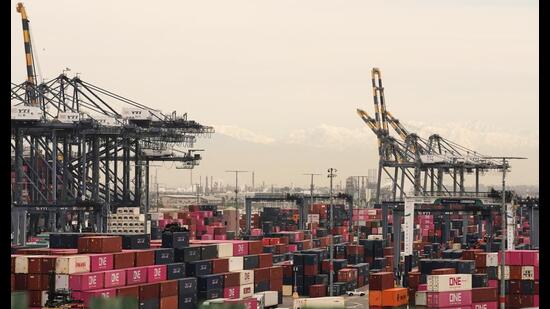
On March 15, Malaysia became the first country to walk away from its trade deal with the US. The move followed the US Supreme Court’s February 20 ruling that struck down the Trump administration’s “reciprocal tariffs,” removing the legal foundation of the strategy Washington had used to pressure trading partners into making concessions. With the tariff leverage gone, the agreements negotiated under it suddenly lost much of their value. The Supreme Court ruling has forced Washington to rethink its tactics. Unable to rely on sweeping countrywide tariffs, the administration is shifting toward narrower, product-specific investigations to retain leverage and discourage partners from abandoning the deals already signed. Yet this approach risks creating new friction, as governments that already made concessions now face fresh probes and the threat of new tariffs.
The evolving US trade approach, from tariffs to investigations, should concern policymakers and economists about its credibility and future stability. To understand how this situation emerged — and what it could mean for India and the global trading system — it is necessary to trace the evolution of President Donald Trump’s trade strategy from the “Liberation Day” tariffs announced on April 2, 2025, to the legal and political fallout now unfolding.
Phase one of the Trump administration’s trade policy began in April 2025, when Washington imposed high “reciprocal tariffs” on most trading partners, arguing that foreign barriers were responsible for the large US trade deficit. The US offered countries relief if they negotiated concessions on tariffs, investment rules, procurement access or regulatory barriers.
Because the US remains one of the world’s largest export markets, the threat carried weight. Governments quickly entered negotiations. Several countries reached agreements that reduced — but did not eliminate — the tariffs. The US lowered reciprocal duties to 15% for the European Union (EU), Japan, and South Korea; 20% for Vietnam and Taiwan; 19% for Malaysia, Indonesia, and Thailand; and 18% for India.
The Supreme Court’s February 20 ruling declared the legal basis for reciprocal tariffs unlawful, fundamentally altering US trade policy.
The administration responded within hours of the Supreme Court ruling by invoking Section 122 of the Trade Act of 1974 to impose a uniform 10% tariff on imports from all trading partners. The tariff took effect on February 24 and will remain in force for five months, until July 24.
That shift created an immediate dilemma. Agreements negotiated under the reciprocal tariff strategy suddenly lost their economic value. Governments that had accepted concessions in exchange for tariffs of 15–20% now faced the same 10% duty as countries that had made no concessions.
The advantage promised by those agreements disappeared overnight. Countries that opened procurement markets, reduced tariffs or changed investment rules now had little reason to maintain those commitments when identical access to the US market was available without a deal. Many governments quietly began reconsidering the agreements.
Washington quickly recognised the risk. If partners began abandoning these arrangements, the architecture of the administration’s trade strategy could unravel. In his February 24 State of the Union address, President Trump warned against reopening existing deals, cautioning that any attempt to renegotiate could trigger harsher measures.
Political warnings alone may not be enough. The administration has, therefore, moved to a second phase of its strategy. On March 11–12, the Office of the US Trade Representative launched two investigations under Section 301 of the Trade Act of 1974 targeting major trading partners.
The first examines excess industrial capacity in 16 economies, including China, the EU, Japan, South Korea and India. US officials will review whether government subsidies, state-backed expansion and other policies have created manufacturing overcapacity that harms American industries. The inquiry covers sectors such as steel, aluminium, automobiles, batteries, electronics, chemicals, semiconductors and solar modules. For India, the probe focuses on sectors such as solar modules, petrochemicals, and steel, while also examining exports of textiles, construction materials, and automotive products. US officials note that India’s solar manufacturing capacity is nearly three times domestic demand, suggesting future production may depend heavily on exports.
A second investigation announced March 12 targets forced labour in global supply chains across about 60 economies, including India, China, the EU, the United Kingdom, Japan, Canada and Australia. The probe will examine both the direct use of forced labour and cases where countries used imported inputs produced under coercive conditions to manufacture goods exported to the US.
China is expected to face the closest scrutiny because of allegations involving Uyghur labour in the Xinjiang region. For countries like India, the risk lies less in domestic labour practices than in supply-chain links with China. Solar panels rely on imported polysilicon and cells, electronics manufacturing depends on Chinese components, and textile exporters frequently source yarn and fabrics from Chinese suppliers.
This new Section 301 investigation strategy carries risks of its own. By launching probes even against countries that have already concluded trade deals with Washington, the US may be sending an unsettling message: That signing a trade agreement offers no protection from future investigations or tariffs.
The consequences are already visible. On March 15, Malaysia walked out of its trade deal with the US, becoming the first country to abandon an agreement negotiated under the reciprocal tariff strategy. “It is not on hold. It is no longer there, it’s null and void,” said Malaysia’s minister of investment, trade and industry, Johari Abdul Ghani.
Under the agreement, the US had reduced tariffs on Malaysian exports to 19% in exchange for expanded market access and policy concessions. After the Supreme Court ruling replaced the system with a uniform 10% tariff, those concessions no longer provided a clear benefit.
Malaysia has moved first. Others — including India — may find it increasingly hard to justify staying the course. The Supreme Court’s February 20 ruling wiped out the core advantage of these deals overnight. Yet even after accepting one-sided concessions, countries are now facing fresh US probes, underscoring a deeper problem: There is no certainty or predictability even after signing a trade agreement with Washington.
Malaysia’s exit reflects this new reality. When benefits disappear and pressure continues, the political case for such deals collapses. Other governments will struggle to defend asymmetrical concessions to domestic constituencies.
What was presented as a path to stable market access now looks increasingly like a moving target— one that few countries, including India, may be willing to chase for long. Many will walk away soon.
Ajay Srivastava is the founder, Global Trade Research Initiative (GTRI). The views expressed are personal


