

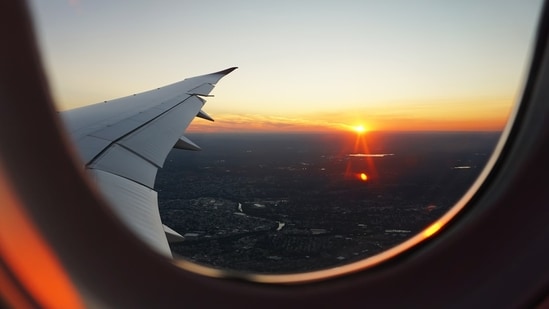
I have been reading so much about the glory days of travel when resorts were not overrun by tourists; when airports were not the obstacle courses they have now become; when air travel was glamorous; and when hotels were not room factories.
All this nostalgia made me think back 50 years. Born to parents who were always travelling, I have been coping with planes, airports, hotels and resorts since I was a small boy. And so, I asked myself: Was it really better in those days?
Well, purely in terms of experience, much of it was better. But all too often, lots of it was not as good as it is today.
Let’s start with airports. When I was young, Heathrow was the most glamorous airport ever; the centre of the world. Sadly, privatisation has ensured that it’s a dump today. Its corporate owners treat it as an ATM with runways attached.
The same is true of many other Western airports. On the other hand, Asian airports have improved beyond recognition. The finest airports are now in our part of the world. Bombay, Bangalore and Delhi are better than most European or American airports.
But we have stopped being excited about airports. I still remember a time when visitors were allowed into Indian airports. Because relatively few people travelled abroad and those that went (students, emigrants, brides etc) knew they would be gone for a long time, every departure was an occasion. Departing passengers would be garlanded by swarms of weeping relatives and a designated cadre of airport photographers (all specially licensed) would take group photos.
That’s all gone now. Travelling abroad is neither emotional nor glamorous.
Were resorts very different? Yes, they were. The first time I went to Goa in 1976 the journey from the airport to my hotel (the Fort Aguada) required us to use two separate ferries to cross rivers. It was a time-consuming nuisance but it did add to the sense of adventure.
In that simpler era people from Bombay routinely drove to hill stations in the Western Ghats and stayed at clubs and small hotels while gorging on local strawberries and eating hand-cranked ice cream. Hardly anyone went to the now trendy Alibaug and a weekend in Manori was the height of excitement.
Do I miss that? I have to say I do. Especially in the case of Goa. There was a time in the 1980s and for much of the 1990s when I would escape to Goa whenever I could; every single new year for instance. Now, you’d have to pay me to go to the mess that Goa has become.
There is a flip side to this of course. Why should the joys of Goa have been restricted to a small group of people from Mumbai? Surely, it’s better for the Goan economy if lakhs of North Indian tourists visit and ask for paneer and butter chicken? Those of us who don’t approve of the destruction of Goa’s unique character can go somewhere else; as indeed we do.
But it’s always a fine balance between development and destruction. Take the Maldives. When I started going there in the early 1990s, there were relatively few resorts and most were middle market. That didn’t matter to me because I had never seen such clear water and so many different shades of blue in the ocean. I didn’t mind that the food was not very good (I stayed at the two Taj resorts and ate the staff meal because it was the best food on offer) because the natural beauty was so staggering.
Then, early in this century, the world discovered the Maldives. The top hotels now charge the highest resort rates in the world, the food has improved dramatically and so many fancy new resorts have opened that they have had to introduce domestic flights to take guests to faraway islands. In the old days nearly everything was a boat ride away.
I still love the Maldives and I admire the luxury resorts, some of which are among the finest in the world. But as more and more land is reclaimed in the atolls near the capital and the airport, I wonder if the sea views I admired so much will disappear. Already there is massive overcrowding in what was once such a quiet and peaceful place. I guess that one solution is to go to islands that are further and further away from the capital; I am planning to do exactly that next month.
And yes, there are times when I find myself longing for the Maldives of the 1990s.
You hear a lot about the romance of air travel in the old days. Some of it is true. Till the 1980s, most international airlines only had two classes. A tiny proportion of millionaire globetrotters travelled first while the rest of us travelled economy. In those days the airline cartel IATA was so strong that everyone had to offer the same fare. So, if you were flying from Delhi to London in economy class there was no
significant difference between the fares on British Airways or Air India. Your choice of airline was usually influenced by what you thought of the economy class experience. This meant that airlines tried harder to please economy class passengers.
Now, with deregulation and dynamic pricing, fares can vary wildly from airline to airline and between flight to flight even within the same airline.
Plus, it’s no longer just first and economy. There are business class, premium economy etc. Airlines realise that passengers now make decisions based almost solely on fares. So, they don’t give a damn about treating economy class passengers well, recognising that low fares are all that matters.
They make more of an effort with business class and first class passengers but even there they know that the level of fares will probably influence the decision.
In this complex, competitive world of travel, you get what you pay for. You want the romance of air travel, then you pay for first class on the few airlines that still do it with style: Emirates, Singapore Airlines and a handful of others. It will be an amazing experience, but the fares will usually be ridiculously high.
As for the rest of us, we can kiss romance goodbye and treat plane journeys as we treat bus rides or commuter travel on the metro. You will need to save your money, clench your butt cheeks and wait till it is time to get off.
Will things get better? I don’t think so. The truth is that the real cost of air travel, adjusted for inflation, has dropped in this century. (We Indians don’t necessarily realise this because the rupee is now nearly worthless, so every international flight still seems expensive.) It won’t drop further. Instead, airlines will start charging for all the things we used to take for granted, like checked luggage and free soft drinks.
And yet, here is the irony: Most global luxury brands report drops in sales, but the hotel sector is booming. Luxury hotels are more expensive than they have ever been. As the income gap between the rich and the middle class has grown over the last decade, one difference has clearly emerged. The middle class saves to spend on luxuries: jewellery, bags, designer clothes, etc
But the rich are tired of spending money on yet another designer bag or a new pair of earrings. They would rather spend on experiences: Deluxe hotels, private plane rides or at the very least onboard suites in first class.
I guess that for them the romance of travel continues. It’s the rest of us who squeeze into narrow airline seats and queue up to check in to hotels that are room factories.