
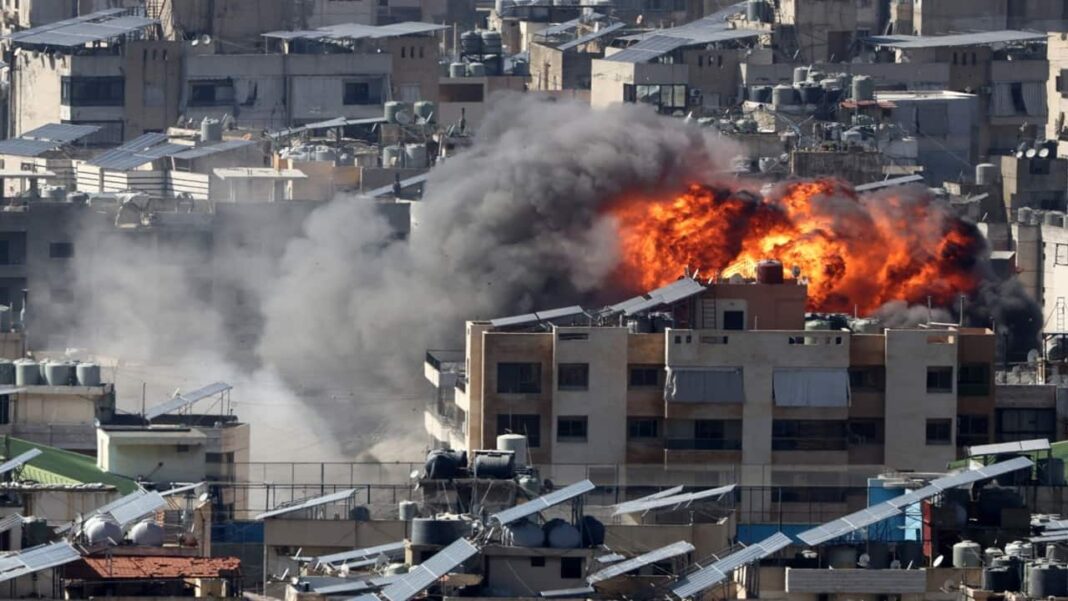
The last few days clearly indicate that Iran is much stronger, and the war likely to last much longer, than many were expecting when Israel and America attacked Iran on 28th February. As for the global markets, the price of crude oil speaks reflects this pessimistic expectation. From $ 70 a barrel average in February, and around that level at month end, Brent crude has surged to average $ 86.50 during March upto 11th Wednesday, as per ‘closing’ prices taken from the yahoo finance portal, and on 12th March Thursday, it was $ 100.46. With several oil tankers being struck, and their insurance rates skyrocketing so as to make shipping unviable, and with Iran likely to retain control of the Strait of Hormuz, crude oil prices could easily surge way above over $100 the next days.
Any economic forecast needs to make some baseline assumption about the price of oil. Needless to say, inflation and growth outcomes depend on how the war plays out and its impact upon the price and delivery of oil, and conjectures about that are very necessary. For starters, anything can happen, including Israel using nuclear weapons if the war is not going its way, as the knowledgeable ex Col. Lawrence Wilkerson pointed out in a YouTube video.
If the unpredictable US President Trump pulls out declaring victory claiming his objectives were met, and Iran does not want to risk continuing the war, then oil prices could tumble. However, that is unlikely since Iran has enormous capacity to take punishment and motivation to do so, being attacked while negotiations were underway. Iran has clearly declared its goals for ending the war, and that includes removal of all US military bases and reparation payments. America is unlikely to agree to either.
Taking these considerations into account, it is assumed here that the war will continue to drag on for at least a few weeks. Corresponding to that scenario, a benchmark of $100 for Brent over the next few weeks is assumed. We will ignore the small difference between the price of a barrel of Brent and the price of the Indian basket, which is usually a bit lower since it contains about 80% sour crude which has a higher cost of refining.
Normally economic policy makers need to consider only the oil price impact upon inflation in making their decisions. However, at present, both because of Iran’s specific decisions with regard to allowing tanker deliveries for specific countries and umpteen logistical issues, the actual amount of crude delivered would vary greatly, whatever that country’s specific demand. Luckily for India, Iran has magnanimously permitted shipments. Thus, we will assume crude oil imports based upon India’s purchases of crude oil at the going price, without any subsequent supply interruptions.
Related Stories
- Partial flight resumptions restore some gold flows from key hub Dubai
- Jindal Stainless flags operations disruption due to fuel shortage
The next meeting of RBI’s Monetary Policy Committee takes place in early April. The latest inflation data, for January, was 2.7%, close to the bottom of the target range of 2% to 6 %. February’s inflation data, incorporating a new base and a new methodology (Classification of Individual Consumption According to Purpose) with different groupings, came out just yesterday on 12th March. The CPI rose modestly in February to 3.2%, but still below the 4% target. It did not reflect the oil price shock. The energy component was virtually flat.
Prior to the 7th to 9th April MPC meeting, March CPI data will not have been released. Thus, there is no basis for the RBI to alter the repo rate, now at 5.25%, as per its mandate. Even if the data were released, the impact of the March surge in crude oil prices is unlikely to have a sufficient impact on headline CPI inflation in March to push it above 6%, the top of the target range.
As per the RBI’s July 2025 Bulletin, a 10% rise in crude prices raises the CPI by about 0.2 percentage points on a contemporaneous basis. Hence a rise from $70 to $100 a barrel would raise inflation by about 0.8 percentage points from 3.2%, bringing it to just on target at 4.0%. One could expect a higher impact over a longer period, as the price rise works its way through the supply chain. Conversely panic buying and hoarding could push up consumer prices, specifically for LPG and petrol, vital for households, well above the RBI’s estimates.
A factor that might tilt the RBI toward a rate hike is a sharp drop in the rupee, which has been steadily slipping, even prior to the attack on Iran. Between end December to end February, it has fallen by over a rupee, and further to 92.22 per US$ as of yesterday’s (11th March) close. However, it is very likely that RBI will sell forex now to prevent a sharp drop.
One major limitation of an inflation target is that it precludes preemptive easing in response to a sudden weakening of the economy, a clear danger at present. In my opinion, growth is now likely to fall sharply not only due to negative impact on the supply chain and prices of the crude oil supply shock. Growth will also fall sharply due to a huge demand contraction in world tourism, trade and commerce under way, especially in the Gulf, after the attack on Iran. Ongoing drops in equity markets and erosion of financial wealth will also reduce consumer demand. Even as shipments of crude will remain low due to Iran’s blockade and steep insurance rates, a sharp drop in global demand, as took place due to Covid, may put an offsetting downward pressure on oil prices. A drop to below $ 100 a barrel in the weeks ahead cannot be ruled out.
(Vivek Moorthy is Distinguished Professor, St. Joseph’s Institute of Management, Bengaluru. His main website is financialmacroeconomics.com and he can be reached at ep.vivekmoorthy@gmail.com.)
Views are personal and do not represent the stand of this organisation.


