
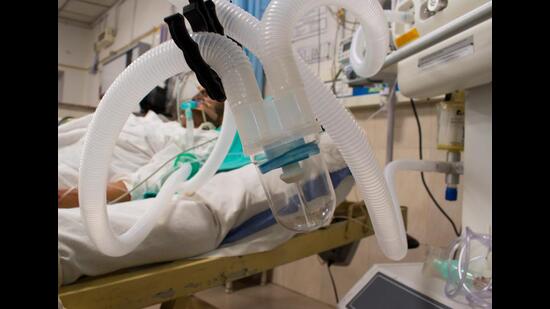
Harish Rana was 18 when a fall left him with catastrophic brain injuries. For 13 years, he lay in a vegetative state, his body sustained solely through artificial support while his mind was gone. Acting on a plea by his parents, the Supreme Court on March 11 applied India’s passive euthanasia guidelines for the first time to allow withdrawal of life-sustaining treatment, observing that “When the degree of bodily invasion progressively increases, and the prognosis for recovery progressively decreases, there arises a certain point when the State’s absolute interest in preserving life must become subservient to the dignity of the individual…” Rana died on Tuesday.
Rana’s case is the latest chapter in a long and uneven legal journey. In Maruti S Dubal v. State of Maharashtra (1987) and P Rathinam v. Union of India (1994), the Supreme Court first entertained the notion that the Right to Life under Article 21 included a Right to Die, striking down Section 309 of the Indian Penal Code, which criminalised attempted suicide. But in 1996, a five-judge bench in Gian Kaur v State of Punjab reversed course. The Court held that while Parliament may decriminalise attempted suicide (as in the Mental Healthcare Act, 2017), Article 21 constitutionally protects life and forbids its extinguishment.
But what happens when artificially preserving life contradicts the principle of dignity enshrined in the Right to Life?
It was not until the tragic case of Aruna Ramachandra Shanbaug v Union of India (2011) that the Court engaged with this question in concrete terms. Shanbaug, a nurse, had remained in a vegetative state for 42 years after a brutal sexual assault. Confronted with a life biologically sustained but not lived, the Supreme Court rejected a plea for passive euthanasia but took the opportunity to distinguish between actively ending life and allowing the natural process of death, issued guidelines for passive euthanasia, and urged Parliament to formalise the framework.
Still, legislative and institutional responses lagged behind judicial affirmation. Several pleas were rejected — a mother seeking mercy killing for her ailing son in Andhra Pradesh (2004), parents of children with muscular dystrophy in Mirzapur (2008), and a porter in Kanyakumari seeking a dignified end for his infant (2013). The burden of securing dignity in death continues to fall on the next of kin, requiring years of waiting and prolonged suffering.
The shift in understanding came in Common Cause v Union of India (2018 and 2023), when the Court located the “right to die with dignity” within Article 21. Guidelines on life-sustaining treatment and end-of-life care were introduced through Advance Medical Directives (ADs) — legal documents that include living wills for patients to specify medical wishes and appoint a health care proxy for when they lose capacity.
Legal ideals often collide with social realities. ADs are complicated to implement. In rural areas, hospitals lack medical boards to conduct assessments. The number of trained doctors and palliative care infrastructure are limited. When the burden of emotional and financial care falls on the next of kin, consent may not always be free. Living wills may be misunderstood, coerced, or violated. At the same time, the Hippocratic oath is caught in a contradiction — tasked with both preserving life and alleviating suffering.
And yet, to reject passive euthanasia altogether would be a mistake. Modern medicine can prolong dying through ventilators, feeding tubes, and endless interventions long after the person is gone. To insist on continuing such treatment regardless of prognosis or suffering is not the protection of life; it is cruelty.
This is where Harish Rana becomes significant. The judgment does not grant a sweeping right to die; it only allows the refusal of futile medical intervention. Robust safeguards have to be built, including proper medical board oversight, expert confirmation, documented consent, maintenance of hospital records, and compassionate palliative care. Living wills must be protected, accessible and verifiable. Ultimately, passive euthanasia acknowledges that life preserved at all costs may not be a life worth living. When death is approached with respect, it is the final act of dignity.
Ashish Bharadwaj is ex-Dean at BITS Pilani and Jindal Global University. Insiyah Vahanvaty is a socio-political commentator and author of ‘The Fearless Judge’. The views expressed are personal


