
‘The past is never dead. It’s not even past.’ William Faulkner’s words about the American South apply to India’s health system as well. Much of how the Indian State governs disease, regulates medicines, structures public health administration, and even distributes health resources is rooted in priorities shaped during British rule.
Much has rightly been made of the systematic transfer of wealth from India to Britain during colonial rule. Less often discussed is the systematic underinvestment in the health of the population being ruled. That neglect depressed life expectancy at Independence but also helped create institutional hierarchies and regional disparities that persist to this day.
Consider the legal backbone of epidemic response. When Covid-19 struck, governments invoked the Epidemic Diseases Act, which was enacted after the 1896 plague epidemic in Bombay. Its sweeping powers reflected a colonial State concerned with order and control in the face of a public health emergency, rather than a public health response, which was not what the British were primarily concerned about. Similarly, the Drugs and Cosmetics Act, passed in the final decade of British rule, continues to anchor India’s pharmaceutical regulatory framework. That law too was to enable different provinces to operate independently on drug approvals with no overall concern for the ramifications for a unified country where drugs approved and manufactured in one state could be sold in another without restriction. The colonial State did not create universal health care, but it did create durable administrative frameworks that prioritised the army, port cities, and infrastructure that enabled extraction, most notably the railways. Hospitals, sanitation systems, and medical services developed first where they protected troops and trade.
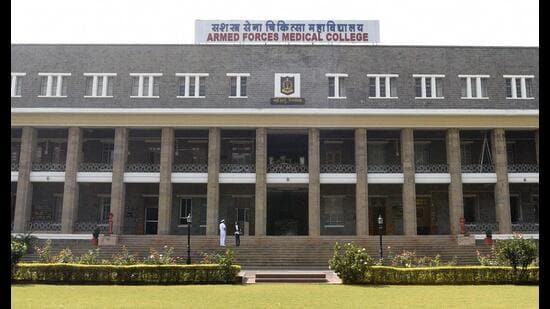
Even today, some of India’s best-functioning health systems remain those tied to those colonial priorities. The medical services of the Armed Forces trace directly to the colonial Indian Medical Service — primarily designed to safeguard British troops. Its origin dates back to the formation of the Bengal Medical Service in 1763. The railway health system was designed to protect labour essential to imperial commerce. Nearly 80 years after Independence, these vertically integrated systems provide more reliable, better-funded care to their beneficiaries than the public system does to ordinary citizens.
The regional imprint of colonial priorities is visible in health conditions even today. Economist Lakshmi Iyer’s research comparing districts directly ruled by the British with those governed by princely States found that, decades after Independence, districts that had been directly ruled by the British had 37% fewer villages with middle schools, 70% fewer villages with primary health subcenters, and 46% fewer villages with good roads in the 1990s. Poverty rates were nearly 40% higher, and infant mortality rates 33% higher, in these districts compared to areas formerly under Native rulers. Notably, there were few differences between the areas ruled by Hindu or Muslim kings in the provision of public goods, although Sikh rulers tended to do better than both. But, directly-ruled British areas had nearly 40% higher poverty rates and 33% higher infant mortality rates in the early 1990s, compared to districts that had been part of Native-ruled states.
The divergence was already visible in the 1951 Census. The all-India crude death rate was 27.4 per 1,000. But states that had Native rulers recorded much lower crude death rates. Travancore-Cochin recorded 18, Mysore 18.9, and Madras 22.8. In contrast, what are now Madhya Pradesh and Chhattisgarh reported rates above 35, Assam 31.8, and Odisha 29.9. Southern states — less likely to be directly British ruled — entered Independence with a substantial advantage. These statistics challenge a common assumption, that centralised colonial administration necessarily produced better public goods. Fiscal extraction, limited local accountability, and weak incentives for social investment by the British left long shadows.
Part of that advantage also lay in institutional choices. The Madras Medical College, established in 1835, became one of Asia’s earliest institutions of European medicine. The Christian Medical College Vellore, founded as a clinic in 1900 and then the Mary Taber Schell Memorial Hospital, in 1902, drew international expertise. The princely States of Travancore and Cochin were equally proactive. Cochin established a general hospital in 1845; Trivandrum followed in 1865. A royal proclamation in 1879 in Travancore, during the reign of Ayilyam Thirunal Rama Varma, mandated smallpox vaccination for public servants, prisoners, and students — an unusually strong public health measure for the time. Early rural health units in that state integrated preventive and curative services, and predated many national reforms.
Within the Madras Presidency, repeated outbreaks, including a mumps outbreak around 1918–1919 that spread widely among schoolchildren, exposed weaknesses in disease surveillance. In response, provincial authorities created a separate public health department with its own director, distinct from curative medical services. That decision birthed a dedicated public health cadre. Today, Tamil Nadu remains the only state with a formal, separate public health cadre. This institutional innovation continues to influence its performance on immunisation, maternal health, and surveillance, but has yet to be replicated in any other state.
Southern states with port access integrated earlier into trade networks, generating income that could support education and health. Yet, income alone does not explain health outcomes. Social determinants, particularly women’s education and status, play critical roles.
Independent India inherited institutional strengths of colonial governance, but also its weaknesses including underinvestment in rural sanitation, fragmented primary care, and legal frameworks designed for executive control rather than democratic accountability.
India did not begin in 1947 with a blank slate. We inherited laws, institutions, hierarchies, and disparities forged under colonial rule. Many remain embedded in our system. The challenge is to rethink our commitment to this core element of human well-being, by shifting from extraction-oriented vertical systems toward equitable, population-wide public health investment. The past is not even past. But the path we take from here to a state of development is a matter of conscious choice.
Ramanan Laxminarayan is president,One Health Trust. The views expressed are personal


