
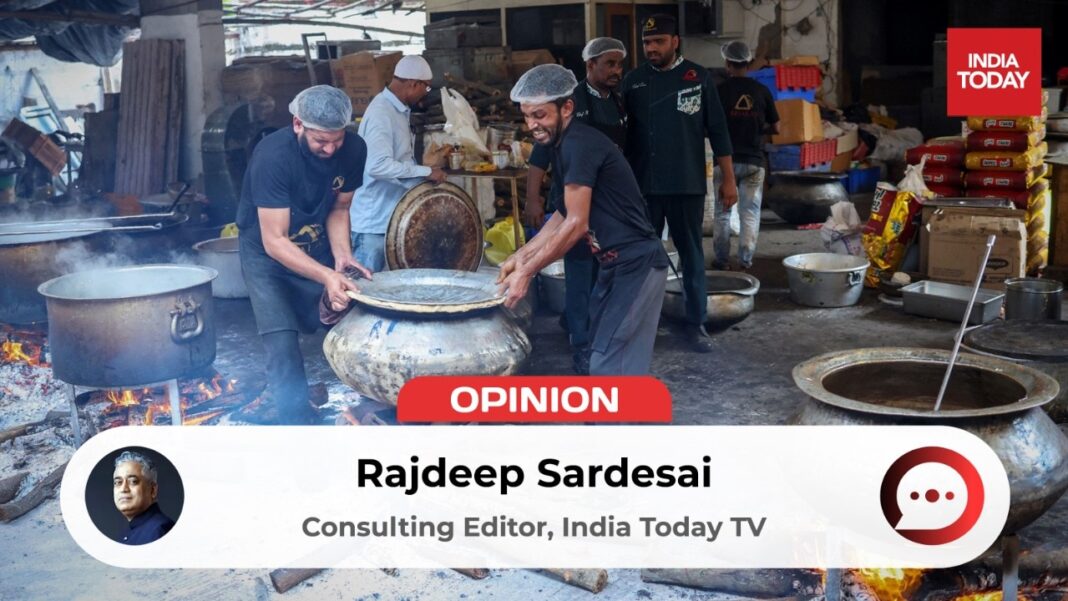
On a recent trip through the coastal state of Kerala, I noticed something unsettling. In town after town, familiar small tea shops— the lifeblood of everyday conversation — were shuttered. Not all, but enough to be impossible to ignore. A local Malayali tea-seller offered a blunt response, “What do you expect us to do without LPG cylinders? Yes, there is a war in the Middle East that has created the scarcity. We are not blaming anyone, but why can’t the government in Delhi at least acknowledge our problems?”
It was a small detail, easy to miss amid rallies and rhetoric. But it captures the economic undercurrent of India in 2026 — one that the political class seems reluctant to acknowledge. While the official line insists that all is well, the reality on the ground is far more fragile.
This is not a Covid-like crisis that announced itself dramatically. It has crept in quietly — through a closed shop, a delayed LPG refill, a household cutting back on essentials. Its roots lie far beyond India’s borders.
IRAN WAR HITS LPG SUPPLY
The global backdrop is impossible to ignore. Tensions in the Middle East have disrupted supply routes, especially along the Strait of Hormuz, pushing up freight and insurance costs. What was once a predictable global supply chain now resembles a Trumpian world disorder under constant stress.
But here is the critical point: global disruptions may trigger the crisis, but domestic policy determines how deeply it is felt. And that is where the government’s “all is well” narrative begins to ring hollow.
Take LPG. For millions of households, access to clean cooking fuel was one of the most transformative welfare interventions of the past decade. But what use is access without affordability? Across India, there is mounting evidence of families rationing usage, delaying refills, or returning to traditional fuels.
The scale of vulnerability is not anecdotal alone. India still imports roughly 85% of its crude oil needs, and LPG import dependence remains above 60%. Every global price spike — triggered by war, sanctions, or supply disruptions — inevitably finds its way into Indian kitchens.
To be fair, the Modi government has not been entirely unresponsive. It has cut excise duties on fuel to soften the blow and prioritised domestic LPG consumption. This has provided relief and deserves acknowledgement, though concerns remain that prices may be raised once state elections are over.
THE CRUDE ASYMMETRY
But that is only part of the story. The more uncomfortable question is this: when global crude prices were low, why was that benefit not passed on to consumers? Instead, taxes were raised, cushioning government revenues while households continued to pay high prices. In effect, gains were internalised, while losses were socialised. That asymmetry lies at the heart of today’s discontent.
Because when global prices rise — as they do in times of conflict — the starting point for consumers is already elevated. The room for relief shrinks, and the burden grows heavier.
The consequences are visible everywhere — if only our leaders stepped out of their VVIP bubble. The tea shop owner in Kerala shuts down because input costs have soared. The delivery worker in Chennai spending more on fuel than he can afford. The farmer grappling with rising diesel and fertiliser prices without matching returns. The daily wage labourer losing work as small factories struggle.
This is how distant wars translate into domestic distress. Yet, the response has often been to downplay the problem, with the Modi government insisting that supplies are “adequate” and blaming hoarders or black marketeers.
On the plus side, India’s macro story in the last decade is one of resilience: decent growth and relatively low inflation have offered grounds for optimism. But macro stability means little if micro realities are deteriorating.
ENERGY SELF-SUFFICIENCY NEED OF THE HOUR
There is also a deeper strategic concern. India has long known its dependence on imported energy. Yet, the push towards genuine energy security has been inconsistent. Compare this with China, which has built buffers — long-term contracts, strategic reserves, diversified sourcing, and rapid expansion of renewable energy. China is not immune to shocks. But it is far better insulated.
India, by contrast, still appears more reactive than prepared. Whether at the Centre or in the states, the required urgency is often missing.
To be sure, constraints are real. Energy transitions take time, and India’s developmental needs are vast. But that is precisely why urgency matters.
The first step is honesty. Governments do themselves no favours by pretending the pain is limited. People know when their budgets are under strain — when a cylinder costs more, when commuting becomes expensive, when a small business is no longer viable. Acknowledging this reality is not weakness — it is the foundation of credible policy.
The second step is immediate relief. Fuel taxation needs more than episodic cuts. It requires a transparent, rule-based framework — ensuring consumers benefit when global prices fall and are protected when they rise.
Similarly, LPG subsidies must be revisited. Today’s pressures extend beyond the poorest households to a large swathe of the lower middle class.
But short-term relief alone will not suffice. India needs a far more serious push towards energy self-sufficiency — accelerating renewable adoption, including at the household level. Electric cooking, backed by reliable power, could be a game-changer.
It also means investing in decentralised energy solutions — biogas, local grids — that reduce dependence on global supply chains. And above all, it requires integrating energy policy with economic strategy. Energy underpins agriculture, industry, and services alike.
Right now, that integration appears weak. Instead, what we see is a pattern of firefighting — responding to crises rather than building resilience.
That approach may have sufficed in a more stable world. It is increasingly untenable because the world is not becoming more predictable. Conflicts are more frequent. Supply chains are more fragile. Shocks are more sudden.
And that brings us back to the shuttered tea shops of Kerala.
They are not just small businesses closing down. They are warning signs — early signals of stress in the economy’s most vulnerable layers. Ignore them, and the damage spreads quietly until it is too large to contain.
Governance is not about insisting everything is fine. It is about recognising when it isn’t — and acting before the crisis becomes visible to all. Today, too many Indians are coping in silence — cutting back, adjusting, absorbing shocks that should have been softened. You cannot build a $5 trillion economy on the back of shrinking household resilience.
When global wars begin to decide what is cooked in Indian kitchens — and whether a neighbourhood tea shop stays open — it is no longer a distant problem. It is a domestic failure. And the longer we pretend otherwise, the higher the price we pay.
(The writer is a senior journalist and author.)


