
Economists speak of capital, ecologists of ecosystems. But, perhaps, one of our most underappreciated assets is water, gurgling through pipes, feeding fields, and supporting the livelihoods of a sizeable portion of our population through agriculture, environment, and related activities. Yet it is vanishing faster than we can replenish it. There is no bail out with a stimulus policy here. What we can do is learn to live differently, treating water not as a commodity to be consumed but as a global commons to be cared for.
Water covers two-thirds of the planet, but less than 3% is fresh, and even that is unevenly shared. Urbanisation, population growth, and competing demands are testing the limits of this resource. India, with 18% of the world’s population and only 4% of its freshwater, is feeling the pinch. Historically, its approach has been extract, consume, discharge. But this no longer serves a future defined by resource constraints and ecological volatility. Erratic monsoons and shrinking glaciers indicate an imbalance between what we draw from nature and what we give back.
A shift towards circularity is needed — a framework viewing water not as expendable, but as a continuously recoverable, renewable asset. Circularity in water management encompasses every stage of the value chain, from source protection to reuse. Each demands a blend of technology, community stewardship, and institutional reform, with the system allowing little wastage.
Protecting rivers, wetlands, and aquifers is essential. Equally important is mainstreaming treated wastewater and greywater. Reclaimed water has the potential to sustain entire economies. Currently, less than a third of India’s wastewater is treated before being released into the environment. Reusing even half of this could meet a significant portion of non-potable demand in agriculture and beyond.
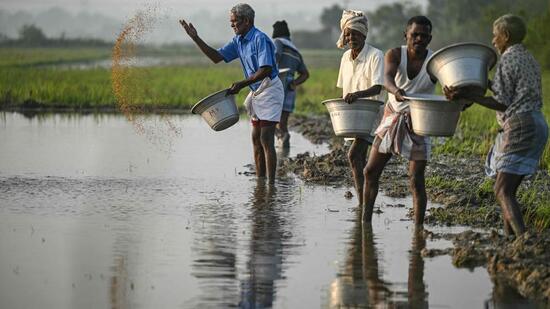
Agriculture accounts for nearly 91% of India’s freshwater withdrawals, industry 2%, and domestic use 7%. Improving irrigation efficiency is central to a circular water economy. Micro-irrigation, precision farming, and crop diversification toward less water-intensive varieties can dramatically reduce demand. Industries, too, must move to regeneration and embed zero-liquid-discharge principles. Policy must shift from volume-based subsidies to performance-based incentives rewarding water productivity.
Enhancing storage capacity is critical. Traditional systems like tanks and stepwells once captured and managed monsoon water effectively, but today, much of India’s rainfall is lost as runoff. Reviving these with modern solutions, such as aquifer recharge and rainwater harvesting, can build resilience. Distribution is also a key challenge, with significant loss before water reaches users. While technology can help address inefficiencies, lasting solutions require decentralised, community-led governance.
Ultimately, the future lies in combining nature-based solutions with digital tools, alongside integrated water management that brings together institutions, local bodies, and citizens to ensure efficiency, equity, and sustainability.
The choices we make now will determine whether we secure a future of abundance or slip into scarcity. It should not be managed from the top, but rather stewarded from the ground. Every drop has a second life, and our task is to build systems that let it flow. Against this reality, the next great revolution may not be digital. It may be blue, powered by how wisely we learn to value, manage, and reuse water.
Divyang Waghela is head, water, sanitation, and hygiene (WaSH) at Tata Trusts.The views expressed are personal


