

The tongue rarely gets attention unless something feels wrong. Yet doctors have long used it as a quick window into overall health. The colour, surface, coating, and even the shape of the tongue can offer early clues about what might be happening inside the body.
During routine check-ups, physicians often ask patients to stick out their tongue. It is not a random request. Subtle changes in the tongue sometimes appear before other symptoms show up. A shift in colour, unusual cracks, or sores that refuse to heal can signal nutritional deficiencies, infections, or other underlying problems.
Dr Pradeep Narayan Sahoo, Consultant – Internal Medicine at Manipal Hospital Bhubaneshwar, told TOI Health, “Our tongue does more than help you taste food or speak clearly.
In many cases, it can offer early clues about what is happening inside the body. Changes in the tongue’s color, texture, or coating can sometimes point to underlying health issues, which is why doctors often examine the tongue during routine check-ups. ”
Medical researchers have also explored this connection. A report by the National Institutes of Health (NIH) discusses how oral signs can reflect systemic diseases and nutritional deficiencies.
So what exactly should people watch for? Doctors point to several tongue changes that may deserve attention.
A white-coated tongue that does not go away
A thin white layer on the tongue after waking up is common. It usually disappears after brushing or drinking water. But when the coating becomes thick and stubborn, it may indicate a deeper issue.
Dr Sahoo notes that a persistently white-coated tongue can happen due to poor oral hygiene, dehydration, or fungal infections such as Oral Thrush. Thrush occurs when a yeast called Candida grows excessively in the mouth.
People with weakened immunity, diabetes, or those taking antibiotics often face this condition. The tongue may appear creamy white, sometimes accompanied by burning or soreness.
The US Centers for Disease Control and Prevention (CDC) explains that oral thrush is more common in infants, older adults, and individuals with certain health conditions.
If the coating does not clear despite regular cleaning, doctors usually recommend medical evaluation.
A bright red or “strawberry” tongue
A tongue that looks unusually red or swollen can sometimes reveal nutritional gaps. Doctors often associate this sign with deficiencies of vitamin B12 or folic acid.
According to Dr Sahoo, a bright red or “strawberry” tongue can indicate vitamin deficiencies, especially low levels of vitamin B12 or folic acid. In some cases, it may also appear during infections or inflammatory conditions such as Scarlet Fever.
Vitamin B12 deficiency is not uncommon, particularly among people with vegetarian diets or digestive disorders that affect nutrient absorption.
Often, fatigue, weakness, and tingling in the hands may accompany this sign.
Cracks or grooves on the tongue
Some people notice deep lines or grooves running across their tongue. This condition is known as a fissured tongue.
Dr Sahoo explains that cracks or deep grooves on the tongue are usually harmless but may sometimes be linked with nutritional deficiencies or chronic irritation. Food particles can sometimes collect in these grooves, which may lead to irritation or bad breath.
Good hydration and regular oral cleaning usually help manage the issue.
For most people, the change is harmless. But when it appears suddenly or becomes painful, it may be worth discussing with a doctor.
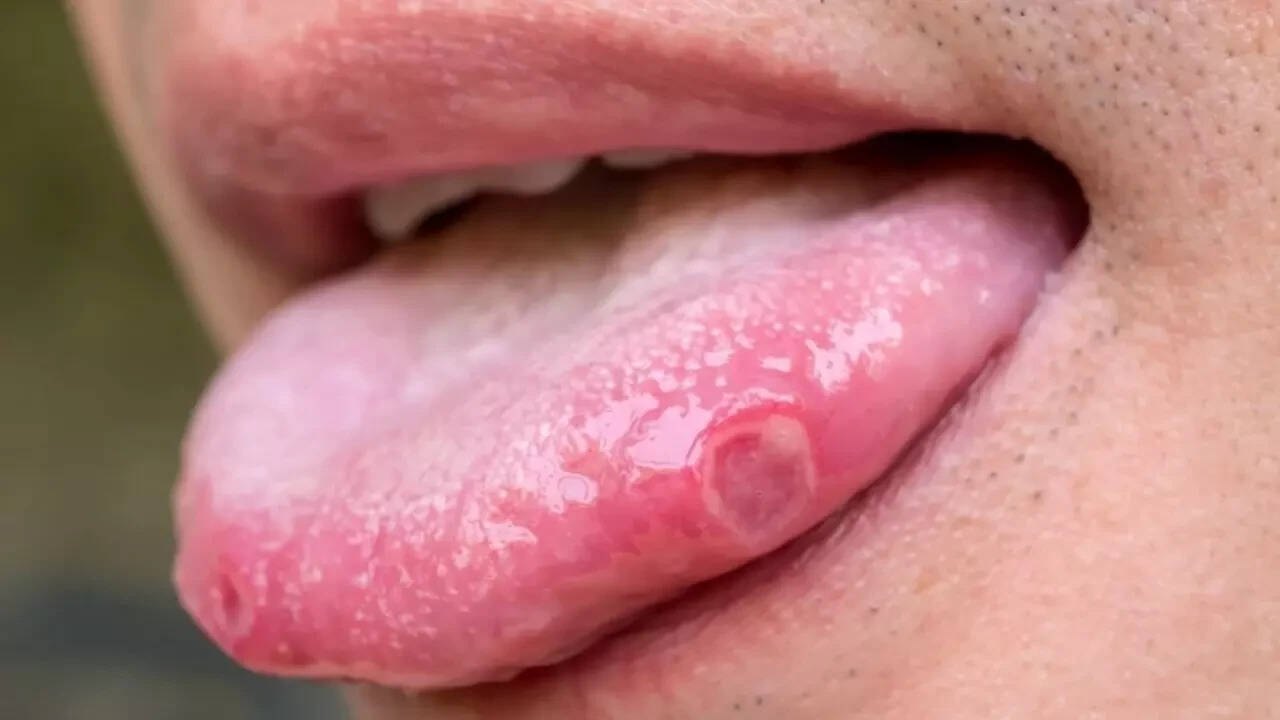
Ulcers or sores that refuse to heal
Mouth ulcers are common and usually heal within a week or two. But when a sore on the tongue lingers longer than expected, it deserves attention.
Dr Sahoo warns that persistent tongue ulcers that do not heal within two weeks could be due to irritation, infections, or occasionally more serious conditions such as Oral Cancer.
Risk increases among people who smoke, chew tobacco, or consume alcohol regularly. Early detection is crucial because oral cancers often start as small ulcers or patches.
According to the National Cancer Institute, early evaluation of persistent oral sores significantly improves treatment outcomes.
If a sore becomes painful, grows in size, or causes difficulty swallowing, medical advice should be sought quickly.
A pale tongue that may signal anemia
Colour changes often reveal problems with blood health. A tongue that appears unusually pale may suggest anemia, a condition where the body lacks enough healthy red blood cells.
Dr Sahoo notes that a pale tongue may sometimes point to anemia.
Iron deficiency is one of the most common causes of anemia worldwide. Along with a pale tongue, people may experience fatigue, dizziness, or shortness of breath.
The World Health Organization (WHO) estimates that anemia affects nearly 30 percent of the global population, particularly women and children.
A simple blood test can confirm the condition, and treatment usually involves dietary changes or supplements.
A yellowish coating and digestive clues
A yellow film on the tongue can sometimes appear when bacteria accumulate in the mouth. It may also be linked to dehydration, smoking, or digestive disturbances.
Dr Sahoo explains that a yellowish coating can sometimes reflect digestive disturbances or bacterial buildup in the mouth.
Poor oral hygiene, dry mouth, and certain medications can also contribute to this change. Brushing the tongue gently and staying hydrated often helps restore a normal appearance.
When the colour change persists or is accompanied by other symptoms, doctors recommend further evaluation.
Why doctors still trust the tongue as a health clue
Modern medicine relies heavily on scans and blood tests. Yet the physical exam still matters. The tongue remains one of the simplest tools doctors use to spot early warning signs.
Dr Sahoo emphasizes that not every change signals disease. Still, persistent or unusual signs should not be ignored. If symptoms last longer than two weeks or are accompanied by pain, swelling, or difficulty swallowing, medical evaluation is recommended.
Sometimes the body sends quiet signals before a health problem grows louder. The tongue is one of those signals.
This article includes expert inputs shared with TOI Health by:
Dr Pradeep Narayan Sahoo, Consultant – Internal Medicine at Manipal Hospital Bhubaneshwar
Inputs were used to explain how changes in the appearance of the tongue can sometimes reflect underlying health issues, and to highlight the warning signs doctors say people should not ignore.



