
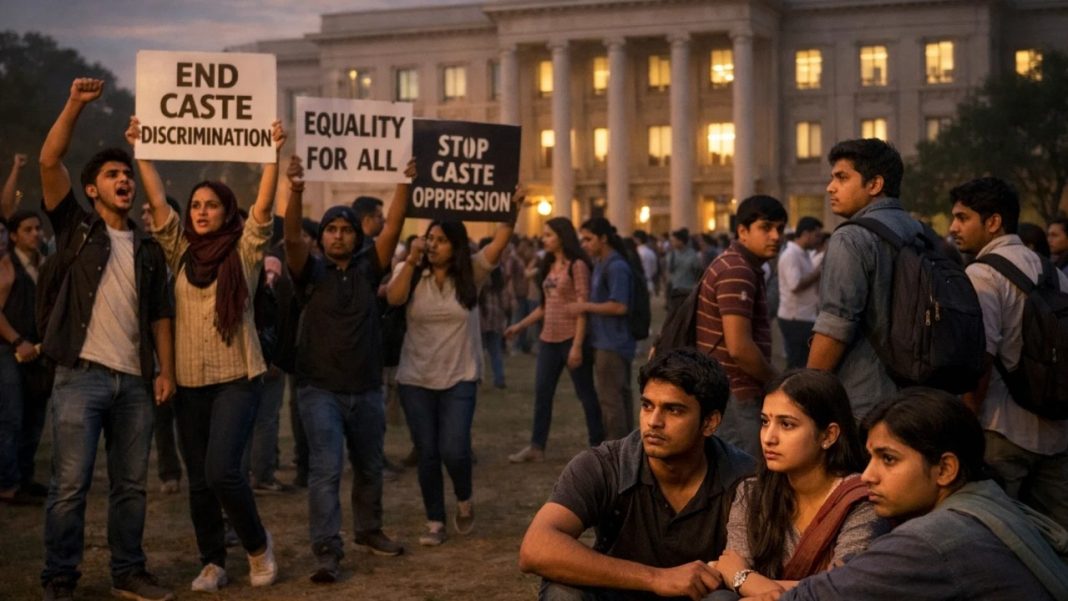
New UGC Faculty Guidelines Spark Fears of Deepening Caste Divide
The University Grants Commission’s new faculty appointment rules, emphasizing high-impact publications, have ignited a fierce debate. Critics warn they will marginalize SC, ST, and OBC academics and undermine social justice in higher education.
Key Takeaways
- New UGC guidelines prioritize research in high-impact journals and NIRF rankings for faculty hiring.
- Academics from marginalized communities call the rules exclusionary, favoring privileged candidates.
- Protests are planned, demanding a rollback and a more holistic evaluation system.
- The UGC defends the move as necessary for global standards and merit-based excellence.
What the New Guidelines Mandate
The University Grants Commission (UGC) has introduced stringent new regulations for appointing faculty across Indian universities. The rules mandate a strong focus on publications in ‘high-impact’ journals and align closely with the National Institutional Ranking Framework (NIRF) parameters for recruitment and promotion. Supporters argue this fosters a competitive, merit-based academic environment.
Why Critics See a Threat to Social Justice
A large section of academics from Scheduled Castes (SC), Scheduled Tribes (ST), and Other Backward Classes (OBC) view the guidelines as inherently biased. They argue the criteria favor candidates from privileged backgrounds with better access to resources, networks, and elite institutions.
“The new UGC norms are a direct attack on social justice in education,” said a professor from a central university, requesting anonymity. “They ignore the systemic barriers faced by Dalit, Adivasi, and OBC scholars. Publishing in certain expensive international journals often requires financial and social capital that many from reserved categories simply do not possess.”
Critics also point out that the guidelines reduce weightage for teaching experience and community service—areas where many marginalized faculty have historically excelled. They fear this could nullify gains from reservation policies, creating a new, subtle form of discrimination.
Growing Protests and the UGC’s Defence
Student organizations and teachers’ associations are planning protests, demanding a complete rollback. They advocate for a holistic evaluation system that values diverse academic contributions and compensates for historical disadvantages.
In its defence, the UGC states the guidelines aim to bring global standards to Indian universities, asserting that merit must be the sole criterion for academic excellence. This debate underscores the core tension between pursuing ‘world-class’ standards and upholding India’s constitutional mandate for social equity in education .


