The National Council of Educational Research and Training has always been the backbone of India’s school system. It designs textbooks, shapes curriculum, and sets the tone for what millions of students learn.
Now, it is stepping into a very different role.
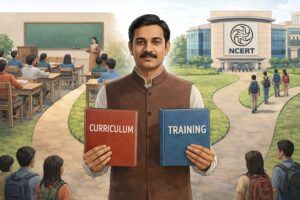
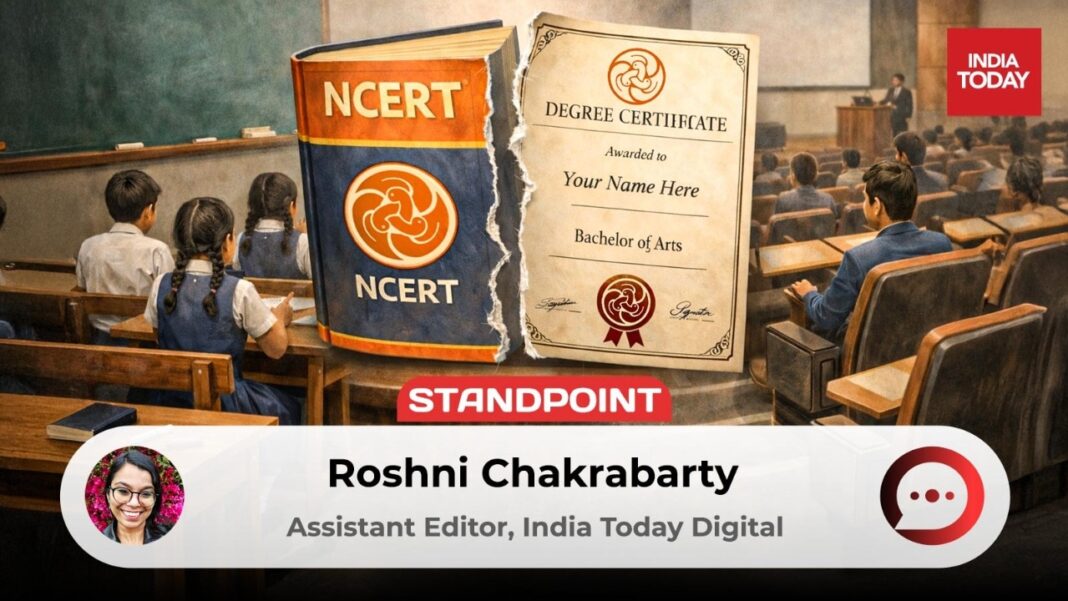
With the Centre granting it “deemed to be university” status, NCERT can design courses, run programmes, and award degrees in its own name.
This might looks like an expansion but in reality, it raises a bigger structural question: Should a body that sets the rules also enter the field as a player?
FROM REFEREE TO PLAYER
NCERT was never just another institution. It acted as a standard-setter, almost like a watchdog for school education. Its textbooks are followed across CBSE schools and influence state boards as well.
Turning it into a university changes that equation.
It now has the power to create academic programmes, train teachers at scale, and shape how education itself is taught. That sounds efficient, but it also blurs lines.
When one body writes the syllabus, trains the teachers, and evaluates learning frameworks, the ecosystem risks becoming too centralised.
WHY NOW?
The timing is hard to ignore.
Over the past few years, NCERT has been at the centre of repeated textbook revisions, especially after Covid. Chapters have been removed, updated, and debated. More recently, even subjects like judicial processes have triggered public discussion.
Against this backdrop, the new status feels less like a routine upgrade and more like a structural shift in how education authority is organised.
The official reasoning, however, is straightforward. The government wants NCERT to evolve into a full-fledged academic hub focused on teacher training, research, and innovation. India has long lacked specialised institutions dedicated to pedagogy and curriculum design at scale.
There is also a practical angle. Teacher education in India is fragmented, often criticised for poor quality and outdated methods. A central institution like NCERT stepping in with degree programmes could standardise training and bring more research into classrooms.
Seen this way, the move is not just about expanding powers. It is also about filling a long-standing institutional gap.
WHAT ARE THE GAINS?
There are real advantages here.
NCERT can now train teachers through structured degree programmes, something that has long needed attention. It can run PhDs in education, build research capacity, and create new models for how subjects are taught in classrooms.
It also brings a level of institutional weight. With accreditation from bodies like NAAC and participation in national rankings, NCERT will now be evaluated more transparently, at least in theory.
If done well, this could improve teacher training quality, which remains one of India’s weakest links. It could also create a stronger bridge between research and classroom practice, something the system has struggled with for years.
WHAT ARE THE CONCERNS?
The biggest worry is not just expansion. It is concentration of influence.
NCERT already shapes what millions of students read. But over the last few years, that role has come under repeated scrutiny across subjects.
The textbook revisions began as “rationalisation” during Covid, meant to reduce student load. But they soon turned into something much larger. Multiple rounds of changes removed or altered content across history, political science, and even science.
In history, entire chapters and sections were dropped or trimmed. This included content on the Mughal era, Delhi Sultanate, and even global themes like the Cold War and industrialisation. In some cases, narratives were not just reduced but reframed, with changes in how historical figures and events were described.
In political science, chapters on democracy, protest movements, and diversity were removed from some classes. References to events like the 2002 Gujarat riots and other politically sensitive topics were also cut during revisions.
Even science was not untouched. Topics like Darwin’s theory of evolution and parts of the periodic table were dropped from certain levels during the rationalisation phase, raising concerns about academic dilution.
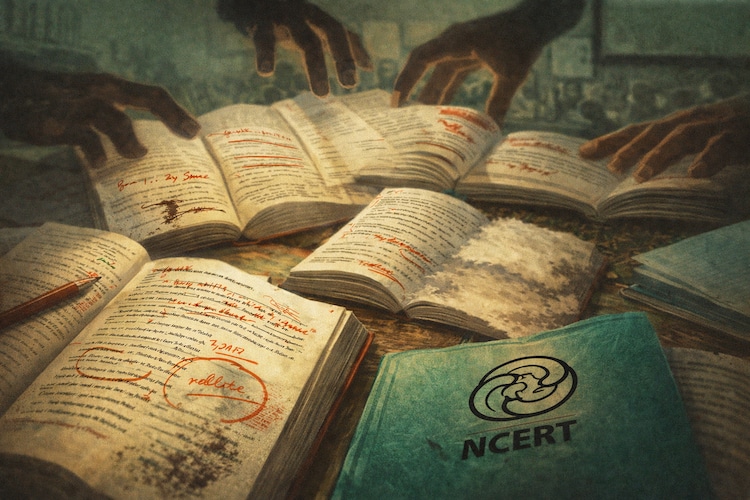
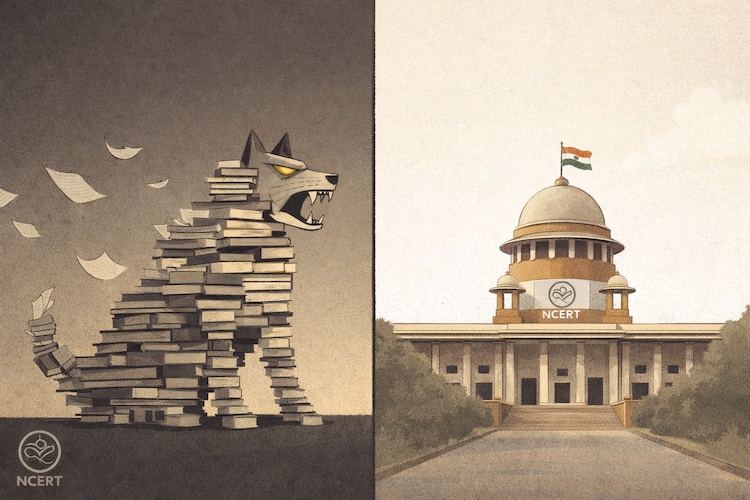
Then came the most recent flashpoint. A chapter foregrounding corruption in the judiciary sparked a major backlash, with the Supreme Court stepping in decisively, not just ordering the book’s withdrawal but initiating a probe and in publicly funded institutions.
Put together, this creates a pattern. Frequent revisions, selective deletions, and narrative shifts have raised a larger question about consistency and academic independence.
Now place this against the new move.
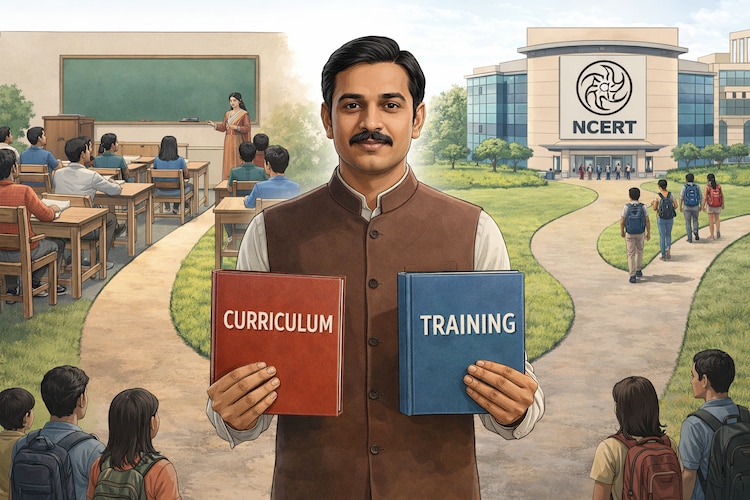
If the same institution that controls school curriculum also begins awarding degrees and training teachers, it risks creating a closed loop. Future educators may be trained within a single dominant framework, with fewer competing academic perspectives entering the system.
There is also the issue of timing. These changes are still fresh. Many are unresolved. Trust in the process is still being debated.
Which is why the bigger concern is not just what NCERT will teach.
It is who decides what is worth teaching in the first place.
WHAT IT MEANS FOR YOU
For students, this may not change much immediately. NCERT textbooks will remain central to school learning. But over time, this shift could influence how teachers are trained, what methods they use, and how subjects are explained in classrooms.
For educators, this is more direct. Teacher training, research, and curriculum thinking could increasingly come from one central source. That could bring consistency, but it also raises questions about how much room will remain for diverse approaches to teaching.
For the system as a whole, this is a structural shift.
NCERT is no longer just guiding education. It is now positioned to shape it at multiple levels, from what is taught in schools to how future teachers are trained.
And that makes this decision not just significant, but deeply consequential for how education in India evolves.