
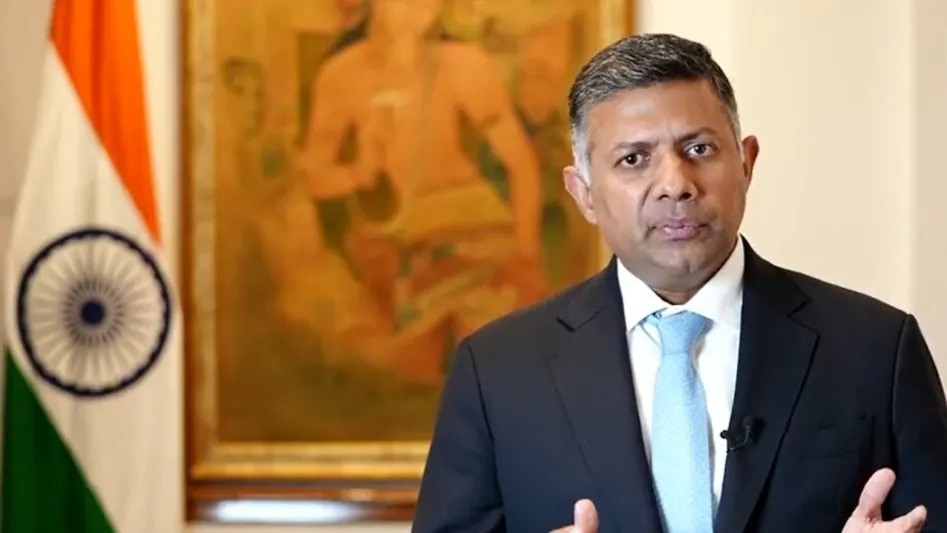
India’s newly appointed Ambassador to China, Vikram K Doraiswami, has taken on a Chinese name, Wei Jiameng. At first glance, it may appear to be a simple linguistic adjustment. But in diplomatic practice, names often carry meaning, context, and intent.
In Mandarin, names are not just phonetic translations. They are chosen carefully, often combining sound with meaning.
“Wei” is a well-known historical surname linked to an ancient Chinese kingdom. “Jia” broadly means to add or enhance, while “Meng” refers to alliance or pact. When read together, the name can be understood as someone who builds or represents alliances.
While such interpretations can vary, the act of adopting a Chinese name is part of a longer diplomatic practice. It is not new, nor is it limited to one individual.
A PRACTICE WITH A LONG HISTORY
The tradition of foreign diplomats using Chinese names goes back several decades. When India established diplomatic relations with the People’s Republic of China in the early 1950s, its first ambassador was also given a Chinese name, Pn N Ji, often written as Pan Nike in English.
This was part of a broader effort to make communication easier and more culturally aligned.
Chinese is a tonal language, and many foreign names do not fit easily into its phonetic system. A locally adapted name helps in official settings, public interactions, and media references.
Over time, this has become a standard practice not only for diplomats but also for business leaders, academics, and public figures working in China.
BEYOND TRANSLATION
Adopting a local name is not just about pronunciation. In China, names often reflect ideas, values, or qualities. A well-chosen name can carry positive associations and make interactions smoother.
For diplomats, this becomes part of the larger process of engagement. Diplomacy is not limited to formal meetings. It also involves building familiarity, trust, and ease in communication. A name that fits the local language and culture can support that process.
However, it is important to note that these names are usually selected for linguistic and cultural reasons, not as formal political statements.
While observers may read deeper meaning into them, in most cases they are meant to ensure clarity and acceptance in a different setting.
This practice is not unique to China. Across regions, diplomats and public figures often adapt their names to suit local languages. In Japan and Korea, names are often written in local scripts.
In the Arab world, pronunciation is adjusted to fit Arabic sounds. In Europe, names are sometimes shortened or anglicised for ease.
What stands out in China is the structured nature of the process. Names are often created using characters that balance sound and meaning, making them easier to remember and culturally appropriate.
Doraiswami’s adoption of the name Wei Jiameng fits into this broader tradition. It reflects an established diplomatic approach rather than an isolated choice. It also shows how language and identity are adjusted in international engagement.
At a time when India and China continue to manage a complex relationship, such small details often attract attention.
But at its core, the practice remains practical, helping diplomats function effectively in a different linguistic and cultural environment.
In diplomacy, even a name can become a tool. Not for signalling alone, but for making communication work.


