
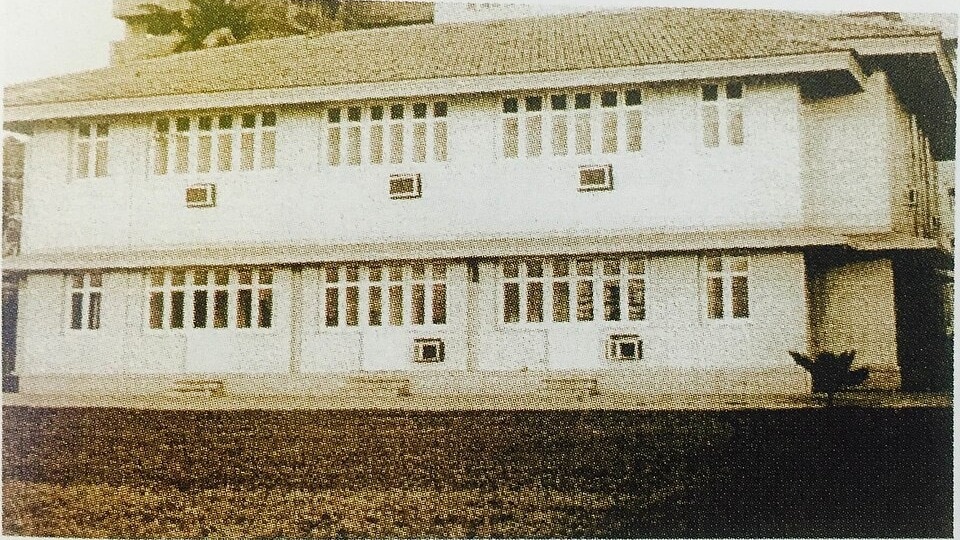
When Germany offered India a hand in building the prestigious IIT Bombay in 1958, it marked more than just academic cooperation. It turned into an emblem of a relationship slowly built over decades, through trade, technology, and people.
But few know that this partnership did not stop at engineering.
Two years later, in 1960, another German-led initiative quietly took shape in Bombay. This time, it was not an institute of technology, but a school.
An idea born within a small expatriate community would go on to become one of the city’s earliest international education centres, Deutsche Schule Bombay.
A SCHOOL BORN OUT OF A COMMUNITY NEED
The story begins with a simple question: where would German children in Bombay study?
By the late 1950s, German engineers, technicians and professionals were already part of India’s development story, from the Rourkela Steel Plant to collaborations in higher education.
With families settling in the city, the need for a school that could offer German-language education became urgent.
A survey among German parents confirmed this demand.
On September 16, 1960, the German School Association was formed. Soon after, classes began in a villa on Malabar Hill. The school opened with just a handful of students, but even in its earliest days, it reflected diversity.
Alongside 12 German children were students from Switzerland, Italy, Japan, England and Chile.
A DEEPER HISTORY BEHIND THE IDEA
This was not an isolated effort. The roots of Indo-German connections go back centuries. As explored in the book India and the Germans: 500 Years of Indo-German Contacts, German merchants had reached Indian shores as early as the 16th century, often travelling alongside Portuguese expeditions.
Over time, Germans in India built a quiet presence, as missionaries, scholars, traders and later, industrial experts.
By the 20th century, they were often described as an “elite minority”, highly educated, technically skilled, but small in number.
The two World Wars disrupted this community deeply.
German institutions in India faced restrictions, closures, and suspicion. Many families left. By the end of World War I, much of the earlier German presence had faded.
Yet, some stayed.
After India’s independence in 1947, the country became one of the first to establish diplomatic ties with Germany. Slowly, the relationship was rebuilt—this time through infrastructure, education and industry.
The founding of IIT Bombay and Deutsche Schule Bombay came from this renewed phase.
FROM SURVIVAL TO REINVENTION
The Deutsche Schule Bombay moved to a new campus on Warden Road (now Bhulabhai Desai Road) in 1967. Over time, it expanded, adding campuses in Breach Candy and Parel.
But its journey was not smooth.
In the 1990s, falling student numbers and reduced funding nearly pushed the school to closure. At one point, it had barely 21 students.
Former principal Eckhard Gaumnitz would later recall: the school was “on fire”. What saved it was adaptation.
An English-medium section was introduced. The school opened itself to a wider international community. It was no longer just for German children, it became a space where cultures met.
Today, Deutsche Schule Bombay, now known as DSB International School, offers both the National Curriculum of England and the German curriculum of Thuringia.
German remains central to its identity, but its classrooms reflect something broader. Students study in an international environment while remaining rooted in Mumbai.
In many ways, the story of this school mirrors the story of Indo-German relations itself.
From 16th-century merchants to 20th-century engineers, from war-time disruption to post-independence rebuilding, this connection has moved quietly, often unnoticed.
And in a city like Mumbai, it found expression not just in factories or institutes, but in classrooms.
A school that began with 12 children and a community’s need became a lasting reminder, of how nations sometimes connect not through politics, but through people.


