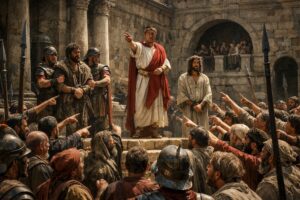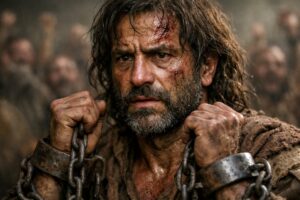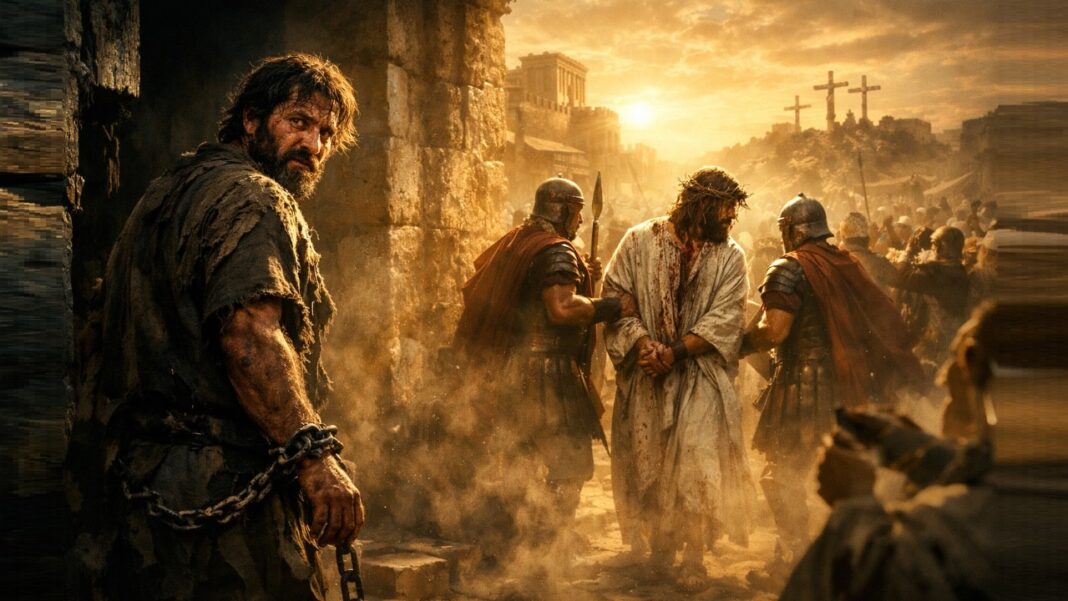
It is one of the most dramatic moments in the story of Good Friday. A crowd gathers outside the Roman governor’s palace. The air is tense, voices rising, choices narrowing. On one side stands Jesus Christ, already beaten, already condemned in the eyes of powerful men. On the other stands a prisoner named Barabbas.
History remembers what happens next with unsettling clarity.
It is the Jewish festival of Passover, a major religious event in Jerusalem at the time, commemorating the Exodus of the Israelites from Egypt and draws large crowds to the city every year.
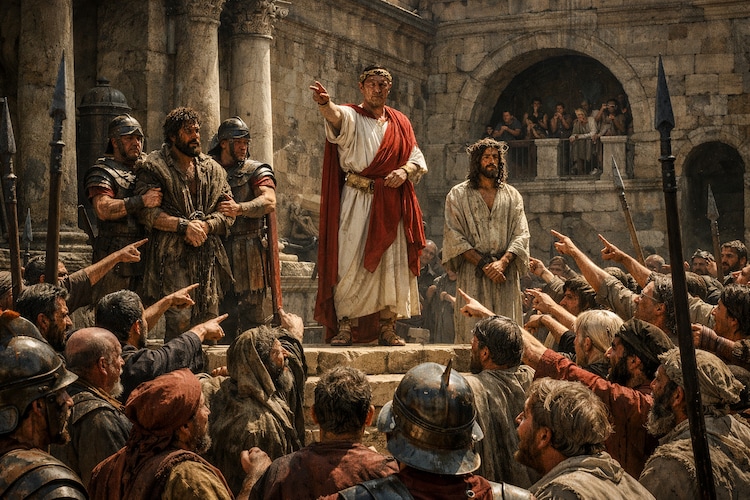
The Roman governor Pontius Pilate offers the crowd a choice, following a custom of releasing one prisoner during the festival. The decision is placed in the hands of the people. And they choose Barabbas.
In that instant, one man walks free. Another walks towards crucifixion.
It is a moment that has echoed through centuries. The name of Jesus Christ is known across the world. But Barabbas, the man who slipped out of history’s grip at that very point, remains a shadowy figure.
Who was he? And what became of him after he stepped back into the world?
WHO WAS BARABBAS?
The Gospels offer brief but striking clues. Barabbas is not described as an ordinary criminal. Some accounts call him a robber. Others go further, calling him a rebel involved in an uprising, even linked to murder.
In a Roman-occupied land like Judea, that label carries weight. Rebels were not petty offenders. They were political threats.
The name itself is intriguing. “Barabbas” can be read as “son of the father” in Aramaic. Some early manuscripts even refer to him as “Jesus Barabbas”, which adds another layer to the moment. The crowd may have been choosing between two men with the same first name.
One a preacher speaking of forgiveness and the kingdom of God. The other a man tied to violence and resistance.
That contrast sharpens the scene. It is no longer just a legal decision. It becomes a reflection of a society under strain, caught between fear, anger, and hope.
Barabbas disappears from the biblical narrative almost as suddenly as he appears. There is no follow-up, no closure. He is released, and then the story moves on to the crucifixion of Jesus Christ.
But that silence has never satisfied readers.
WHAT HAPPENED AFTER HIS RELEASE?
This is where history gives way to speculation, and stories begin to branch out.
There are no confirmed records of Barabbas after his release. No Roman document tracks him. No early Christian text offers a clear account. Yet, over time, writers and thinkers have tried to imagine his fate.
Some traditions suggest he returned to a life of crime or rebellion. In this version, nothing changed. He walked out of prison and went back to the world he knew.
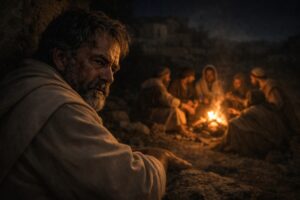
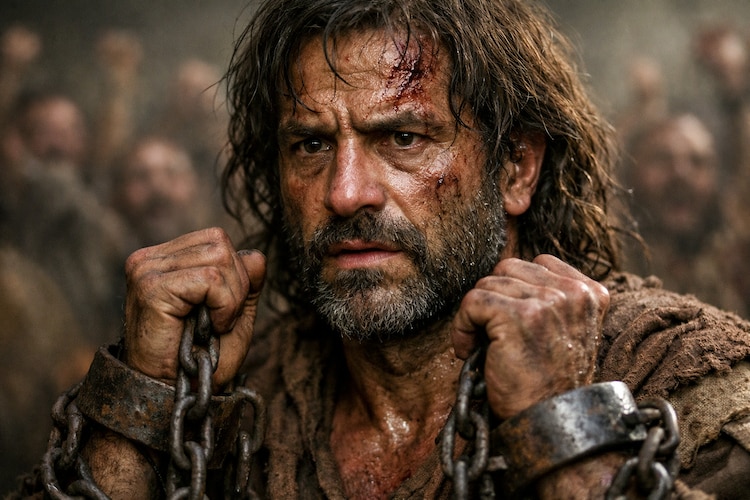
Other interpretations take a different turn. They imagine a man shaken by what he witnessed. A man who saw another take his place on the cross. In these retellings, Barabbas becomes restless, even haunted.
A few later Christian writings and fictional accounts go further. They describe him as someone who eventually encounters the followers of Jesus, struggling to understand what had happened that day.
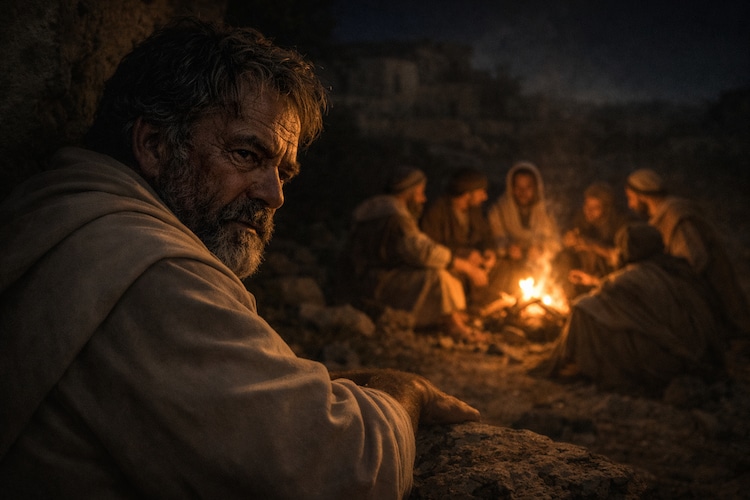
Some stories even suggest he converted, moved by the idea that he had been spared while another died in his place.
But these are not historical facts. They are attempts to fill a silence that history left behind.
Writers, especially in later centuries, were drawn to the emotional weight of that exchange. The idea that one man’s freedom came at the exact moment another faced execution is powerful. It raises questions that go beyond history.
Did Barabbas feel relief? Guilt? Confusion?
Or did he simply disappear into the crowd, another life continuing while a very different story unfolded on a hill outside the city?
WHY HIS STORY STILL MATTERS
Barabbas remains a minor figure in terms of historical detail, but a major one in terms of meaning.
Every Good Friday, the story returns. Not just as a moment of faith, but as a moment of human choice. A crowd is asked to decide, and the decision shapes everything that follows.
Barabbas stands at the centre of that decision. Not as a hero or a villain in the traditional sense, but as a reminder of how unpredictable history can be. The man who was meant to die lives on. The man who preached peace is executed.
That reversal is part of why the story has endured.
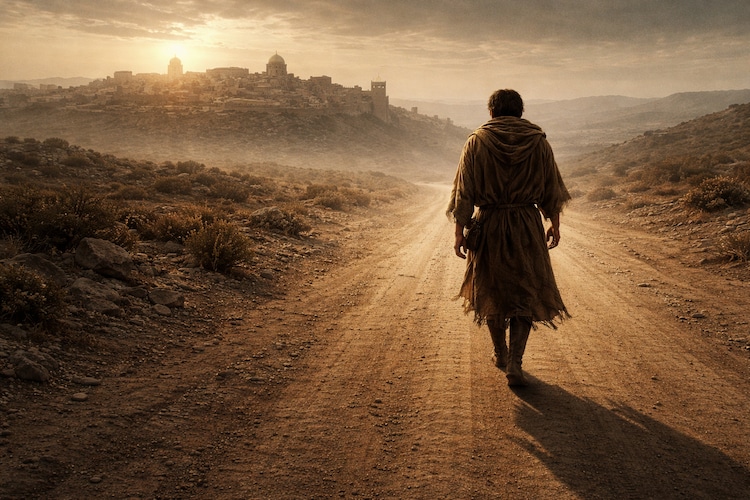
Over time, Barabbas has appeared in novels, films, and theological debates. Each version tries to answer the same question in a different way. What happens to a man who is given a second chance under such circumstances?
There is no single answer. And perhaps that is the point.
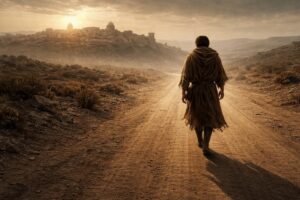
Barabbas walked free on a day marked by suffering and sacrifice. His footsteps fade quickly in the historical record, but the moment of his release continues to be retold, examined, and imagined.
On Good Friday, as the story of the crucifixion is remembered across the world, there is also a quieter question that lingers in the background.
Not just what happened to Jesus, but what happened to the man who walked away.