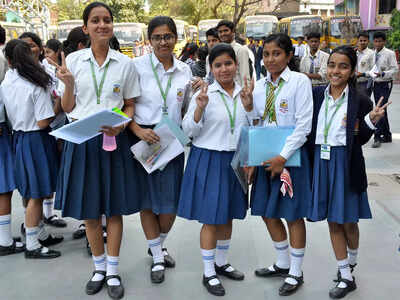
The Central Board of Secondary Education (CBSE) has concluded the Class 12 Physics examination, with over 18 lakh students appearing for the paper across the country. The offline, pen-and-paper test was held in a single morning shift, which began at 10:30 AM and concluded at 1:30 PM. Question booklets were distributed at 10:15 AM — giving students a 15-minute window to read through the paper before writing began.
With the exam now over, students and parents are searching for the question paper PDF, expert-reviewed answer keys, and a detailed breakdown of the paper to cross-check responses and get a rough sense of final scores.
Student reactions: A divided verdict
Initial reactions from students present a mixed picture. Ishant, a student from Government Boys Senior Secondary School (GBSSS), School No.
2, Tukhmirpur, Delhi, who appeared for the exam at GBSSS Khajoori Khas, Delhi, described the paper as moderately difficult. “The paper was moderate, not too easy, not too hard,” he said. His classmate Anmol, however, had a sharply different take. “The paper was very difficult,” he said. Both students had appeared for the exam at the same centre in Khajoori Khas.
Arnav Tyagi, a student from Jaypee Public School, Greater Noida, who received Set 3 of the question paper, was equally unsparing in his assessment.
“The difficulty level was high,” he said, adding that he found the exam tough overall.
Shloka Pandey, a Grade 12 student at Shiv Nadar School, Noida, offered a more measured take. “Section A went smoothly, as did Sections D and E. While the overall paper was manageable, some numerical questions in Sections B and C were slightly challenging,” she said.
A reader, who chose to remain anonymous, also weighed in. “It was a tough paper.
All sets were tough. CBSE has to remember that not all students who have Physics are JEE students,” the reader wrote, pointing to what they felt was a mismatch between the paper’s demands and the wider student cohort that sits the Class 12 Physics examination.
- Direct link to download the CBSE Physics paper 2026 PDF
What teachers made of the paper
The overall verdict from educators across the country leaned towards moderate, though several flagged the paper’s length and calculation-intensive sections as potential challenges for average students.
Thilak M., PGT Physics at JAIN International Residential School (JIRS), Bengaluru, rated the paper easy to moderate and well within the prescribed syllabus. “The paper was balanced and gave students ample opportunity to score, while also testing conceptual understanding in selected areas,” he said. Section E, carrying five marks for long-answer questions, was particularly scoring, with important derivations from Electrostatics, Ray Optics, and Electromagnetic Induction and Alternating Current (EMI & AC) — topics that students who had practised standard derivations from previous years would have found comfortable.
Section D’s case study questions, drawn from Galvanometer and Photoelectric Effect, tested conceptual understanding over memorisation. Section C had a mix of theory and numericals, with questions on Gauss’s Law, Wheatstone network, dielectric insertion into a capacitor, p–n junction diode formation, and ray diagrams being straightforward, while numericals from Electrostatic potential, Semiconductor diode circuits, and Total Internal Reflection (TIR) were multi-step and demanding. “The paper covered the entire syllabus and was strictly as per CBSE guidelines. Students with consistent preparation and previous year practice would have found the paper comfortable,” he said.
Priya Roy, PGT Physics at Modern English School, Kahilipara, Guwahati, Assam, described the paper as well-balanced and largely moderate, aligned with the expected application-based pattern.
“The assertion and reason-based questions were moderate and based on conceptual clarity, which will help students score well,” she said. The two-mark questions included direct questions from Semiconductor Electronics and Nuclei, alongside numericals testing problem-solving ability. The three-mark questions were moderate and manageable, with six to seven marks allotted to numericals. “Overall, the paper reflected a fair distribution of questions, with approximately 25–30 marks comprising direct questions and the rest involving arithmetic and numerical components, comfortably within a moderate range,” she said.
Saurabh Shukla, PGT Physics at Global Indian International School, Noida, described the paper as moderate overall, though slightly lengthy. Most questions were concept-based and syllabus-aligned, with a few requiring careful interpretation. He noted that the weightage of numericals was lower compared to last year, while derivation-based questions carried relatively higher weightage.
In terms of chapter-wise distribution, Electrostatics and Current Electricity together accounted for 17 marks, Magnetism and Matter along with EMI and AC carried 17 marks, Optics had the highest weightage at 21 marks, Modern Physics comprised 12 marks, and Semiconductor Electronics accounted for 7 marks. “Overall, the paper was balanced and student-friendly, providing fair opportunities for students with clear conceptual understanding to perform well,” he said.
Sunita Kandpal, HOD Physics at DPS Sector 45, Gurugram, also found the paper well-balanced, though she noted a few questions involved lengthy calculations. “Students who had prepared thoroughly from NCERT should be able to score well, as some questions were directly based on NCERT solved examples,” she said. Feedback gathered from students at her school reflected a similar pattern — they found the paper somewhat lengthy but considered it balanced and fair overall.
Praneet Mungali, educationist and Trustee at Sanskriti Group of Schools, Pune, said the paper emphasised conceptual understanding over memorisation. “The paper was of moderate difficulty level. Although most questions were direct and based on NCERT concepts, some questions demanded a higher level of conceptual understanding and interpretation,” he said. Section A, in his assessment, was quite easy and scoring, while Section B required explanatory, step-by-step answers with some application-based thinking.
The long-answer and case study-based questions were slightly tricky but not unjust, he added. “The paper was long but could be attempted in the given time by well-prepared students,” he said.
Mahender Sehrawat, educator at Shiv Nadar School, Gurugram, said the paper was within expectations. “The paper was of moderate difficulty and well within expectations. Most questions were direct, especially in Sets 1 and 2, with five-mark questions closely aligned to the anticipated pattern.
While a couple of assertion-reason and case study questions required careful interpretation, the overall paper was balanced and not lengthy,” he said. His colleague Rachna Arora, also an educator at Shiv Nadar School, Noida, echoed the broad assessment while flagging specific sections. “The paper was of moderate difficulty. While the overall structure was familiar, some numerical questions and five-mark answers required detailed calculations, making a few sections slightly time-consuming,” she said.
Nishant Kumar Singh, Subject Matter Expert at Seth M.R. Jaipuria Schools, described the paper as moderate to slightly challenging, with a balanced mix of conceptual recall and numerical application. He noted that Section A was largely straightforward, with most questions direct and concept-based, though some — such as the one on dipole rotation work done — required multiple steps. Section B was of moderate difficulty, with standard numericals drawn from the NCERT framework.
Section C, he said, was the conceptual core of the paper, requiring students to explain phenomena and perform structured derivations, with questions on torque on a coil and the comparison of deuteron and alpha particle serving as good differentiators. The case study questions in Section D, drawn from capacitors and moving charges, were innovative and well-structured, testing application over rote learning. Section E’s long-answer questions were comprehensive and demanding, with derivations on lens combination, refraction at a spherical surface, and questions combining conceptual justifiers with heavy numerical calculations. “The paper was well-balanced and adhered to the competency-based assessment model. It rewarded students who had a strong conceptual foundation and had practised numerical problems extensively,” Singh said.
Dr Alka Kapur, Principal of Modern Public School, Shalimar Bagh, Delhi, noted that the MCQ section required more calculation-based thinking than expected. The paper was comparatively more theoretical in nature, with a good number of derivations from the prescribed syllabus.
“While the numericals were not excessively difficult, they were time-consuming and demanded careful calculation, which posed a challenge in time management,” she said. The case study question from Optics was relatively difficult, she added. “Overall, the paper was moderately easy when compared to last year’s examination. However, due to the length and calculation-intensive nature of the questions, it was time-taking. Average students might have found it slightly challenging to complete within the allotted time,” she said.
Abhishek Sharma, Director of Academics at Newton School of Technology and an IIT Kanpur graduate, found the paper broadly balanced. About a third of the paper, he noted, was purely conceptual — giving students who understand concepts but struggle with mathematics a decent chance to pass.
He also observed that the higher-order questions were grounded in real-world scenarios, relating closely to everyday electronic and optical devices, and that the case study questions were designed to deepen students’ engagement with the subject. He did flag one issue: “There aren’t any major errors in the paper, except the unit of area in Q23b,” he said.
Anup Karda, Physics Teacher at Witty International School, Udaipur, rated the paper moderate to difficult and fairly lengthy.
“Section E was easy, featuring direct questions, while Section D was of moderate difficulty. Sections B and C were slightly challenging and required stronger conceptual clarity from students,” he said. He noted that due to the paper’s length, many students attempted Section A towards the end. “The numerical problems were direct and approachable, making them easier to solve. Each section carried a good weightage of derivations, which added to the length but effectively tested students’ understanding,” he added.
Vijay Giri, Physics teacher at Satya School, Gurugram, described the paper as slightly above average in difficulty. “One of the MCQs, along with the graph-based questions and the case study, was relatively lengthy and required careful reading,” he said. Student reactions at his centre were mixed — most felt the exam went well, while a few found certain sections confusing. “JEE aspirants in particular appeared confident, as the paper aligned well with their preparation and they were largely satisfied with their performance,” Giri said.
A total of 18,59,551 candidates have registered for the Class 12 board examinations this year. The gender-wise data shows 10,27,552 male candidates and 8,31,999 female candidates appearing for the exams.
The examinations are being conducted at 7,574 centres across the country. Physics is among the major subjects in the senior secondary science stream and is one of 120 subjects scheduled in the current Class 12 examination cycle.
After the examination concludes, students will be able to access the question paper PDF and verified answer keys once they are released. These documents will help candidates cross-check their responses and calculate tentative scores.
Further updates regarding the question paper, answer key and detailed paper analysis will be published once available.
Ready to navigate global policies? Secure your overseas future. Get expert guidance now!