
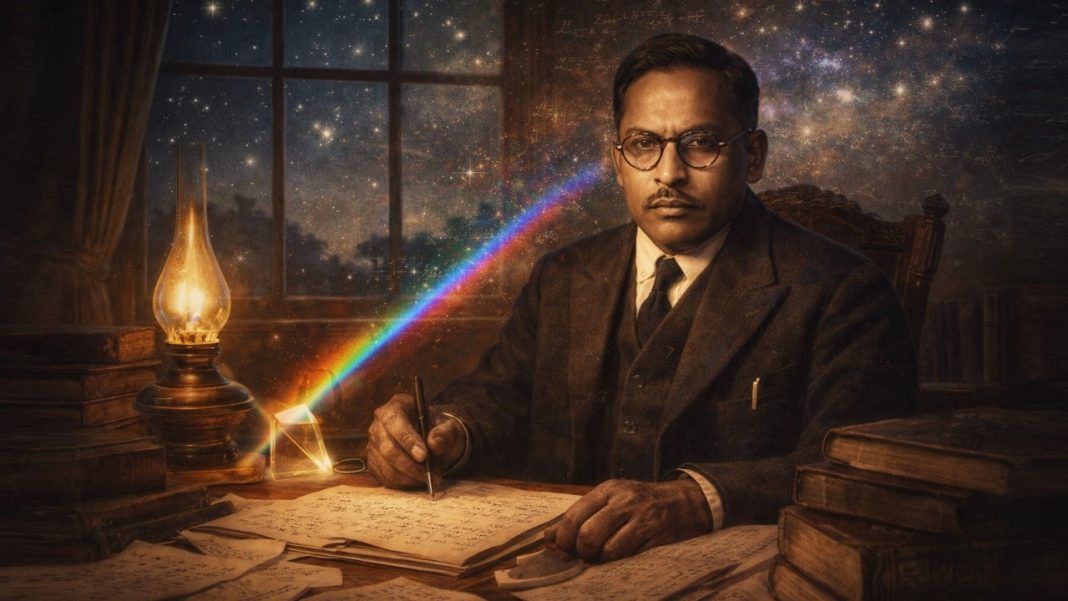
Stockholm, December 10, 1930.
The orchestra swells. White ties and medals gleam under heavy chandeliers. The Nobel ceremony unfolds with ritual precision. Each name called is meant to mark a permanent place in history.
But history is selective.
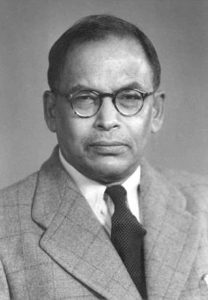
That year, like several before and after, Meghnad Saha is not among them.
He had already reshaped astrophysics. He would be nominated again. And again. Five times in total.
Yet the prize would never come.
THE EQUATION THAT TAUGHT US TO READ STARLIGHT
At the turn of the 20th century, astronomers were staring at puzzles.
When starlight was split through a prism, it revealed dark lines — spectral signatures. Scientists knew these lines corresponded to elements – Hydrogen, Helium, Calcium.
But something didn’t add up.
The same element seemed to behave differently in different stars. Why did spectral lines appear strong in one star and faint in another?
Was the chemical composition different? Or was something else happening?
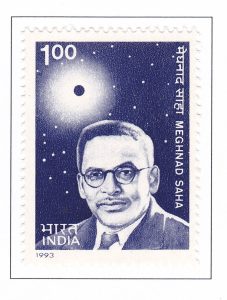
In the early 1920s, Meghnad Saha offered an answer that cut through decades of confusion.
Using thermodynamics and atomic physics, he showed that the appearance of spectral lines depends on temperature and pressure inside a star.
At extreme heat, atoms lose electrons — they become ionised. That changes the light they emit or absorb. The differences in stellar spectra were not mysteries of composition but consequences of physics.
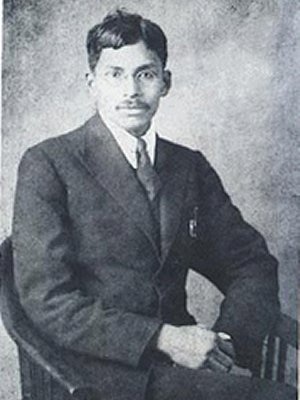
It was a breakthrough. A bridge between atomic theory and astronomy.
With what became known as the Saha ionisation equation, scientists could now calculate the physical conditions inside stars without ever touching them. Suddenly, starlight became measurable evidence. The universe could be interrogated, not just admired.
Every modern course in astrophysics still rests on this framework. The method used in observatories across the world traces back to his insight.
FROM A SMALL BENGAL VILLAGE TO GLOBAL SCIENCE
Saha did not come from privilege.
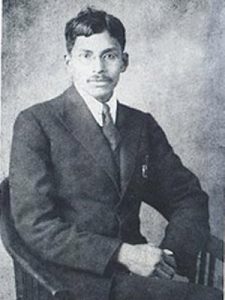
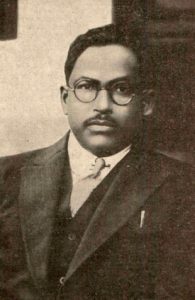
Born in 1893 in a modest village in Bengal, he was the son of a shopkeeper. There were no laboratories waiting for him. No family tradition of higher education. He studied against odds that would have stopped many others — financial hardship, colonial discrimination, limited access to resources.
At Presidency College in Calcutta, he stood among some of the brightest young minds of the time. But brilliance alone did not guarantee opportunity. Scientific India was still finding its footing under British rule.
Saha taught himself advanced physics from borrowed texts. He followed European journals as closely as he could. When the new quantum ideas began reshaping physics abroad, he absorbed them and asked: how can this help us understand the stars?
His answer changed astronomy.
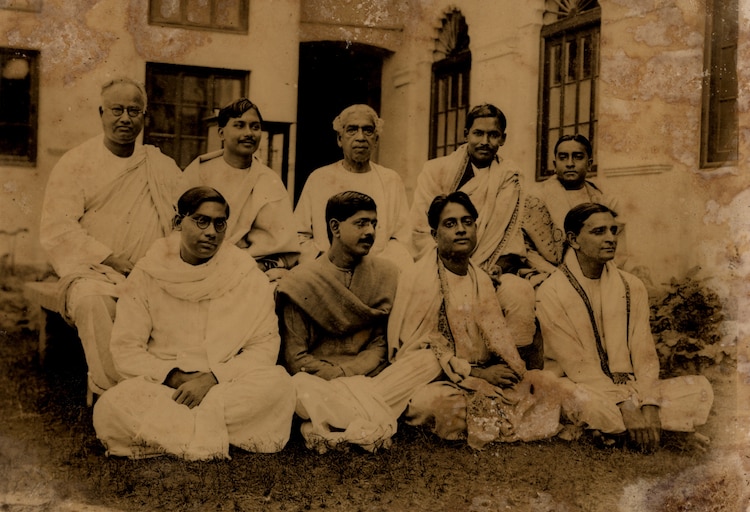
FIVE NOMINATIONS. NO MEDAL.
Between the 1920s and 1940s, Saha was nominated for the Nobel Prize five times. The global scientific community recognised the importance of his work.
But nomination is not victory.
The Nobel Committee operates within its own ecosystem, shaped by networks, reputations, shifting research trends. In those years, astrophysics was evolving rapidly. Other scientists built upon Saha’s foundation. Some of them received international honours.
But he did not.
It is one of science’s uncomfortable truths: the tools that enable discovery do not always earn the spotlight. Sometimes, the architect stands outside the celebration.
Saha continued his work regardless.
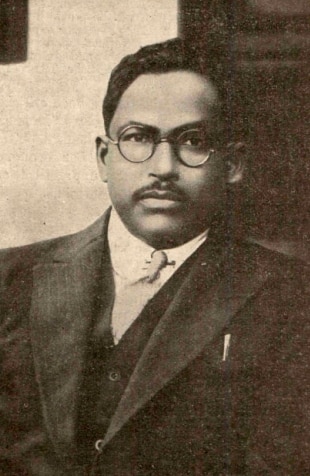
THE MAN BEHIND THE EQUATION
Meghnad Saha was not a scholar sealed off from the world.
He married Radha Rani Saha when he was around 16, as was common in Bengal at the time. They went on to have three sons. His life did not unfold in comfort. Money was often tight.
Even after he became known internationally, financial responsibility remained a constant weight. He supported not only his immediate family but also relatives, determined that the insecurity he had grown up with would not define the next generation.
At home, he was a husband and father negotiating the everyday realities of middle-class life in colonial and later independent India.
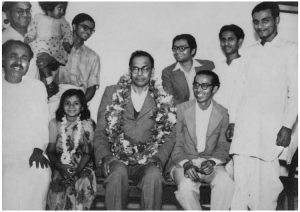
History remembers the equation. His children remembered the man who worked late, argued passionately, and carried both ambition and obligation in equal measure.
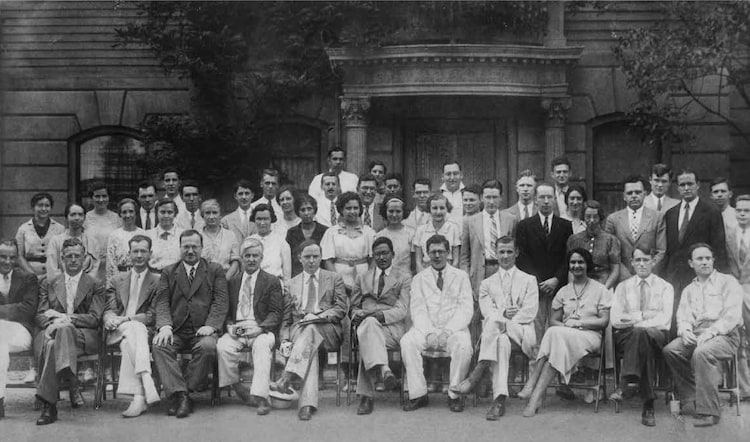
In 1919, he travelled to Europe, a decisive phase. He worked in London and later in Germany, where physics was being reshaped by quantum theory. Laboratories were better equipped. Conversations were intense.
For a young scientist from colonial India, this was the centre of global science. He could have stayed and built a career within those circles.
But he chose not to.
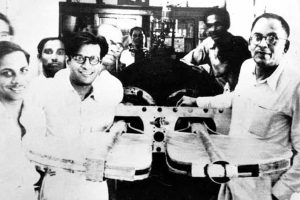
In 1920, Saha returned home, convinced that science in India could not grow if its brightest minds remained abroad. He joined the University of Calcutta and later moved to Allahabad University, where he built one of the country’s most active physics departments.
Students found him exacting and impatient with complacency, but deeply committed to serious scholarship. He wanted Indian science to compete, not imitate.
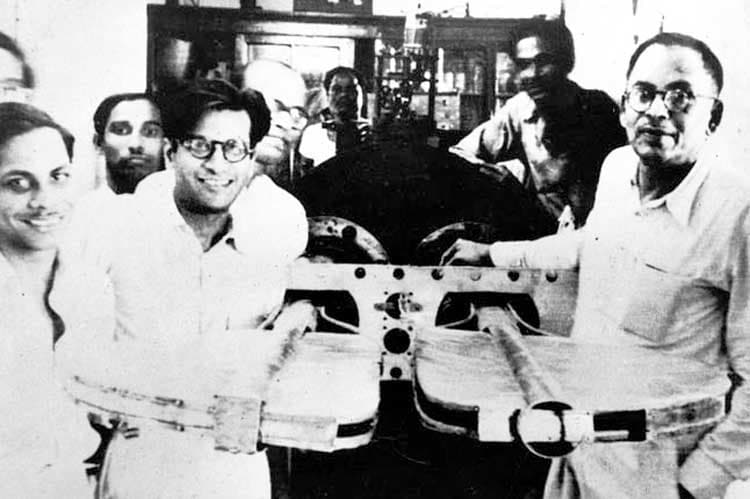
BUILDING SCIENCE IN A NEW INDIA
Even before Independence, his interests had begun to widen beyond astronomy. He wrote on river systems, industrial planning and the role of scientific education in economic growth.
For Saha, poverty was not merely a social problem; it was a technical one to be addressed with rational policy. It required engineering, data and long-term planning.
When India became independent in 1947, Saha deepened this engagement. He was not content with publishing papers alone. He believed a country’s future depended on scientific literacy and strong institutions.
He argued for national laboratories and structured planning rooted in evidence rather than ideology. He advocated river valley projects, energy development and education reform.
In 1952, he formally entered politics, winning a seat in Parliament as an independent candidate. It was an unusual path for a theoretical physicist, but to Saha there was no dividing line between laboratory and legislature.
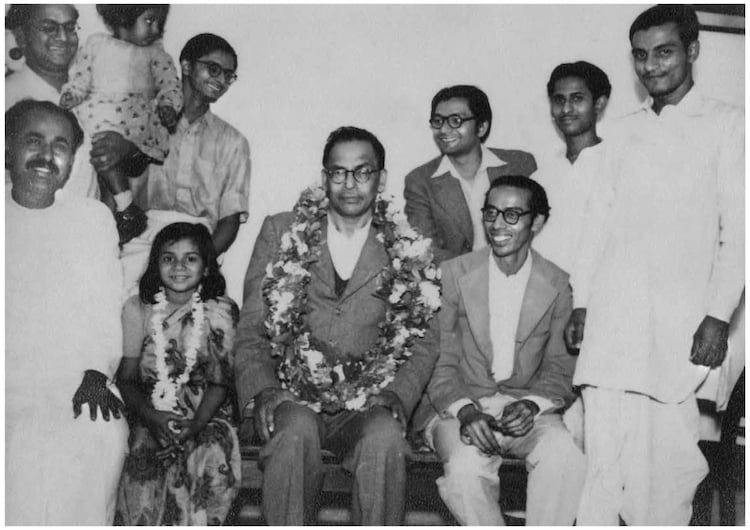
He brought a scientist’s lens to policy debates and argued for flood control and power generation with the same force he once applied to stellar atmospheres.
For him, physics was never detached from society. Knowledge had to serve development.
Meghnad Saha died on February 16, 1956, in New Delhi after suffering a heart attack. He had been on his way to a meeting of the Planning Commission when he collapsed near the Parliament area. He was 62 years old.
His death was sudden, in the middle of active public and scientific work.
By then, he was no longer only the author of a famous equation. He was a professor, institution builder, editor, parliamentarian and one of the strongest advocates for scientific thinking in public life.
The equation made him known to the world. The task of building a scientific nation gave him a second mission.
The Nobel Prize simply never arrived.
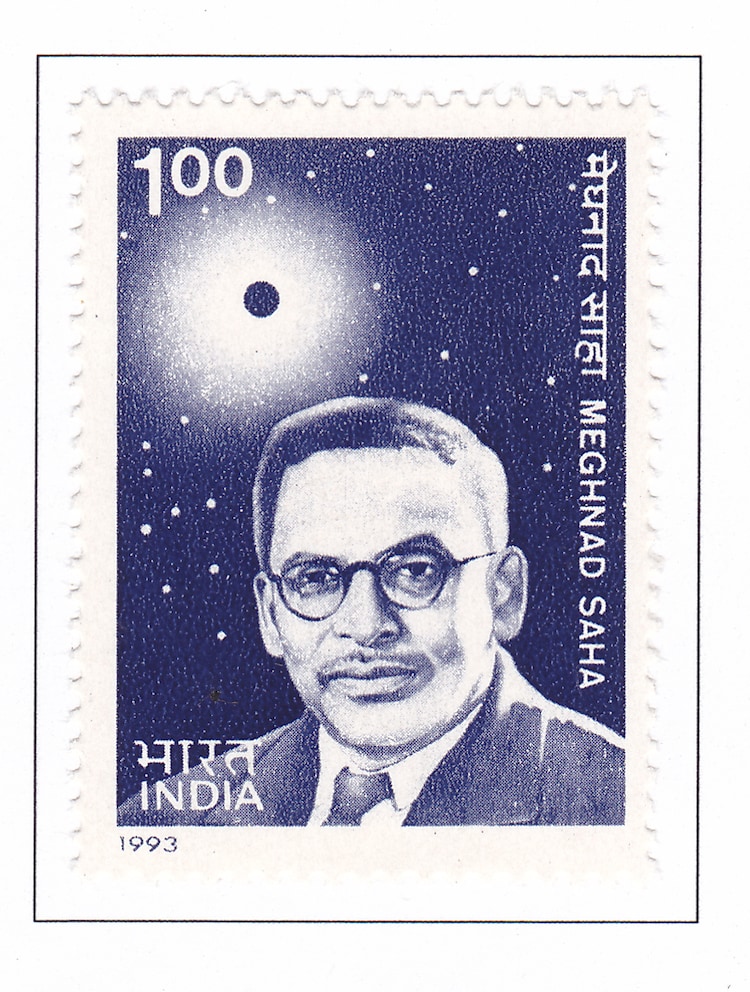
THE STARS STILL USE HIS MATHS
If you open any astrophysics textbook today, you will find the Saha ionisation equation. If an astronomer determines the temperature of a distant star, Saha’s work is somewhere in the calculation.
It is woven into the discipline so deeply that students often learn the formula before they learn the man.
There is something stark about that.
A boy who once struggled to afford education ended up decoding the physics of stellar atmospheres. His equation gave humanity a way to estimate the heat and structure of objects millions of kilometres away.
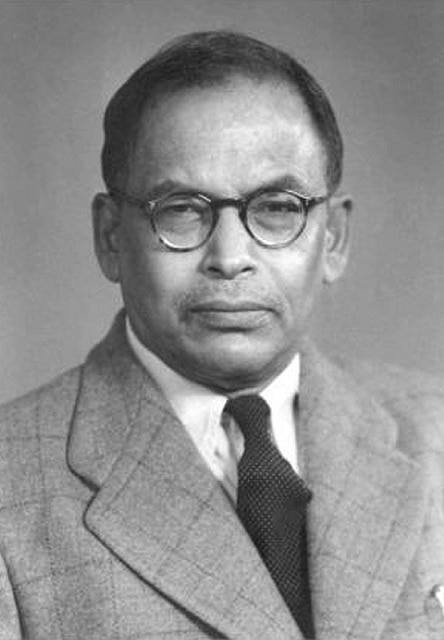
Yet outside scientific circles, his name rarely surfaces.
Awards shape public memory. Equations shape understanding.
In 1930, a hall in Stockholm applauded other names. But the framework that allowed modern astrophysics to grow had already been laid down by a physicist from Bengal who refused to be limited by his circumstances.
The Nobel committee moved on each year.
But the stars did not.
They continue to burn according to the laws he described — their light carrying temperatures, pressures and elemental secrets across space, waiting to be decoded using mathematics first written by Meghnad Saha.
And that, perhaps, is the deeper measure of legacy.