
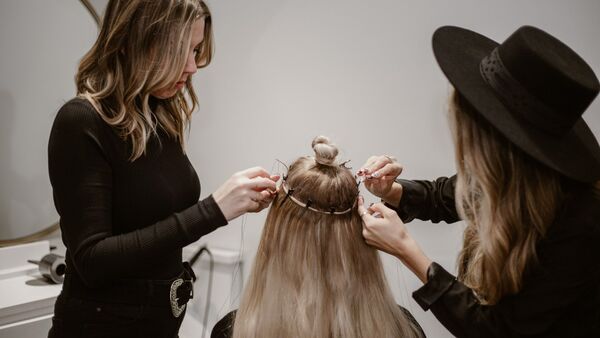
Hair extensions have become a go-to beauty upgrade for many Indian women—promising instant length, volume and style flexibility. But emerging scientific findings are now prompting doctors and consumers alike to pause and take a closer look at what these products may contain, and what long-term use could mean for health.
Recent independent laboratory analyses of some commercially available hair extensions have detected a wide range of chemical compounds, particularly in synthetic or heavily treated products. Among those identified are phthalates, flame retardants, organotin compounds and volatile organic compounds (VOCs). Several of these substances are already recognised globally as potential endocrine disruptors or carcinogens when exposure is frequent or prolonged.
Dermatology experts stress that the concern is not about occasional use, but about repeated and extended exposure. “From a clinical perspective, the concern lies in cumulative exposure rather than occasional use,” explains Dr Sunil Kumar Prabhu, Consultant – Dermatology, Aster RV Hospital, Bengaluru.
Why prolonged use raises questions
Hair extensions are typically worn for weeks or even months at a stretch, staying in close contact with the scalp. Daily activities such as washing, brushing and heat styling can potentially release chemical residues or fumes, which may then be absorbed through the skin or inhaled.
“Hair extensions are typically worn for weeks or months at a time, maintaining prolonged contact with the scalp. In addition, heat styling, washing, and daily wear can release fumes or particles that may be inhaled,” Dr Prabhu notes. He adds that salon professionals who handle these products frequently could face higher cumulative exposure over time.
Some of the chemicals detected in testing are known to interfere with hormonal balance in other exposure settings. Endocrine-disrupting substances have been linked, in certain contexts, to issues affecting reproductive health, menstrual regularity and fertility. While experts emphasise that there is currently no conclusive evidence directly proving that hair extensions cause cancer or infertility, the presence of such chemicals has raised red flags.
“While there is currently no definitive evidence proving that hair extensions directly cause cancer or infertility, the detection of chemicals already linked to such outcomes in other exposure settings warrants a precautionary approach,” Dr Prabhu says.
What consumers should know
For Indian consumers, the takeaway is awareness—not panic. Hair extensions remain widely used, and not all products carry the same risk profile. However, doctors advise making more informed choices, especially for people who use extensions frequently or for long durations.
Basic precautions can help reduce potential risks:
- Opt for high-quality, certified products from established brands
- Ask salons about ingredient transparency and formaldehyde-free adhesives
- Ensure extension procedures are carried out in well-ventilated spaces
- Avoid continuous, back-to-back use; give the scalp regular breaks
- Consult a doctor if you experience persistent scalp irritation, excessive hair fall or unexplained symptoms
A larger beauty industry conversation
The discussion around hair extensions also feeds into a broader debate on cosmetic safety and regulation. Products designed for prolonged contact with the scalp are often subject to less scrutiny than medicines, despite their repeated use.
Experts argue that clearer labelling, ingredient disclosure and stricter safety testing are essential as the beauty industry grows. For consumers, especially young women experimenting with trends popularised on social media, understanding what goes onto the scalp is becoming just as important as how it looks.
As Dr Prabhu puts it, cosmetic enhancement should never come at the cost of long-term health—and informed choices remain the strongest line of defence.


