
I am not a nutritionist. I am not a fitness coach. I am a journalist, a mother, and someone who felt stuck in her own body.
When I weighed 81 kilos after pregnancy, I felt uncomfortable and disconnected from myself. I had tried dieting before. I had gone to the gym. I had even followed structured diet plans given by professionals.
The lowest I had reached earlier was 68 kilos. But this time felt different. My schedule was unpredictable. Sleep was broken. A gym routine felt impossible.
I did not want a crash diet. I did not want shortcuts. I wanted something realistic.
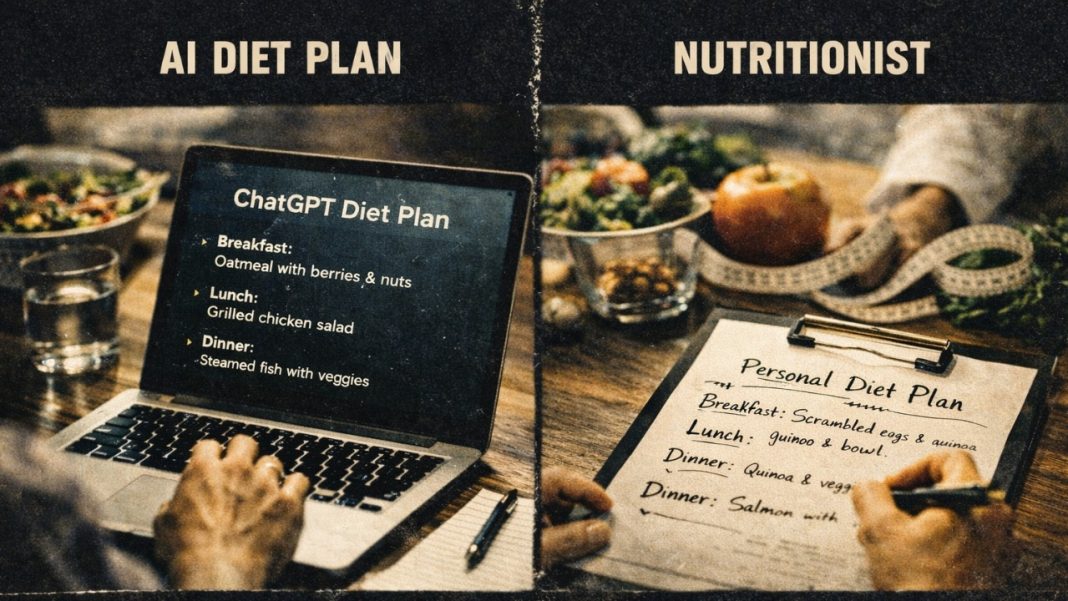
So I did something different. I asked AI to create a diet plan for me.
What followed was not magic. It was discipline.
NO GYM, NO CRASH DIET, JUST FOOD DISCIPLINE
I gave my body three months to recover after childbirth. Then I started slowly. Since workouts were difficult with a baby, I decided to focus only on food.
The AI-generated plan was simple. It focused on calorie deficit, adequate protein, fibre intake, and portion control.
There were no extreme restrictions. No fancy superfoods. Just structure.
I began tracking calories. I removed junk food, sugar, and processed snacks. I shifted to home-cooked meals. Breakfast was repetitive boiled eggs or oats.
Snacks were roasted chana or makhana instead of packaged chips. White rice becomes brown rice or quinoa.
Later, I slowly introduced intermittent fasting. I started with 14 hours and gradually moved to 18 hours. It reduced mindless snacking and helped me understand real hunger cues.
In 10 months, I went from 81 kilos to 60 kilos.
There were no cheat days. No dramatic transformations. Just consistent daily choices.
But as the weight dropped, one question stayed on my mind: Is this safe long-term?
WHAT DO CLINICAL NUTRITION EXPERTS SAY?
To understand the bigger picture, I spoke to three senior clinical nutrition experts.
- Dt. Sujatha Stephen, RD, Chief Dietitian, Yashoda Hospitals, Hyderabad
She says AI-generated diet plans can help with basic structure and calorie control.
“AI-generated diet plans can be helpful for basic guidance and calorie control, especially for people looking for structure or meal ideas. However, they are not fully personalised.
Safety depends on the individual’s health and nutritional needs.
These tools may miss deficiencies, metabolic disorders, or food intolerances. They can support weight loss, but they should not replace consultation with a qualified nutritionist.”
Her point is simple: AI can guide, but not diagnose.
- Dr Anshul Singh, Team Leader, Clinical Nutrition and Dietetics, Artemis Hospitals
Dr Singh believes AI can deliver results, but with caution.
“AI-generated diet plans can help you lose weight, especially if they are based on basic nutrition science and calorie tracking. Many people may see results quickly.
But safety depends on the person’s health. AI tools do not always have complete information about medical history, lab reports, hormonal status, or emotional eating patterns. They might miss deeper issues.
These tools should ideally be used with professional guidance.”
He adds that AI works best when combined with human supervision.
- Dr Anshu Chaturvedi, Head, Department of Dietetics, CK Birla Hospitals, Jaipur
Dr Chaturvedi explains the difference between short-term weight loss and long-term health.
“AI-generated diet plans might work well over a short period, especially for people who need structure and calorie awareness. Many lose weight because the plan builds discipline.
But weight loss is only one goal. Safety, nutritional adequacy, metabolic health, hormonal balance, and sustainability are equally important.”
She warns that AI models usually consider age, height, weight, and activity level.
They may not account for thyroid disorders, insulin resistance, gut issues, food intolerances, or micronutrient deficiencies unless specifically programmed.
“Rapid weight loss without oversight can lead to muscle loss, deficiencies, fatigue, menstrual problems, or weight regain. AI plans should be seen as starting outlines, not replacements for personalised consultation.”
IF AI IS RISKY, WHY IS IT USED IN HEALTHCARE?
AI is growing rapidly in healthcare. It helps with diagnostics, imaging, remote monitoring, and data analysis.
According to Dr Chaturvedi, the reason is clear: “AI is excellent at recognising patterns and processing large data quickly. But it works as an assistant to clinicians, not a replacement.”
The same applies to nutrition.
AI can track calories, analyse eating habits, suggest healthier swaps, and send reminders. It can improve access for people who cannot easily consult specialists.
But interpreting complex metabolic health, emotional triggers, or medical conditions still requires human expertise.
Dr. Singh echoes this: AI can support. It cannot replace clinical judgement.
MY HONEST TAKE: AI VS NUTRITIONIST
I am no one to say AI is better than a nutritionist. And I am not saying traditional counselling is wrong.
I am only sharing what worked for me.
Earlier, when I went to the gym and followed a dietitian’s plan, I reached 68 kilos. This time, following an AI-generated structure at home, I saw a bigger difference: 60 kilos.
The difference was not just the plan. It was my discipline.
AI gave me structure. But consistency came from me.
The doctors agree on one thing: AI can help with awareness and tracking. But long-term health needs personalised guidance, medical screening, and behavioural support.
Perhaps the future is not AI versus nutritionist.
Perhaps it is a plus for a nutritionist.
THE BIGGER LESSON
The biggest truth I learnt is this: motivation fades. Discipline stays.
Calorie deficit works. Protein and fibre matter. Home-cooked food helps. And small steps, taken daily, change everything.
Technology can guide you. Experts can advise you. But in the end, transformation depends on what you do every single day.
Ten months ago, I decided not to wait for a Monday. Today, I am 21 kilos lighter and far more aware.
And maybe that awareness is the real win.


