Key Takeaways
- 9.3 million people in the Himalayan region are at risk from catastrophic glacial lake floods.
- Glacial lakes in High Mountain Asia expanded by 10% in area between 1990 and 2020.
- The fastest-growing lakes, which are most dangerous, saw area increases of 47% to 56%.
- Researchers call for urgent international collaboration on monitoring and early warning systems.
A major new study from IIT Roorkee warns that the threat of a Himalayan “tsunami”—a sudden glacial lake flood—is rising sharply, putting over 9.3 million people at direct risk.
The research, published in Nature Communications, reveals a dramatic expansion of glacial lakes in the High Mountain Asia region over the last 30 years. The total surface area of these lakes grew by 10%, with the number of lakes increasing by 6.27%.
What is a GLOF and Why is the Risk Growing?
The study identified 6,353 significant glacial lakes in 2020. Their expansion has drastically increased the risk of Glacial Lake Outburst Floods (GLOFs)—sudden, catastrophic releases of water that can wipe out entire valleys downstream.
“The rapid growth of glacial lakes in the High Mountain Asia region is a clear indicator of climate change,” said Dr. Mohd Farooq Azam, Associate Professor at IIT Roorkee and study co-author. “These lakes are becoming increasingly hazardous, posing a significant threat to communities and infrastructure.”
Most Dangerous Lakes Growing Fastest
The research pinpointed the lakes posing the greatest danger. Proglacial lakes (formed in front of glaciers) grew by 47%, while supraglacial lakes (on top of glaciers) expanded by 56%. These ice-contact lakes are most prone to triggering a catastrophic breach.
India’s Vulnerability and the Kedarnath Memory
Within the region, India witnessed a 40% rise in the number of glacial lakes and a 59% expansion in their total area. The Ganga basin, a critical water source for millions, saw the highest number of new lakes form.
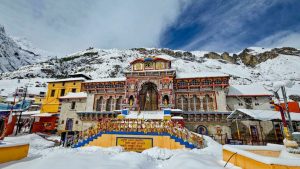
The 2013 Kedarnath disaster, triggered by a GLOF, remains a grim benchmark. That event caused thousands of deaths and widespread destruction, highlighting the scale of the threat.
Call for Urgent Action and Global Cooperation
Dr. Azam stressed the need for immediate measures. “Our findings underscore the urgent need for continuous monitoring using satellite data and on-ground surveys. Developing robust early warning systems is crucial to protect vulnerable populations.”
The study calls for international collaboration, as a lake in one country can flood communities in another. The team has made their full glacial lake inventory public to aid global research and policy efforts to avert future disasters.