
Key Takeaways
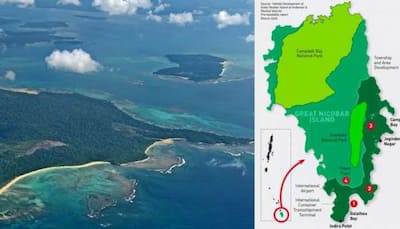
- A ₹72,000 crore project on Great Nicobar Island aims to build a transshipment terminal, airport, and township.
- It’s promoted as a strategic counter to China but faces fierce opposition over ecological damage.
- The plan involves clearing 160 sq km of forest, felling 10 lakh trees, and risks displacing vulnerable tribal groups.
- Clearances are granted, but legal challenges and scientific scrutiny continue.
India’s ambitious ₹72,000-crore Great Nicobar Island development has sparked a major national debate, pitting critical security goals against severe environmental risks.
The Strategic Vision: Countering China in the Indian Ocean
Spearheaded by the Andaman and Nicobar Islands Integrated Development Corporation (ANIIDCO), the project plans to transform over 160 square kilometres of pristine land. The blueprint includes an international container transshipment terminal, a greenfield airport, a township, and a power plant.
Proponents highlight its vital location—just 90 nautical miles from the strategic Malacca Strait. They argue it is essential for India’s economic and military security, aiming to boost maritime logistics and naval surveillance capabilities in a region where Chinese influence is growing.
The Staggering Ecological Cost
However, the environmental price tag is immense. A report from a National Board for Wildlife (NBWL) committee reveals the project would require felling nearly one million trees in a biodiverse rainforest. It threatens endangered species like the Nicobar megapode, leatherback sea turtle, and saltwater crocodile.
The island is a UNESCO Biosphere Reserve. Furthermore, the area is seismically volatile, having been hit by the 2004 tsunami, raising serious safety concerns about large-scale construction.
Threat to Indigenous Tribes
A core conflict is the project’s impact on indigenous communities, especially the Shompen—a Particularly Vulnerable Tribal Group (PVTG) with minimal outside contact. Activists allege the development could lead to their displacement and cultural decimation, potentially violating the Forest Rights Act, 2006. The government maintains tribal welfare and habitat protection are priorities.
Clearances Granted, But Challenges Remain
While the project has secured in-principle forest and environmental clearances, it faces ongoing legal battles and intense scrutiny. Critics contend the Environmental Impact Assessment (EIA) was flawed, conducted during the pandemic, and failed to properly consult tribal populations. They demand a comprehensive reevaluation, suggesting less destructive alternatives could meet strategic needs.
The Great Nicobar project represents a monumental development-versus-conservation dilemma. The government sees it as an indispensable security leap, while opponents condemn it as a reckless gamble with irreversible ecological and cultural damage. The final decision will set a crucial precedent for India’s approach to balancing strategic ambition with environmental responsibility.


