
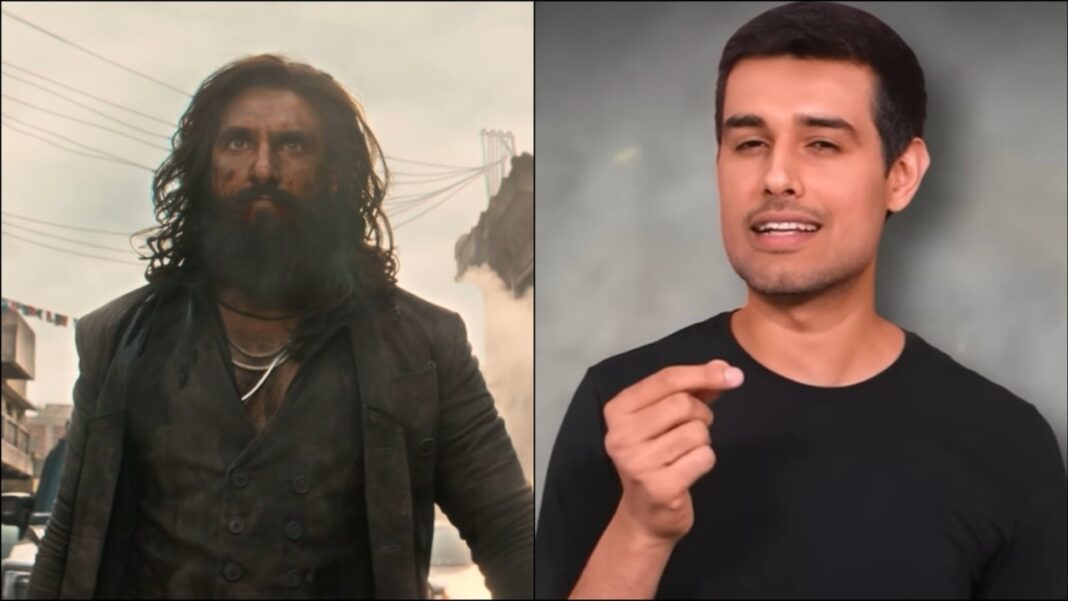
Aditya Dhar’s Dhurandhar: The Revenge continues to break box office records and receive widespread acclaim within the film industry. However, like its predecessor, the movie has sparked debate among viewers and commentators regarding its political messaging. Amid this ongoing discussion, YouTuber Dhruv Rathee, who had previously criticised the first Dhurandhar film, has shared an in-depth video analysing the sequel.
Rathee states that his earlier concerns have grown stronger after watching the new release. In his video, Rathee remarked, “Dhurandhar 2 is not a film made for entertainment, it is the BJP’s most expensive election advertisement, for which you pay Rs 500 to watch,” and described the director as a “maha chaatukar” (great sycophant).
Rathee structured his critique following the film’s own narrative style, dividing his video into chapters. He questioned the film’s claim of being a fictional story inspired by real events, pointing out that using actual faces, names and archival footage blurs the line between fact and fiction.
He said, “You show Narendra Modi’s real face and real footage using real names like Dawood Ibrahim and then say it’s all coincidental?” Rathee called such disclaimers “a legal cheat code used to manipulate the audience so they cannot tell where truth ends and imagination begins.”
The YouTuber also highlighted certain scenes he believes are designed to provoke strong emotional reactions, calling this technique “emotional priming”. He explained, “First generate emotion, then build your narrative on top of it.” Rathee noted that some of these moments could be removed without affecting the plot but serve to influence the audience’s perception.
He compared this approach to “feeding someone an extremely spicy chilli so their tongue burns, and then they are forced to buy sweets,” adding, “Aditya Dhar burns the audience emotionally so they easily consume whatever propaganda is served afterward.”
Rathee further pointed to scenes where villains praise India’s leadership, including a line attributed to a character based on Dawood Ibrahim. He described this as a deliberate and psychologically calculated choice, saying, “If the hero praises someone, it has less impact. But if the biggest villain does it, the audience gets convinced at another level.”
The video also examines how the film portrays real events, such as the 2016 demonetisation. Rathee argued that the narrative frames demonetisation as a focused national security measure while downplaying its wider economic effects, including reports of deaths linked to cash shortages. He also mentioned a sequence inspired by the 2023 killing of Atiq Ahmed, noting that the film presents the incident differently from actual events. Additionally, Rathee pointed out that the ISI character played by Arjun Rampal is based on a real person who died in 2011.


