There was a time when you walked into a theatre, saw a flashy explosion or a slightly questionable alien, nodded in polite appreciation, and then waited for the story to get back on track. Visual effects were the garnish. Nice to have, easy to forget.
That equation is gone now.
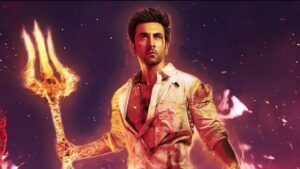
With Ranbir Kapoor’s Ramayana, Bollywood is no longer treating VFX as decoration. It is treating it as the world itself. Mounted on a reported Rs 4,000 crore budget and designed for an IMAX-first experience, Nitesh Tiwari’s two-film effort is not just another big production. It is a statement of intent.
The ambition is clear. Build an entire universe. Not just scenes.
And yes, obvious comparisons will rise – especially with Hollywood’s Avatar. Not because Indian cinema is trying to reach that scale in VFX, but because it represents a shift in thought process, too. The question is no longer whether Bollywood can match Hollywood visually. The more interesting question is what an Indian version of that scale can actually look like.
Watch the Ramayana teaser here:
Koi… Mil Gaya: Start of the new VFX era
To understand how we got here, you have to go back to a time when ambition was ahead of infrastructure.
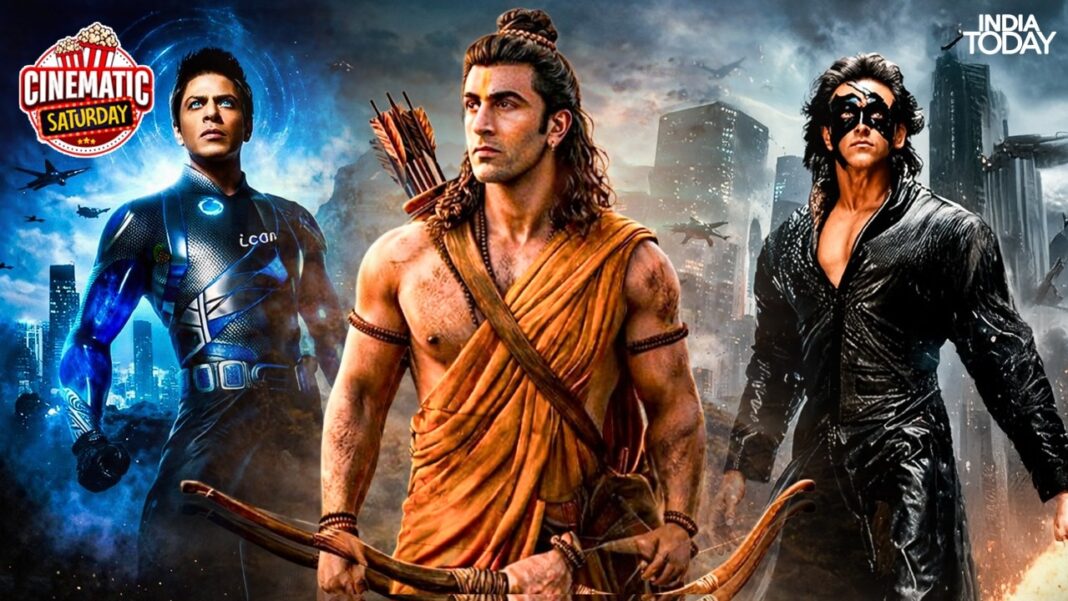
When actor-filmmaker Rakesh Roshan made Koi… Mil Gaya, and later Krrish, VFX-heavy storytelling was not exactly standard practice in Bollywood. It was unfamiliar territory.
Roshan is very clear about where his priorities lay. “When I made the story, I concentrated on the story first. I didn’t think about the visual effects,” he says.
The technology came later. And when it did, it came from outside. He travelled to Los Angeles, working with international VFX teams to translate his ideas. “I spoke to them that this is my story and I want such VFX in the film,” says the veteran filmmaker.

What followed was a deeply collaborative process. The VFX teams were not just involved in post-production. They were present from the early stages of shooting. “From the first year of shooting, they were with me all the time whenever VFX was required,” Roshan explains. “You have to do the lighting also in the same way. So they guided us.”
This was not just technical support. It was education.
Roshan describes how even basic decisions, such as how to light a scene, had to be adjusted to accommodate visual effects. “Maybe you please light up this way. Don’t throw much light on this character,” he recalls being told. “So this is what they helped me.”
The learning curve extended to everyone involved. “I was also in a learning process at that time. So was Hrithik (Roshan). So both of us were learning.”
The challenges were not minor. Apart from the fact that the biggest Indian films didn’t have the budget to match international standard VFX-heavy visuals on screen, studios in our country were not yet accustomed to this level of detail or complexity.
“The biggest challenge was the studios over here we are working with. They were not used to all these VFX,” says Rakesh Roshan. Communicating imagination itself became a hurdle. “Our imagination to put it in their mind was very difficult.”
Yet those early efforts mattered. They created a base. They made mistakes in public. And in doing so, they quietly set the stage for something bigger.
Baahubali: Scale meets identity
That shift became impossible to ignore only with the release of Baahubali: The Beginning (2015). The film, as well as its subsequent sequel were not just about scale. These films were about confidence, too.
For VFX supervisor Srinivas Mohan, India’s journey in visual effects is best understood in phases. The first phase, he explains, is defined by ambition without infrastructure. Bollywood films like Koi… Mil Gaya, its sequel Krrish (2006) and Ra.One (2011) attempted scale, but also revealed gaps in planning and execution.
It was with Baahubali that the second phase arrived in 2015. “What made it special was not just the scale, but the confidence of its identity,” Mohan says.
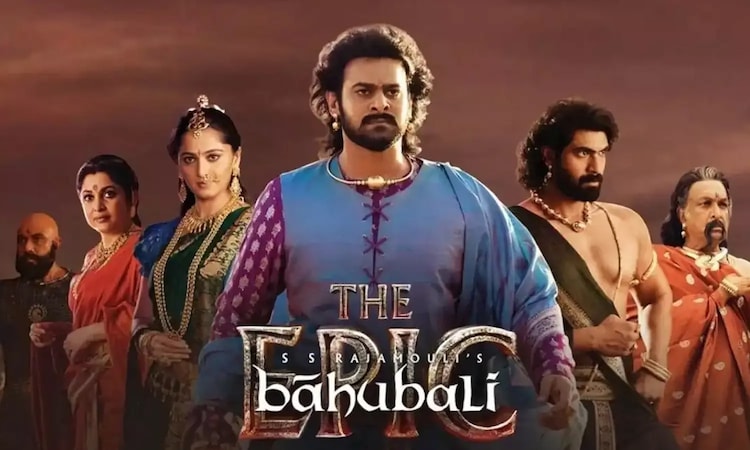
(Photo: Bahubali: The Epic poster)
That identity was crucial. The film did not attempt to look like something it was not. It drew from Indian epics, from their visual and emotional language and built a world that felt rooted even at its most extravagant.
Mohan is careful to address a common concern about modern VFX. “I do not think the risk lies in photorealism itself. The real risk is in copying someone else’s idea of photorealism.”
The balance between realism and stylisation was deliberate. Realism made the world believable. Stylisation gave it scale and mythic weight. And, importantly, this balance was decided early, in creative discussions, not left to post-production. Technology followed vision. Not the other way around.
Brahmastra: Towards immersion
By the time Brahmastra: Part One – Shiva arrived in 2022, VFX had started to disappear into the narrative. Not because it was absent, but because there was an attempt to integrate it.
The visual effects were no longer interruptions. They were part of the storytelling fabric.
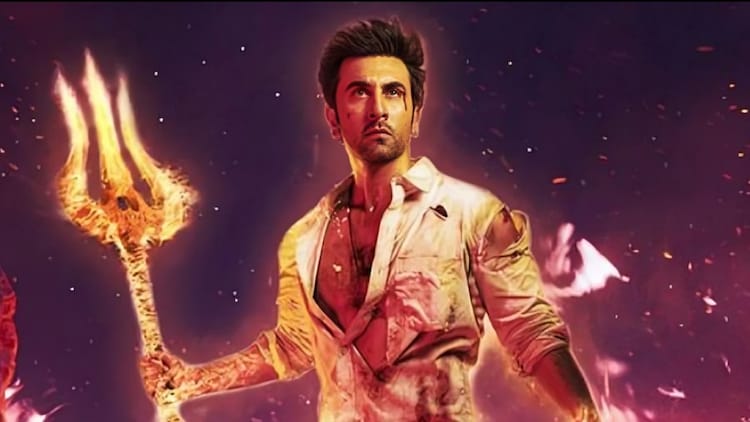
This is where Ramayana promises to take things further. The goal is no longer integration alone. It is immersion — fully realised environments, photoreal imagery and the increasing use of AI-assisted workflows.
The tools are evolving rapidly. But Mohan offers a grounded perspective. AI can create striking visuals, but it is still built on existing data. Cinema, he points out, is more than output. It is a process.
It is the collaboration of writers, directors, actors, designers, cinematographers and VFX artists. That collective effort gives cinema its emotional weight. Audiences may not articulate it in technical terms, but they can feel it.
Technology can enhance storytelling. It cannot replace it.
The economics of ambition
Of course, scale of the magnitude of the Ramayana films brings its pressures.
Trade analyst Taran Adarsh views Ramayana as a global play. “They are looking at a global audience, not just India, but the US, the UK. I mean, everywhere,” he says. The intention is to release it like a major Hollywood production, reaching beyond the Indian diaspora.
At the same time, he acknowledges the uncertainty about the two-film franchise. “It’s a bit too early to comment on the kind of revenue that will be coming in,” he says, noting that there is yet to be a clarity around release strategy and distribution.
What he does emphasise is the potential impact. “I strongly feel that this is going to take Indian cinema notches higher.”
He is equally clear about the fundamentals. “VFX is important, but more important are the plot, the story and the characters. I think stories are more important than everything else.”
That reminder carries weight, especially after Adipurush, which faced criticism for its execution. The lesson was blunt. Audiences will not forgive weak storytelling simply because a film looks expensive.
India’s familiarity with Ramayan the epic does not guarantee acceptance for Ranbir Kapoor’s Ramayana. It raises expectations.
The road ahead
The journey from Koi… Mil Gaya to Ramayana is not just a story of better tools. It is a story of changing confidence. Indian cinema is no longer experimenting with VFX. It is building with it.
The industry has moved from asking whether something is possible to asking how to do it better. Studios are more equipped. Filmmakers are more ambitious. Audiences are more discerning.