
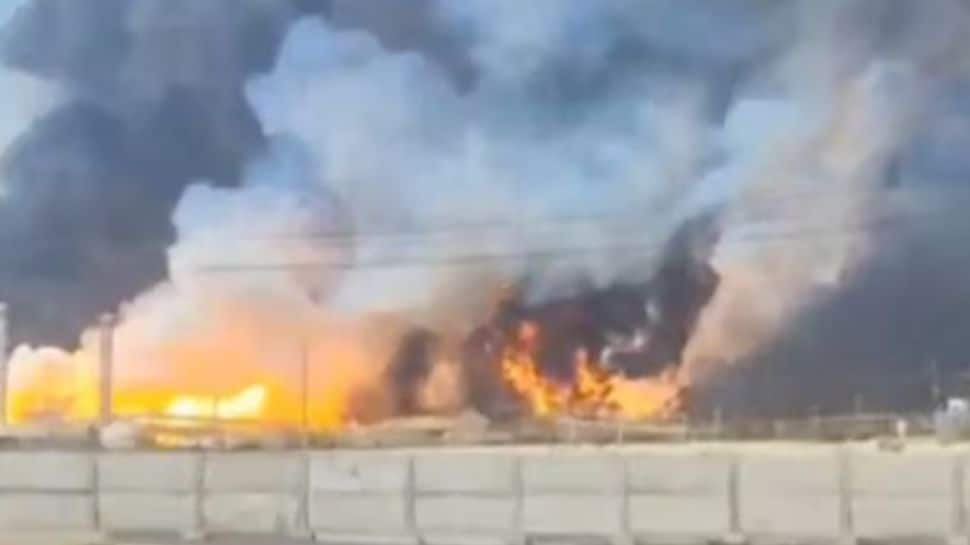
US-Israel-Iran War: The war between the United States-Israel and Iran has disrupted energy markets across the world. Oil prices have surged. Shipping routes are facing risks, particularly near the Strait of Hormuz. In response, the US President Donald Trump has granted a 60-day temporary waiver on the century-old Jones Act.
Let’s examine the law’s provisions, its purpose and the potential effects of suspending it on supply chains in emergency situations.
The Jones Act
The US Congress passed the legislation, which is also known as the Merchant Marine Act of 1920, to support the country’s shipping and maritime industries. It establishes stringent regulations for ships carrying passengers or cargo between US ports.
According to the law, ships must be constructed in the United States, be owned by American people, fly the US flag and have a crew of US citizens or permanent residents. Domestic marine trade is not open to foreign ships.
Concerns following the World War-I gave rise to the statute. German submarine assaults revealed weaknesses in US commerce shipping. It endangered national security and supply linkages.
In addition to safeguarding domestic shipbuilding and maritime jobs, the Jones Act guaranteed that the United States would have a robust fleet that could transport troops, weapons and necessities during emergencies.
Who gains from the law
The Act has long had the support of American shipbuilders, shipping corporations and marine unions. It ensures that the nation has a fleet prepared for national emergencies or times of war, safeguards jobs in the marine industry and ensures a stable domestic shipping business.
The law is also seen by many national security specialists as an essential protection.
Why the law is criticised
The Jones Act’s critics claim that it raises domestic shipping expenses. Because these expenses are eventually passed on to customers, building and running ships domestically is more expensive than hiring foreign boats.
Due to these limitations, items are substantially more expensive in remote or island areas like Hawaii, Puerto Rico, Alaska and Guam.
Every time there are supply disruptions, especially during global energy crises, the law has come under investigation.
Jones Act and the Iran war
The ongoing military confrontation in West Asia has added volatility to international oil markets. A critical maritime route connecting the Persian Gulf and the Arabian Sea, the Strait of Hormuz handles roughly 20 percent of the world’s oil supply. Its closure because of hostilities in the region has stalled tankers, increased the risk of attacks and prompted some Gulf producers to cut output.
In response, the Trump administration temporarily waived Jones Act restrictions to allow foreign ships to transport goods between US ports. The move is intended to speed up energy supplies, reduce congestion at ports and ease transport of industrial and agricultural products.
Impact on oil prices
Before the war escalated, crude oil was trading around $70 per barrel. Supply disruptions have pushed it closer to $100 per barrel, directly affecting petrol and diesel prices across the world.
In just one month, the cost of petrol in the United States has increased by about 69 cents per gallon. It is creating financial pressure on consumers and industries.
Although the temporary waiver provides some relief, experts warn that it is unlikely to significantly reduce fuel prices. Though certain areas may still see price hikes, think tanks predict slight drops, like three cents per gallon around the East Coast.
They also warn that easing the Jones Act may impact domestic shipbuilding and maritime jobs.
Other measures to address energy crunch
The United States and its allies are taking additional steps to stabilise the market. Limited exemptions on Russian oil imports have been allowed. India has also been temporarily permitted to purchase Russian crude to maintain global supply continuity.
The International Energy Agency (IEA) has released 400 million barrels from member country reserves. This is the biggest emergency discharge in recorded history. To further alleviate shortages, 172 million barrels will be released over 120 days from the US Strategic Petroleum Reserve.
Why the crisis might continue
Analysts caution that respite might only last temporarily despite these steps. Shipping fresh supplies takes time, and refineries work under pre-existing contracts. If the Iran war continues, oil prices and market volatility might stay high.
Even the United States, which is also a major producer and net exporter of oil, is impacted by international prices. While many refineries are set up for heavy or sour crude, which requires certain imports, a large portion of its production is light and sweet oil.
The impact of the Iran war on international energy markets has led to an increase in crude prices. In addition, it has caused uncertainty in international supply networks.
Experts anticipate that the broader energy crisis will not resolve until geopolitical concerns and tensions in the Middle East lessen, even though temporarily relaxing the Jones Act would be advantageous in the near term.


