
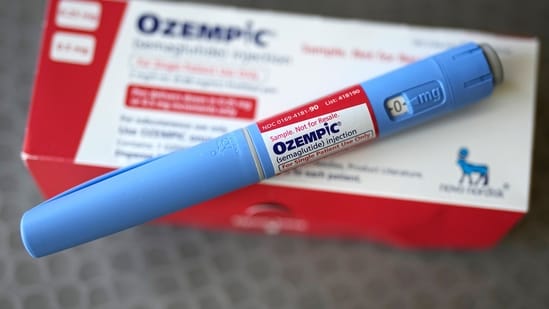
Swati Pradhan sees about 12 obesity patients a day at her small clinic in southern Mumbai. She expects this number to at least double from this month as Indian drugmakers prepare to launch generic versions of Novo Nordisk’s blockbuster weight-loss drug at half the price.
The Danish drugmaker’s key patent on semaglutide, the active ingredient in Ozempic and Wegovy that reshaped the global weight-loss industry, expires in India on 20 March. At least five Indian drugmakers—Mankind Pharma Ltd., Ajanta Pharma Ltd., Sun Pharmaceutical Industries Ltd., Dr. Reddy’s Laboratories Ltd., and Lupin Ltd.—are gearing up to sell generic versions of the drug immediately after the expiry, according to their statements and post-earnings calls.
This has prompted hospitals, tele-health firms and clinics across India to expand obesity-focused services in anticipation of a demand surge. The generic versions are expected to be at least 50% cheaper—priced at around ₹5,000 for a weekly dose — than Novo’s therapy, according to people familiar with the matter who spoke on the condition of anonymity as pricing information is competitive.
India is the first major country after Canada where Novo is losing patent on semaglutide and will see an onslaught of generic versions. With its large disease burden and an entrenched pharmaceutical industry known for copycat drugs, India is set to be the test case for how much the prices of these anti-obesity drugs can plummet.
Metabolic disorders such as thyroid disease, diabetes and fatty liver have surged among India’s 1.4-billion-plus population, largely due to increasingly sedentary urban lifestyles. On the other hand, high-calorie diets, dripping with oil and fat, have contributed to rising weight gain in the country, which has the world’s third-largest overweight population, trailing the US and China.
In a move aimed at curbing aggressive commercial practices as demand booms, India’s drug regulator this week banned advertising and promotional activity related to weight-loss programs. The prohibition also extends to disease-awareness campaigns, social media endorsements and corporate marketing initiatives.
Pradhan, an endocrinologist who runs LiveLight Clinic, charges between 21,000 rupees and 26,000 rupees a month for a program that includes services ranging from dietary counseling and blood tests, to side-effect management and weekly check-ins.
The program ensures weight loss of as much as five kilograms a month, which is sometimes not possible if patients take injections without professional support, said Pradhan. Those who opt out of the program at an initial stage “start seeing side effects or their weight loss slows down, and end up contacting the clinic,” she added.
India’s potential GLP‑1 market size is likely to expand nearly five-fold from 10 billion rupees last year to as much as 50 billion rupees by 2030, CareEdge Ratings said in a March 10 note. Prices could decline by 40% to 50% after the patent expires and then some more next year, as more drugmakers enter the segment, it added.
Obesity Clinics
Hospital chains Apollo Health & Lifestyle Ltd. and Fortis Healthcare Ltd. are either launching or expanding obesity management clinics staffed by physicians, dietitians, fitness trainers and psychologists. Novo has already partnered with Apollo Clinics to set up dedicated obesity centers.
The hospital chain continues to evaluate the weight management space given the large opportunity here, Krishnan Akhileswaran, Apollo Hospitals Enterprise Ltd.’s chief financial officer, told Bloomberg News.
Diagnostic chains like Tata 1MG Technologies Pvt. are rolling out discounted weight check-up packages. Pharmacies including PharmEasy offer home delivery of these drugs after e-consultations, though market researcher Pharmarack says online channels remain a small share of overall sales.
Bengaluru-based Cipun Mishra shelled out 65,000 rupees in May for a three-month consultancy with an app-based wellness platform HealthifyMe Wellness Pvt. The package he bought included a wide array of services from a monthly consultation with an endocrinologist, to round-the-clock access to fitness and diet coaches as well as weight-loss vials and a monthly guided injection, he said.
The 32-year-old, who has lost about 42 kilograms (92.6 pounds) after 40 weeks of weekly injections, said the structured support provided at the start of the program was “critical.”
“In the beginning, a lot of habitual changes” happen, such as measuring weight daily, taking supplements, and the accountability to a network is encouraging, said Mishra. “I took up this program because I feared I was going to discontinue my journey,” he said.
Dr. Reddy’s, one of India’s largest drugmakers, is in discussions with hospitals and health care providers to roll out patient support programs alongside its generic launch, its Chief Executive Officer for Branded Markets M. V. Ramana said in January after an earnings briefing.
Cipla-Lilly Pact
Cipla Ltd., which markets Eli Lilly & Co.’s tirzepatide drug as Yurpeak in India, is working with clinics in smaller towns. Lilly’s drug is still under patent protection.
Health professionals are “very keen on how to prescribe, how to manage” the category, for which drugmakers like Cipla can work alongside them, said Cipla’s Chief Executive Officer Designate Achin Gupta.
Consultants see significant revenue potential for providers that bundle drugs with diagnostics and follow-up care. Hospitals in major cities offering obesity programs could generate annual revenue of as much as 110 million rupees per facility, compared with about 60 million rupees from a drugs-only model, Kaustav Ganguli, managing director for health care and life sciences at Alvarez & Marsal, told Bloomberg News.
Market expansion driven by patients starting generic therapy would directly benefit health care institutions, Ganguli said.
Startups are also positioning themselves. New Delhi-based Enlighten Now Healthcare Pvt., which operates weight management platform Elevate Now, is adding corporate partnerships, tying up with large gym chains and exploring collaborations with drugmakers including Dr. Reddy’s, founder Suryansh Kumar said.
The online company with roughly 30,000 registered patients plans to open eight clinics this year.
Adoption of obesity drugs has taken different routes globally. In the US, telehealth platforms launched by Eli Lilly and Novo have gained popularity, while price cuts and government programs have boosted uptake. In China, online channels such as JD Health have been central to sales strategies.
In India’s largely self-funded health care system, patients mostly bear the costs themselves and are a prime constituency for hospitals and clinics providing long-term supervision packages. And every stakeholder is mapping out this opportunity.
“India as a market is very deep and what we are discovering is that therapies have takers in different parts of the country,” said Cipla’s Gupta.


