
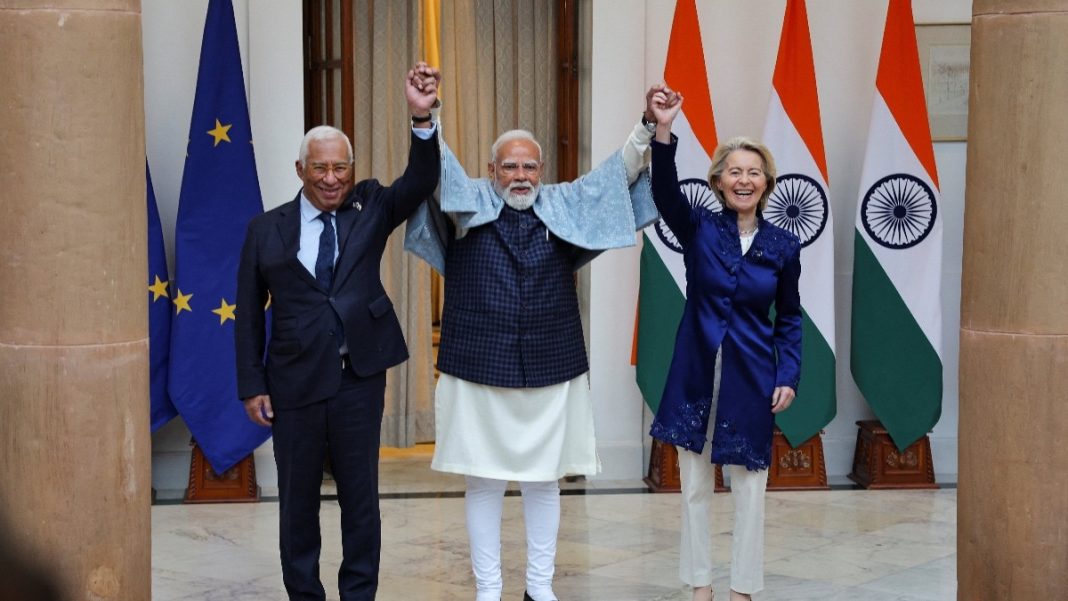
India and EU Sign Historic $2.7 Trillion Trade and Technology Pact
India and the European Union have finalised a landmark trade deal, valued at $2.7 trillion, after years of negotiation. The agreement, signed in Brussels, is poised to dramatically reshape economic ties between the world’s largest democracy and the 27-nation bloc.
Key Takeaways
- Massive Scale: The deal covers an estimated $2.7 trillion in trade and investment.
- Tariff Cuts: Aims to eliminate tariffs on over 90% of traded goods.
- Major Boost: Expected to increase bilateral trade by nearly 40% in five years.
- Strategic Partnership: Includes chapters on tech, sustainability, and skilled worker mobility.
What the India-EU Trade Deal Covers
Formally called the India-EU Trade and Technology Council (TTC) Pact, the agreement will slash tariffs on a vast majority of goods. Key Indian exports like pharmaceuticals, textiles, and farm products will get easier access to the European market. In exchange, India will lower import barriers for European cars, wines, spirits, and dairy products.
Leaders Hail a “Watershed Moment”
European Commission President Ursula von der Leyen described the pact as a “watershed moment.” She stated, “This agreement is about future-proofing our economies. It creates a transparent and rules-based framework that will drive innovation, create jobs, and strengthen our shared commitment to sustainable development.”
Prime Minister Narendra Modi highlighted its strategic importance for supply chains and youth. “This is not just a trade agreement. It is a bridge between our peoples… It will provide a major boost to our ‘Make in India’ initiative and offer new opportunities for our youth and startups,” he said.
Beyond Goods: Tech, Skills, and Deferred Issues
The pact goes beyond traditional trade, covering intellectual property, digital trade, and sustainable development. A significant breakthrough is the mutual recognition of certain professional qualifications, easing the movement of skilled workers between India and the EU.
However, some sensitive topics, notably data localisation rules and specific environmental standards, were set aside for review within the next two years.
Road Ahead and Economic Impact
The agreement has been welcomed by industry leaders, who forecast a potential 40% surge in bilateral trade within five years. The deal now moves to the ratification process in the Indian Parliament and the European Parliament. Provisional application of some clauses could begin by year-end, offering an early boost to businesses.


