

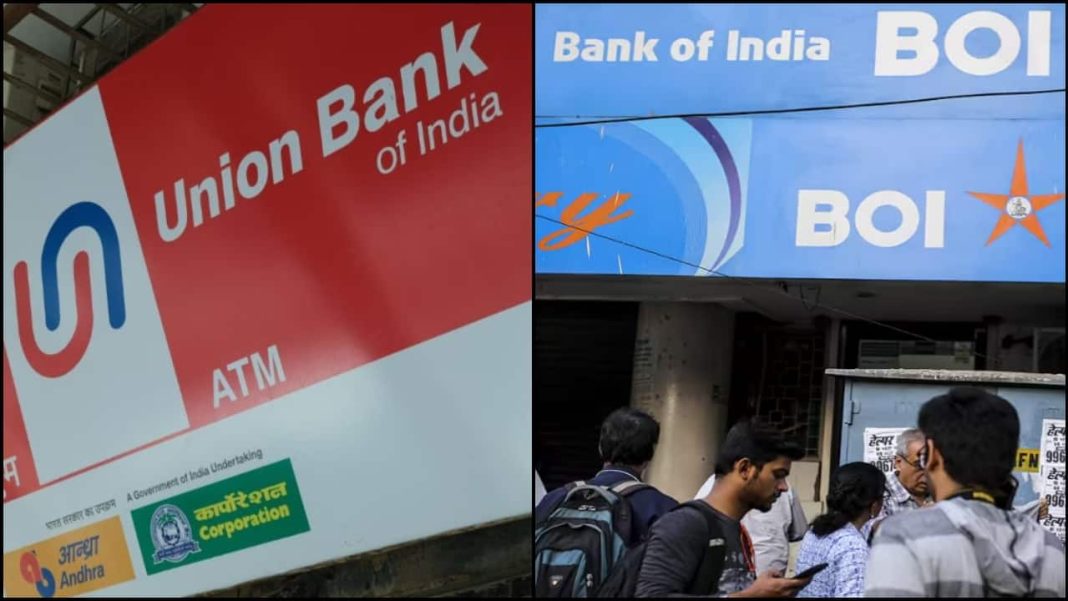
Govt Plans Mega PSB Merger to Trim State Banks to 4 by FY27
The government is preparing a major consolidation blueprint to reduce the number of public sector banks (PSBs) from 12 to just four by the financial year 2027. The plan aims to create stronger, globally competitive lenders to support India’s growth ambitions.
Key Takeaways
- Four anchor banks are envisioned: SBI, PNB, Bank of Baroda, and a merged Canara-Union Bank entity.
- Smaller banks like IOB, Central Bank, and Bank of India will be absorbed into these larger entities.
- The proposal requires approval from the Finance Minister, Cabinet, and PMO, with Sebi’s input on market impact.
A government source revealed the ambitious plan, which is currently being shaped within the Finance Ministry. The goal is to strengthen balance sheets, improve operational efficiency, and build banking institutions capable of large-scale lending.
“The plan is to reduce the number of PSBs from the current 12 to four. Smaller banks will first be merged into the bigger ones, and then consolidated further to form large entities capable of supporting India’s growth needs,” the source told Moneycontrol.
Merger Roadmap and Anchor Banks
The Centre is moving towards merging Canara Bank and Union Bank of India to form one of the four core entities. Indian Bank and UCO Bank are also under consideration for integration into this structure.
Other mid-sized banks, including Indian Overseas Bank (IOB), Central Bank of India (CBI), Bank of India (BoI), and Bank of Maharashtra (BoM), are expected to be absorbed by SBI, PNB, or BoB. A final decision on Punjab & Sind Bank is pending.
Approval and Vetting Process
The consolidation plan will first be presented to the Finance Minister. Once cleared, it will undergo a multi-layered review involving the Cabinet Secretariat, the Prime Minister’s Office (PMO), and the Securities and Exchange Board of India (Sebi).
“A record of discussion will be prepared and escalated in phases. Only after the FM’s approval will it move to the Cabinet and the PMO. Sebi’s observations will also be sought, given the market implications,” the source said.
Rationale for Consolidation
The government views this restructuring as crucial for meeting rising credit demand as India targets sustained high growth. Larger PSBs are seen as better equipped for big-ticket lending, infrastructure financing, and competing with aggressive private banks.
Officials believe consolidation will rationalise branch networks, reduce overlapping costs, and improve capital utilisation. The process is expected to be smoother than the previous round, as larger banks now have stronger governance and balance sheets.
If implemented, this FY27 roadmap would be the second major phase of PSB consolidation, following the 2017-2020 restructuring that reduced state-owned banks from 27 to 12.